Sinner, Save Thyself!

If most of today’s evangelistic efforts were summarized into a succinct sentence, it might be the title of this post – “Sinner, save thyself!”

Before you think me off my rocker, hear me out. You might change your mind, as well as your approach to evangelism (if you are engaged in that noble endeavor).

I make my assertion based largely on the very vocabulary we use! If and when we get to the point when we feel comfortable inviting non-believers to the Cross of Christ we way things like:

“Would you like to ask/have you ‘asked Jesus into your heart?”

“Would you like to receive Jesus as your Lord and Savior?”

“If you choose to follow Jesus. . . .”

“Do you feel Jesus knocking on the door of your heart? Why don’t you just open that door and let him in?”

I even heard a dear family friend once exclaim “I didn’t know it was that easy to save yourself!” when she was told that because she accepted Jesus she was saved. I believe this friend is indeed a Christian for several reasons, and at the same time I think that the exclamation is a quite logical response, given the circumstances of the conversation.

I also know that some of us (evangelicals) believe that it is an individual’s personal natural free will decision that actually determines salvation, although had Christ not gone to the Cross salvation would not be possible for anyone. In other words, God made it possible for us to find salvation, and we ‘close the deal’, so to speak. It is widely assumed we all have the same degree of ‘free will’ possessed by Adam and Eve before the Fall.

Without getting into any doctrinal issues around that assumption, it exists all across Christendom and colors the majority of today’s evangelistic efforts. We establish warm relationships (a good thing), begin discussing matters spiritual and when the moment has arrived for a decision, we make a statement or ask a question requiring the prospective believer to do something and he/she will be saved!

Now I am not saying that we don’t accept/receive/choose Christ. We are, after all, responsible to do so. However, such language is not found anywhere in evangelistic encounters in the New Testament. The language of the NT is merely to ‘repent and believe the gospel’ (See mark 1:15).

“God doesn’t challenge us to volunteer for Jesus, He commands all people everywhere to repent.” Jim Wilson, Moscow Idaho

I can think of several reasons why we don’t simple use NT evangelism as the model for our own efforts, but it’s not the intent of this post to air my personal opinion. I just wanted to get folks thinking. Are we in fact telling those to whom we witness to ‘save themselves’?

If that’s the case, then we are giving to many ‘a reason to boast’, are we not? And doesn’t that collide with. . .

“For by grace you have been saved through faith. And this is not your own doing; it is the gift of God,  not a result of works, so that no one may boast.” – Eph 2:8-9

Food for thought . . .

Have a blessed day.

Does God care who wins the Super Bowl?

I read an article online just yesterday that had as its subject Poll: Some say God influences sporting events.  I’m not going to get into all the statistics other than to say that a new survey has found that more than a quarter of Americans  believe that God “plays a role in determining which team wins” at sports events.” There were, however a few statements in the article worth noting and perhaps discussing.

“Faith and sports have long gone hand in hand; many athletes regularly thank God after their team wins, and some even write references to Scripture on their game-day gear.”

Ravens linebacker Ray Lewis, who will make this Super Bowl his last game in the NFL, has regularly thanked God in the Ravens’ somewhat improbable run to the Super Bowl.. . . After earning a berth in the big game by defeating the New England Patriots in the AFC Championship, Lewis told reporters, “God doesn’t make mistakes. He’s never made one mistake. … God is so amazing.”

The depth of Lewis’ theology might have been partially revealed in the following comments from the article:

 “I’ll tell anybody. One thing about God’s will, you can never see God’s will before it happens,” Lewis said after the game. “You can only see at the end of it. For his will to happen this way, I could never ask for anything else.”

It sounds like ray Lewis was saying that God determined who won the conference championships and that there might be Divine interest in the Super Bowl. If given the opportunity to speak to Mr. Lewis, I would suggest knowing what’s important to God can be discovered by just reading the Bible. I might also add to the conversation the fact that although God has had throughout history, and does have even now, a direct hand in the affairs of men, sporting events don’t seem to be on the list. God seems to be very interested however, in His elect remnant, which is directly connected to the honor of His Name and the praise of His glorious grace!

I have also pondered on occasion the tendency of some players to publically display their faith either with praying postures or heavenward pointing gestures. They kneel or gesture and we automatically cheer their Christian faith! Well, there have always been men of faith in professional sports, but there was a time when their faith was expressed in a form of ‘quiet professionalism’, not unlike combat soldiers who know that overt ‘demonstrations’ or intentional public displays of their faith can be detrimental to unit cohesiveness and even success on the ‘battlefield’, not to mention counterproductive to their evangelistic efforts.

And of course there’s the account found in Luke, chapter 18 of two men who went to the Temple to pray:

“Two men went up into the temple to pray; the one a Pharisee, and the other a publican. The Pharisee stood and prayed thus with himself, God, I thank thee, that I am not as other men are, extortioners, unjust, adulterers, or even as this publican. I fast twice in the week, I give tithes of all that I possess. And the publican, standing afar off, would not lift up so much as his eyes unto heaven, but smote upon his breast, saying, God be merciful to me a sinner.”

Food for thought. . .


Rise Up, O men Of God!

Rise up, O men of God!
Have done with lesser things.
Give heart and mind and soul and strength
To serve the King of kings.

Rise up, O men of God!
The kingdom tarries long.
Bring in the day of brotherhood
And end the night of wrong.

Rise up, O men of God!
The church for you doth wait,
Her strength unequal to her task;
Rise up and make her great!

Lift high the cross of Christ!
Tread where His feet have trod.
As brothers of the Son of Man,
Rise up, O men of God!

Text: William P. Merrill, 1867-1954
Music: William H. Walter, 1825-1893

“I am not ashamed of the gospel.”

“For I am not ashamed of the gospel, for it is the power of God for salvation to everyone who believes, to the Jew first and also to the Greek.”
(Romans 1:16)

Paul

“Therefore do not be ashamed of the testimony about our Lord, nor of me his prisoner, but share in suffering for the gospel by the power of God. . .  which is why I suffer as I do. But I am not ashamed, for I know whom I have believed, and I am convinced that he is able to guard until that Day what has been entrusted to me. Follow the pattern of the sound words that you have heard from me, in the faith and love that are in Christ Jesus. By the Holy Spirit who dwells within us, guard the good deposit entrusted to you. 
(2 Timothy 1:8, 12)

Paul

“For whoever is ashamed of me and of my words in this adulterous and sinful generation, of him will the Son of Man also be ashamed when he comes in the glory of his Father with the holy angels.”
(Mark 8:38)

Jesus

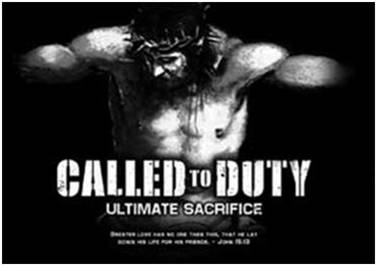
A Call to Duty

called to duty “When the days drew near for him to be taken up, he set his face to go to Jerusalem.” (Luke 9:51)

In this passage, Luke records our Savior’s dedication to His assigned mission, to suffer and die for the sins of God’s people. Other translations use the phrase ‘Jesus resolutely set out for Jerusalem’ or ‘he was determined to go to Jerusalem’.

Although Luke speaks of Jesus being ‘taken up’, with specific reference to the ascension, that Christ’s suffering and death is also in view can be seen in the words of the ‘suffering servant’ through the prophet Isaiah:

“But the Lord GOD helps me;

therefore I have not been disgraced;

therefore I have set my face like a flint,

and I know that I shall not be put to shame.”

(Isaiah 50:7)

Jesus was a ‘man on a mission’, who knowing exactly what awaited him in Jerusalem, ‘set His face like flint’ to carry out that mission. He did not shirk the duty for which he had been sent. I ask you, which of us, if we knew what Jesus knew, would steel our wills in obedience, knowing we would be arrested, scourged, and crucified although completely innocent of any wrongdoing?

You might think that a silly question, but is it?

I offer to you that it is most certainly not a frivolous question, but one that is asked in all seriousness.

While it goes without saying that no believer has ever been given a mission that comes anywhere close to the Savior’s, and that no believer is innocent of sin, there is for every believer a singular ‘call to duty’ that bears certain similarities. Furthermore, it is Jesus himself who issued the call with a few words spoken to his followers after his resurrection. The account is found in John, Chapter 20:

“On the evening of that day, the first day of the week, the doors being locked where the disciples were for fear of the Jews, Jesus came and stood among them and said to them, “Peace be with you.” When he had said this, he showed them his hands and his side. Then the disciples were glad when they saw the Lord. Jesus said to them again, “Peace be with you. As the Father has sent me, even so I am sending you.” A (John 20:19-21)

That there are similarities between the duty laid upon Christ by his Father and the duty Christ has in turn given us who bear His Name is revealed in verse 21, highlighted above:

“As the Father has sent me, even so I am sending you.”

John Gill (1697-1771) expressed quite well both the duty and the similarities:

“Christ’s mission of his disciples supposes power in him, honor done to them, authority put upon them, qualifications given them, and hence success attended them; what they were sent to do, was to preach the Gospel, convert sinners, build up saints, plant churches, and administer ordinances. The pattern of their mission, is the mission of Christ by his Father, which was into this world, to do his will, preach the Gospel, work miracles, and obtain eternal redemption for his people; and which mission does not suppose inferiority in his divine person, nor change of place, but harmony and agreement between the Father and Son: the likeness of these missions lies in these things; their authority is both divine; they are both sent into the same place, the world; and in much the same condition, mean, despicable, hated and persecuted; and in part for the same end, to preach the Gospel, and work miracles, for the confirmation of it; but not to obtain redemption, that being a work done solely by Christ; in which he has no partner, and to whom the glory must be only ascribed.”

Note that while all believers don’t plant churches, administer ordinances, or perform miracles, there are two things that every believer can, and ought, to be about – preaching the gospel and building up saints.

Why do I say that all believers are called to preach the gospel and build up saints? Aren’t evangelism and discipleship the responsibilities of particularly gifted and specially trained individuals ‘called’ to the ministry?

I’m glad you asked! In answer, I offer the following.

First of all, note that Jesus, in our John 20 scenario, was speaking to a group of his followers assembled behind locked doors. We are not told, as in other places in the New Testament, that Jesus was addressing his closest disciples. We also know from NT accounts of his ministry, passion and crucifixion, that the chosen twelve were not his only followers. Therefore, the group behind locked doors consisted of his closest disciples and others who followed him. By extension, the words of Jesus here also pertain to his followers today. Jesus was not just stating a fact, he was establishing a pattern.

We can also observe the ‘evangelical’ pattern as early as the calling of the first disciples:

“One of the two who heard John speak and followed Jesus was Andrew, Simon Peter’s brother. He first found his own brother Simon and said to him, “We have found the Messiah” (which means Christ). He brought him to Jesus. Jesus looked at him and said, “You are Simon the son of John. You shall be called Cephas” (which means Peter).

The next day Jesus decided to go to Galilee. He found Philip and said to him, “Follow me.” Now Philip was from Bethsaida, the city of Andrew and Peter. Philip found Nathanael and said to him, “We have found him of whom Moses in the Law and also the prophets wrote, Jesus of Nazareth, the son of Joseph.” (John 1:40-45)

Here we have Andrew, after hearing John preach, finding his brother Simon and taking him to see Jesus. The next day we see Jesus himself finding Philip, who in turn found Nathaniel. Introducing others to the Messiah who has saved us from our sins should be our natural response to having been introduced to him and having trusted in him for our salvation.

While the pattern established by Jesus is most significant, there is another “As the Father has sent me, even so I am sending you.’ aspect we must consider – the environment into which we are sent.

We are sent into a world that is as hostile to the gospel as it was in Jesus’ day; to a people whose minds are just as set against God and who by nature cannot see or understand the message we bring (See Rom 8:7 & 2 Cor 4:4) We are promised persecution and hatred (John 15:18-19), assuming of course that we never waver from the Biblical gospel – the one that addresses our sin and the need to repent and believe.

The first disciples accepted the call of Jesus, as did Paul, Silas and many others throughout the history of the church. And they have been, and are, persecuted for their faith and stance for the gospel, to this day.

Here in America, we know nothing of real persecution. Nevertheless, some are now asking ‘when’, not ‘if’ it is coming, given what we have seen over the past couple of decades that has been rapidly escalating in recent days.

Nevertheless, Jesus’ words to his followers still stand and will stand until he comes back to claim his bride and judge the earth.

As the Father has sent me, even so I am sending you.”

Good Christian, you who call yourself a ‘soldier’ of the cross, what will you do with the call to duty? We have only two options my friend – go AWOL (absent without leave), in other words desert, or heed the call and like our Savior, the suffering servant, set our faces like flint to the task!

Sanctification Defined

"Sanctification is commonly regarded as a process of moral and spiritual transformation following conversion. In the New Testament, however, it primarily refers to God’s way of taking possession of us in Christ, setting us apart to belong to him and to fulfil his purpose for us. Sanctification certainly has present and ongoing effects, but when the verb ‘to sanctify’ (Gk. hagiazein) and the noun ‘sanctification’ (Gk. hagiasmos) are used, the emphasis is regularly on the saving work of God in Christ, applied to believers through the ministry of the Holy Spirit." -David Peterson.

Ignorance of the Bible Is the Root of All Error

“Does any one ask me, ‘What is the best safeguard against false doctrine?’ I answer in one word, ‘The Bible: the Bible regularly read, regularly prayed over, regularly studied.’ We must go back to the old prescription of our Master: ‘Search the Scriptures’ (John 5:39). If we want a weapon to wield against the devices of Satan, there is nothing like ‘the sword of the Spirit, the Word of God.’ But to wield it successfully, we must read it habitually, diligently, intelligently, and prayerfully. This is a point on which, I fear, many fail. In an age of hurry and bustle, few read their Bibles as much as they should. More books perhaps are read than ever, but less of the one Book which makes man wise unto salvation. Rome and neology could never have made such havoc in the church in the last fifty years if there had not been a most superficial knowledge of the Scriptures throughout the land. A Bible-reading laity is the strength of a church…. ”

“If we would not be carried about by ‘diverse and strange doctrines,’ we must remember the words of our Lord Jesus Christ: ‘Search the Scriptures.’ Ignorance of the Bible is the root of all error. Knowledge of the Bible is the best antidote against modern heresies.”

— J.C. Ryle, Warnings to the Churches, (Banner of Truth Trust: 2007), 77–79.

Mighty to Save

Courtesy of Truth For Life

“Who is this who comes from Edom,   in crimsoned garments from Bozrah,  he who is splendid in his apparel,   marching in the greatness of his strength? “

 “It is I, speaking in righteousness,
  mighty to save.”

(Isaiah 63:1 ESV)

By the words “to save” we understand the whole of the great work of salvation, from the first holy desire onward to complete sanctification. The words are multum in parvo [much in little]: indeed, here is all mercy in a word. Christ is not only “mighty to save” those who repent, but He is able to make men repent. He will carry those to heaven who believe; but He is, moreover, mighty to give men new hearts and to work faith in them. He is mighty to make the man who hates holiness love it, and to constrain the despiser of His name to bend the knee before Him. And this is not all the meaning, for the divine power is equally seen in the after-work. The life of a believer is a series of miracles wrought by the Mighty God. The bush burns but is not consumed. He is mighty to keep His people holy after He has made them so, and to preserve them in His fear and love until He consummates their spiritual existence in heaven.

Christ’s power does not lie in making a believer and then leaving him to fend for himself; but He who begins the good work carries it on; He who imparts the first germ of life in the dead soul prolongs the divine existence and strengthens it until it breaks every bond of sin, and the soul leaps from earth, perfected in glory. Believer, here is encouragement. Are you praying for some beloved one? Oh, do not give up praying, for Christ is “mighty to save.” You are powerless to reclaim the rebel, but your Lord is Almighty. Lay hold on that mighty arm and rouse it to put forth its strength.

Does your own case trouble you? Fear not, for His strength is sufficient for you. Whether to begin with others or to carry on the work in you, Jesus is “mighty to save,” the best proof of which lies in the fact that He has saved you. What a thousand mercies that you have not found Him mighty to destroy!

Excellent Hot Topic Commentary

The Giglio Imbroglio — The Public Inauguration of a New Moral McCarthyism

Al Mohler, Thursday, January 10, 2013

A new chapter in America’s moral revolution came today as Atlanta pastor Louie Giglio withdrew from giving the benediction at President Obama’s second inaugural ceremony. In a statement released to the White House and the Presidential Inaugural Committee, Giglio said that he withdrew because of the furor that emerged yesterday after a liberal watchdog group revealed that almost twenty years ago he had preached a sermon in which he had stated that homosexuality is a sin and that the “only way out of a homosexual lifestyle … is through the healing power of Jesus.”

In other words, a Christian pastor has been effectively disinvited from delivering an inaugural prayer because he believes and teaches Christian truth.

The fact that Giglio was actually disinvited was made clear in a statement from Addie Whisenant of the Presidential Inaugural Committee:

 “We were not aware of Pastor Giglio’s past comments at the time of his selection, and they don’t reflect our desire to celebrate the strength and diversity of our country at this inaugural. Pastor Giglio was asked to deliver the benediction in large part because of his leadership in combating human trafficking around the world. As we now work to select someone to deliver the benediction, we will ensure their beliefs reflect this administration’s vision of inclusion and acceptance for all Americans.”

That statement is, in effect, an embarrassed apology for having invited Louie Giglio in the first place. Whisenant’s statement apologizes for the Presidential Inaugural Committee’s failure to make certain that their selection had never, at any time, for any reason, believed that homosexuality is less than a perfectly acceptable lifestyle. The committee then promised to repent and learn from their failure, committing to select a replacement who would “reflect this administration’s vision of inclusion and acceptance.”

The imbroglio over Louie Giglio is the clearest evidence of the new Moral McCarthyism of our sexually “tolerant” age. During the infamous McCarthy hearings, witnesses would be asked, “Are you now or have you ever been a member of the Communist Party?”

In the version now to be employed by the Presidential Inaugural Committee, the question will be: “Are you now or have you ever been one who believes that homosexuality (or bisexuality, or transsexualism, etc.) is anything less than morally acceptable and worthy of celebration?”

Louie Giglio, pastor of Atlanta’s Passion City Church, is also founder of the Passion movement that brings tens of thousands of Christian young people together to hear Giglio, along with speakers such as John Piper. They urge a rising generation of young Christians to make a passionate commitment to Christ. In recent years, the movement has also sought to raise awareness and activism among young Christians on the issue of sex trafficking. It was that activism that caught the attention of both President Obama and the Presidential Inaugural Committee.

Note carefully that both the White House and the committee were ready to celebrate Giglio’s activism on sex trafficking, but all that was swept away by the Moral McCarthyism on the question of homosexuality.

Two other dimensions of this story also demand attention. First, we should note that Louie Giglio has not been known lately for taking any stand on the issue of homosexuality. To the contrary, Giglio’s own statement withdrawing from the invitation made this clear:

“Due to a message of mine that has surfaced from 15-20 years ago, it is likely that my participation, and the prayer I would offer, will be dwarfed by those seeking to make their agenda the focal point of the inauguration. Clearly, speaking on this issue has not been in the range of my priorities in the past fifteen years. Instead, my aim has been to call people to ultimate significance as we make much of Jesus Christ.”

A fair-minded reading of that statement indicates that Pastor Giglio has strategically avoided any confrontation with the issue of homosexuality for at least fifteen years. The issue “has not been in the range of my priorities,” he said. Given the Bible’s insistance that sexual morality is inseparable from our “ultimate significance as we make much of Jesus Christ,” this must have been a difficult strategy. It is also a strategy that is very attractive to those who want to avoid being castigated as intolerant or homophobic. As this controversy makes abundantly clear, it is a failed strategy. Louie Giglio was cast out of the circle of the acceptable simply because a liberal watchdog group found one sermon he preached almost twenty years ago. If a preacher has ever taken a stand on biblical conviction, he risks being exposed decades after the fact. Anyone who teaches at any time, to any degree, that homosexual behavior is a sin is now to be cast out.

Second, we should note that Pastor Giglio’s sermon was, as we would expect and hope, filled with grace and the promise of the Gospel. Giglio did not just state that homosexuals are sinners — he made clear that every single human being is a sinner, in need of the redemption that is found only in Jesus Christ. “We’ve got to say to the homosexuals, the same thing that I say to you and that you would say to me … It’s not easy to change, but it’s possible to change,” he preached. He pointed his congregation, gay and straight, to “the healing power of Jesus.” He called his entire congregation to repent and come to Christ by faith.

That is the quintessential Christian Gospel. That is undiluted biblical truth. Those words are the consensus of the Church for over 2,000 years, and the firm belief held by the vast majority of Christians around the world today.

The Presidential Inaugural Committee and the White House have now declared historic, biblical Christianity to be out of bounds, casting it off the inaugural program as an embarrassment. By its newly articulated standard, any preacher who holds to the faith of the church for the last 2,000 years is persona non grata. By this standard, no Roman Catholic prelate or priest can participate in the ceremony. No Evangelical who holds to biblical orthodoxy is welcome. The vast majority of Christians around the world have been disinvited. Mormons, and the rabbis of Orthodox Judaism are out. Any Muslim imam who could walk freely in Cairo would be denied a place on the inaugural program. Billy Graham, who participated in at least ten presidential inaugurations is welcome no more. Rick Warren, who incited a similar controversy when he prayed at President Obama’s first inauguration, is way out of bounds. In the span of just four years, the rules are fully changed.

The gauntlet was thrown down yesterday, and the axe fell today. Wayne Besen, founder of the activist group Truth Wins Out, told The New York Times yesterday: “It is imperative that Giglio clarify his remarks and explain whether he has evolved on gay rights, like so many other faith and political leaders. It would be a shame to select a preacher with backward views on LBGT people at a moment when the nation is rapidly moving forward on our issues.”

And there you have it — anyone who has ever believed that homosexuality is morally problematic in any way must now offer public repentance and evidence of having “evolved” on the question. This is the language that President Obama used of his own “evolving” position on same-sex marriage. This is what is now openly demanded of Christians today. If you want to avoid being thrown off the program, you had better learn to evolve fast, and repent in public.

This is precisely what biblical Christians cannot do. While seeking to be gentle in spirit and ruthlessly Gospel-centered in speaking of any sin, we cannot cease to speak of sin as sin. To do so is not only to deny the authority of Scripture, not only to reject the moral consensus of the saints, but it undermines the Gospel itself. The Gospel makes no sense, and is robbed of its saving power, if sin is denied as sin.

An imbroglio is a painful and embarrassing conflict. The imbroglio surrounding Louie Giglio is not only painful, it is revealing. We now see the new Moral McCarthyism in its undisguised and unvarnished reality. If you are a Christian, get ready for the question you will now undoubtedly face: “Do you now or have you ever believed that homosexuality is a sin?” There is nowhere to hide.