The Call to Duty

clip_image002

“When the days drew near for him to be taken up, he set his face to go to Jerusalem.”

(Luke 9:51)

In this passage, Luke tells us that Jesus’ time on earth is coming to a close and that He would soon ascend into heaven. With that in mind Jesus “set his face to go to Jerusalem” in order to complete his assigned mission, to suffer and die for the sins of God’s people. Other translations use the phrase ‘Jesus resolutely set out for Jerusalem’ or ‘he was determined to go to Jerusalem’.

Christ’s suffering and death is also in view in the words of the ‘suffering servant’ through the prophet Isaiah:

clip_image004

Jesus was a ‘man on a mission’, who knowing exactly what awaited him in Jerusalem, ‘set His face like flint’ to carry out that mission. He did not shirk the duty for which he had been sent.

I ask you, which of us, if we knew what Jesus knew, would we steel our wills in obedience, knowing we would be arrested, scourged, and crucified although completely innocent of any wrongdoing?

You might think that a silly question, but is it?

I offer to you that it is most certainly not a frivolous question, but one that is asked in all seriousness.

While it goes without saying that no believer has ever been given a mission that comes anywhere close to the Savior’s, there is for every believer a singular ‘call to duty’ that bears certain similarities. Furthermore, it is Jesus himself who issued the call with a few words spoken to his followers after his resurrection. The account is found in John, Chapter 20:

“On the evening of that day, the first day of the week, the doors being locked where the disciples were for fear of the Jews, Jesus came and stood among them and said to them, “Peace be with you.” When he had said this, he showed them his hands and his side. Then the disciples were glad when they saw the Lord. Jesus said to them again, “Peace be with you. As the Father has sent me, even so I am sending you.” A (John 20:19-21. ESV)

clip_image006

Bible commentator, Albert Barnes (1798 –1870) explains what this means:

As God sent me to preach, to be persecuted, and to suffer; to make known his will, and to offer pardon to men, so I send you. This is the design and the extent of the commission of the ministers of the Lord Jesus. He is their model; and they will be successful only as they study his character and imitate his example. This commission he proceeds to confirm by endowing them all with the gift of the Holy Spirit.”

Jesus know knew what was in store for Him in Jerusalem. Nevertheless, he “set His face” (resolutely determined) to go there anyway (See Luke 9). He “set His face “like a flint”, as the prophet Isiah describes the suffering servant. Jesus was not appalled by the dangers – he was determined to brave all, and go up into the midst of his enemies – to die – to complete His mission!

As Jesus followers, we are also sent. We are sent into a world that is as hostile to the gospel as it was in Jesus’ day; to a people whose minds are just as set against God and who by nature cannot see or understand the message we bring (See Rom 8:7 & 2 Cor 4:4) We are promised persecution and hatred (John 15:18-19), assuming of course that we never waver from the Biblical gospel – the one that addresses our sin and the need to repent and believe.

The first disciples accepted the call of Jesus, as did Paul, Silas and many others throughout the history of the church. And they have been, and are, persecuted for their faith and stance for the gospel, to this day.

Here in America, we know nothing of real persecution. Nevertheless, some are now asking ‘when’, not ‘if’ it is coming, given what we have seen over the past couple of decades that has been rapidly escalating in recent days.

Nevertheless, Jesus’ words to his followers still stand and will stand until he comes back to claim his bride and judge the earth.

As the Father has sent me, even so I am sending you.”

Good Christian, you who call yourself a ‘soldier’ of the cross, what will you do with the call to duty? We have only two options my friend – go AWOL (absent without leave), in other words desert, or heed the call and like our Savior, the suffering servant, set our faces like flint to the task!

Dire Straits – The Natural State of the Unbeliever

The Apostle Paul, speaking to new Gentile believers in the city of Ephesus, called them to “remember” something:

11Therefore remember that at one time you Gentiles in the flesh, called “the uncircumcision” by what is called the circumcision, which is made in the flesh by hands—12remember that you were at that time separated from Christ, alienated from the commonwealth of Israel and strangers to the covenants of promise, having no hope and without God n the world. (Eph 2:11-12, ESV) (Emphasis mine)

Likewise, we who today profess the Name of Christ would also do well to remember from whence we came, “having no hope and without God in the world”, which is the state of anyone who lives without Christ. To be without Christ is to be without God because the only path to God is through Christ (John 14:6).

Additionally, as we go through life sharing the precious gospel with friends, relatives, associates and neighbors (sometimes called FRANgelism), we must keep in our hearts and minds the true state of those to whom we give witness to the saving grace of Christ. I fear that at times we can lose sight of the terrible reality of the natural state of the unbeliever, whether it was once us, or the current state of that one we would lead to Jesus. – the ‘dire straights’, if you will.

So what does the Bible have to tells us about each and every unbeliever, past, present, or future? I’ll let Scripture speak for itself:

1. They are dead in trespasses and sins and children of wrath.

“And you were dead in the trespasses and sins . . . and were by nature children of wrath, like the rest of mankind. (Ephesians 2:1-3)

2. They are living under the dark shadow of God’s just condemnation for their unbelief.

“Whoever believes in him is not condemned, but whoever does not believe stands condemned already because they have not believed in the name of God’s one and only Son. (John 3:18)

3. Their unbelieving, natural minds are blinded by Satan.

In their case the god of this world (Satan) has blinded the minds of the unbelievers, to keep them from seeing the light of the gospel of the glory of Christ, who is the image of God.”(2 Cor. 4:4)

4. They are hostile to God (God’s enemies) and they can do nothing to please Him.

“For the mind that is set on the flesh is hostile to God, for it does not submit to God’s law; indeed, it cannot. Those who are in the flesh cannot please God.” (Rom 8:7-8)

5. They are lost, destined for total destruction at the final judgment.

“For the Son of Man came to seek and to save the lost.” (Luke 19:10)

6. They slaves are of sin.

“Jesus answered them, “Truly, truly, I say to you, everyone who practices sin is a slave to sin.” (John 8:34)

7. In all this, they KNOW God exists, and have no excuse for denying Him.

“For the wrath of God is revealed from heaven against all ungodliness and unrighteousness of men, who by their unrighteousness suppress the truth. For what can be known about God is plain to them, because God has shown it to them. For his invisible attributes, namely, his eternal power and divine nature, have been clearly perceived, ever since the creation of the world, in the things that have been made. So they are without excuse. (Rom 1:18-20)

8. Although the unbeliever knows God exists, he still doesn’t seek Him:

as it is written: “None is righteous, no, not one; 1no one understands; no one seeks for God.”” (Rom 3:10-11)

9. Contrary to a popular belief, they are not God’s children.

Joh 1:12  But to all who did receive him (Jesus Christ), who believed in his name, he gave the right to become children of God,

The passages of Scripture quoted above are not intended to criticize, demean, or otherwise disparage those who deny God or do not believe in Christ. They are just clear descriptions of the dire straits of all unbelievers that are sometimes pushed to back burners of our minds, even as we share Jesus with our unsaved loved ones.

Given the really dire state of the unbeliever, what are we to do? For starters, we don’t need to blurt out any of the accusations that could be levied against a prospective convert. On the other hand, we need to remember a couple of things about how God saves sinners:

We need to remember that it is God who saves and who has given us the great privilege of sharing Christ with those who, by nature, hate Him and don’t want him.

We should remember Lydia in the book of Acts, Chapter 16. She was with a gathering of women near a river one day when the Apostle Paul showed up. We are told that God opened Lydia’s heart to pay attention to what Paul had to say (Acts 16:11-15) and that she was saved that day. You could say that God has a part in we have a part in the salvation of sinners. Simply stated, we share the message of the gospel (Christ died for our sins), and God saves.

That sounds rather simple, does it not? God opens a heart to hear, we present the gospel message, and God saves!

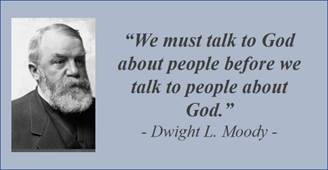
Lest I forget, remember something a famous evangelist had to say:

clip_image002

‘He Gets Us’ Organizers Set to Spend $1 Billion to Promote Jesus.

The ‘He Gets Us’ campaign to market a really likable Jesus who really understands us, and who is the all-time greatest role model in human history is in the news again. For the last 10 months “He Gets Us” ads have shown up on billboards, YouTube channels and television screens across the country, spreading the message that Jesus understands the human condition.

One of the ads that aired during the NFL playoffs was titled “That Day” and tells the story of an innocent man being executed. The ad says:

“Jesus rejected resentment on the cross. He gets us. All of us.”

Jesus did what?! Last I checked Jesus died to save His people from their sin, not to reject the resentment of Roman soldiers or angry religious Jews.

‘He Gets Us’ ads planned for the Super Bowl will cost about $20 million, according to organizers. The original campaign was described as a $100 million effort. The current goal is to invest about a billion dollars over the next three years.

A recent article appeared here that talked about a lady that describes herself as a “love more” Christian and ordinary Mom who works in marketing”, was initially skeptical of another marketing plan for Jesus, but ended up becoming a fan of the ads because, in her opinion they focus on the main message of Christianity:

“It all goes to Jesus, and if it all goes back to Jesus, it all goes back to love.”

At this point, you might be thinking this post might be about the evils of marketing Jesus. While it is certainly true that I dislike marketing campaigns for Jesus, I am most concerned with the opinion that the “He Gets Us’ ads focus on Jesus’s love being the main message of Christianity. Please let me explain.

While It is certainly true that God IS love, and that God’s perfect love resulted in His sending His Son into this world to save us, did God send His Son to us just to show us how much like us Jesus is – how much ‘He Gets Us’?

Before Jesus was born, an Angel of the Lord appeared to am apprehensive Joseph and said:

“She (Mary) will bear a son, and you shall call his name Jesus, for he will save his people from their sins.” (Matt 1:21, ESV)

The Apostle Paul told a young Pastor Timothy:

“The saying is trustworthy and deserving of full acceptance, that Christ Jesus came into the world to save sinners, of whom I am the foremost.” (1 Tim 1:15, ESV)

In one of his letters, the Apostle John tells us exactly how much God loves and why He sent His Son:

“In this is love, not that we have loved God but that he loved us and sent his Son to be the propitiation for our sins”. (1 John 4:10, ESV)

The ‘He Gets Us’ campaign presents a woefully incomplete and inadequate picture of Jesus. Does Jesus ‘get us’? Certainly. Can Jesus identify with our humanity? Certainly. But to present Jesus in His humanity and omit His Divinity, His perfect sinless life, and his death for our sins is to miss the message of the gospel entirely.

Why omit the gospel message? Are the campaign promoters ashamed of the gospel message that Christ died for our sins? They would most certainly say no and claim that they are merely trying to encourage unbelievers to be more interested in Jesus so that others down the road can explain it in more detail.

Campaign organizers say that over 20,000 churches have offered volunteers from a range of denominational backgrounds to follow up with anyone who sees the ads and asks for more information. Will those follow up conversations contain a gospel message that speaks of sin, the need for repentance and believing in Christ for the forgiveness of sin? Your guess is as good as mine, however there’s a good chance that many will not.

The entire ‘He Gets Us’ campaign suffers from what seems to echo the theme that much of today’s evangelicalism presents – the need to try and “attract” unbelievers to Jesus, making Him likable to the unbelieving masses. The difficulty in that approach is clearly identified in 1 Corionthians1:18:

“For the word of the cross is folly to those who are perishing, but to us who are being saved it is the power of God.” (ESV)

Furthermore, the Bible tells us that those whose minds are focused on the “flesh” (all unbelievers) are actually hostile to God:

“For the mind that is set on the flesh is hostile to God, for it does not submit to God’s law; indeed, it cannot.” (Rom 8:7, ESV)

There are other significant criticisms of the ‘He Gets Us’ campaign that should concern conservative, biblically literate Christians. One such article can be found in a previous post here at The Battle Cry. Others can be found with the use of a good internet search engine. I will leave those to you.

So what can we do to upset the misguided goal of ‘He Gets Us’ organizers to “redeem the brand of Christianity’s savior?” Well, most of us will watch the Super Bowl, believers and unbelievers alike. I suggest a couple of things.

  • We can always ask our unbelieving friends and acquaintances how they felt about the ‘He Gets Us’ ads. You might want to wait until after the game before initiating that discussion. You can also listen for discussions already in progress about the ads and politely join in.
  • We can agree with the fact that Jesus was human, but we need to talk about “The Rest of the Story” (Paul Harvey) and talk about how Jesus was also Divine – the God-Man.
  • We can explain how, although Jesus was human, the reason for His coming wasn’t just to share humanity with us, but to carry out a Divine mission, to die for OUR sins; to satisfy God’s just wrath against those sins. Be gentle.
  • We can pray what I call the “Lydia” prayer, asking God to open hearts to hear the gospel. See Acts 16:11-15)
  • Although you might be nervous, be like the Apostle Paul who said:

“For I am not ashamed of the gospel, for it is the power of God for salvation to everyone who believes, to the Jew first and also to the Greek.” (Romans 1:16, ESV)

Jesus doesn’t need to be “re-branded”. His Gospel (the one that includes the issue of Sin, the need for repentance and trusting in Christ for forgiveness) needs to be preached “in season” and “out of season” – when it’s popular or unpopular, timely and untimely, convenient or inconvenient (2 Tim 4:2) . As believers, our part is to faithfully present that gospel. God’s part is to save the souls of those whose hearts He has opened to hear it.

Be Blessed!

________________________________

You can read the complete article referenced in this post here, or at https://julieroys.com/he-gets-us-set-spend-billion-promote-jesus-will-anyone-care/

Roman Catholicism – Same Words, Different Worlds?

Same Words, Different Worlds: Do Roman Catholics and Evangelicals Believe the Same Gospel?, a book by Leonardo De Chirico is an excellent read for those who would like to understand what Roman Catholicism really teaches. The Amazon offering ( I bought the Kindle version) has this to say about the book:

Same Words, Different Worlds explores whether Evangelicals and Catholics have the same gospel if they have core commitments that contradict. It lays out how the words used to understand the gospel are the same but differ drastically in their underlying theology.

With keen insight, Leonardo de Chirico looks at various aspects of Roman Catholic theology – including Mary, the intercession of the saints, purgatory and papal infallibility – from an Evangelical perspective to argue that theological framework of Roman Catholicism is not faithful to the biblical gospel. Only by understanding the real differences can genuine dialogue flourish.

Same Words, Different Worlds will deepen your understanding of the differences between Evangelical and Catholic theology, and how the Reformation is not over in the church today.

In his forward, Dr.Michael Reeves, president and professor of theology at Union School of Theology in the United Kingdom has this to say:

With the courteous graciousness and keen insight he is known for, Leonardo De Chirico shows us here just how much we are missing. Laying out the underlying theological framework of Roman Catholicism, he shows how Rome can use words familiar to evangelicals (‘grace’, ‘faith’, ‘justification’ etc.), but intend quite different things by them. What becomes very clear is that Rome does not just add a few of its own sprinkles (Mary, purgatory and the pope) to an otherwise broadly agreed gospel. From bottom to top, it is a cake with a different (if similar-sounding) recipe and different (if similar-sounding) ingredients. With this book, then, Dr. De Chirico switches on the lights to help us think rightly about Roman Catholicism and engage Roman Catholic friends with biblical grace and biblical clarity.

This book not only  confirmed my own research concerning what Roman Catholicism teaches, it also intelligently and graciously clarified certain areas needing clarification in my old soldiers ‘brain housing group’. one such area was some of the Vatican’s current  teaching concerning the current universalism of the Roman Catholic church. To quote from the book:

According to the book, one Catholic author (Jack Mulder) summarizes the universalism of the Roman Catholic church, quoting Paul VI and John Paul II and evoking standard Vatican II teaching:

‘There are four concentric circles of people: first, all humanity; second, the worshipers of the one God; third, all Christians; and fourth, Catholics themselves. Salvation is seen as a gift that people receive in different degrees depending on the circle they choose to identify with or find themselves in.

  • Roman Catholics receive God’s grace in the fullest measure through the sacraments administered by the (Roman) church under the pope and the bishops who are the successors of the apostles.
  • Other Christians receive God’s grace to a lesser extent because they retain true elements of the faith but lack the fullness of it in not being in full fellowship with the Church of Rome.
  • Religious people receive it because they have a sense of the divine, although they miss important aspects of the faith.
  • Finally, the whole of humanity receives it because everyone is human and therefore existentially open to God’s grace which works in mysterious ways.
  • Ultimately, ‘the only real way to get outside of God’s grace is to expel oneself from it’. The conditions for such self-expulsion are so remote and limited that practically there is hope that all will be saved.

This is quite different from clear biblical teaching, which turns the picture upside down. According to Scripture we are all by nature ‘children of wrath’ (Eph. 2:3), all sinners (Rom. 3:23), all under God’s judgment (John 3:18). It is not we who exclude ourselves from God’s grace. Because of sin we are all born into this condition. Roman Catholicism turns the argument around and believes the contrary, namely that we are all born into God’s grace, albeit at various levels of depth and at different degrees

Such an attitude of universalism seems to soften considerably many of the pronouncements of the 1563 Council of Trent.  that pronounced “anathemas” (curses) against all non-Catholics.

Having said all of that, I highly recommend adding  Roman Catholicism – Same Words, Different Worlds to your reading list.  The in-depth understanding of Roman Catholic theology the book provides can assist us greatly as we engage our Roman friends and acquaintances and present to them the Five Solas of the Reformation.

  1. Sola Fide (“faith alone”): We are saved through faith alone in Jesus Christ.
  2. Sola Gratia (“grace alone”): We are saved by the grace of God alone.
  3. Solus Christus (“Christ alone”): Jesus Christ alone is our Lord, Savior, and King.
  4. Soli Deo Gloria (“to the glory of God alone”): We live for the glory of God alone.

Be Blessed!

A Wonderful Christian Ministry Focused on the Military Needs Your Help

Many of you know that I have been connected to a Christian ministry, Christian Military Fellowship (CMF) for over 40 years now that supports men and women in our Armed Forces, linking them up with each other, providing excellent Christian growth resources, and equipping them to be ambassadors for Christ in the military. Since I first published this blog post, CMF has redesigned its worldwide web presence at the above link, making it more user friendly. In addition to updating the Web site, CMF has joined the Faithlife community and made available to CMF members, an extensive suite of Bible study resources from Logos.

In the years I have been connected to CMF, I’ve had the opportunity to be an integral part of the ministry as a Local Contact, Local Representative, Area Coordinator and have also served in a leadership role. Of all the parachurch ministries focused on our men and women in uniform, CMF is among the smallest, and at the same time unique in that the ministry vision is to equip men and women in uniform to be ‘indigenous’ missionaries in uniform.

Hers’s a true story. Years ago, a Chaplain at Ft. Devens invited me and another Christian brother to a men’s breakfast sponsored by a local church of his denomination. He told the men in attendance that active duty soldiers like the two of us were able to take the message of the Gospel to places where he could/would never be able to set foot. That made a huge impression on me and confirmed to me that rather than attend Bible College and Seminary with an eye to the Chaplaincy (once a personal goal) was not where God wanted me to be, but as a soldier for Christ I was to remain in the enlisted ranks of US Army Special Forces, from which I retired in 1996 as a Sergeant Major.

Please take a few minutes to check out Christian Military Fellowship, as well as  Faithlife and Logos. maybe become a part of the CMF family, or even just support the work that they do. Without the support of regular folks like you all, either directly to CMF, or via charitable organization campaigns like the Combined Federal Campaign (CFC), we wouldn’t be able to do what we do for our men and women in uniform.

Feel free to share this with your friends and families and thanks for a few moments of your time!

Be blessed!

Ultimate Collection of Free Presuppositional Apologetics Lectures

SLIMJIM's avatarThe Domain for Truth

knight armor

The blog True Forms (http://trueforms.wordpress.com) used to have a popular post titled “Ultimate Collection of Free Presuppositional Apologetics Lectures” that was heavily promoted on Social Media.  Unfortunately the blog owner has recently deleted his blog account.  Which is unfortunate if you are looking for great lectures on Presuppositional apologetics online.

I’ve been digging around online to reconstruct that original list.  I have also decided to post the listing with further expansion of other lectures!  This is a work in progress.

Feel free to share this on Facebook, Twitter and other social networks.

Also if there are more resources that you feel should be included on here, please let us know in the comment box.

Camden Bucey
1. Defending the Faith

Shane Kastler
1. Expositional Apologetics

Fred Butler
1. Apologetics Evangelism 101

Jonathan Harris
1. Apologetics Sunday School Class 2011

Brian Rickett
1. Presuppositional Apologetics 2014 Paschal Lectures by Brian Rickett (Videos)
2.

View original post 714 more words

If Faith Alone Saves Before Baptism. . .

A good friend of mine who belongs to the Church of Christ posted the above graphic on Facebook. Church of Christ teaches the following concerning water baptism:

“Churches of Christ teach that baptism by immersion for believers is essential for the remission of sins and is necessary for salvation. They use passages such as Mark 16:16 and Acts 2:38 to substantiate this teaching. Baptism has a threefold purpose: (1) it is necessary for salvation; (2) it places the believer in Christ; and (3) it places the believer in the church.” (NAMB Online Source)

Rather than debate the issue however, I would like to address the above “Why?” questions, just to examine the passages used in the questions. What do they really say?

If faith alone saves before baptism. . .

“Nevertheless, many even of the authorities believed in him, but for fear of the Pharisees they did not confess it, so that they would not be put out of the synagogue.” John 12:42 (ESV)

  • Why were the men in John 12:42 not complimented for their salvation since they “believed”?

John 12:42 is part of a section of John 12 (John 12:36-43) dealing with the unbelief of Jesus’ own Jewish people.  Verse 42 tells us that in the midst of rampant unbelief many Jewish rulers did believe in Jesus as the Messiah, but did so secretly for fear of the Pharisees.

  • Why were the convicted 3,000 wanting to know what to do since they were already saved the moment they were convicted? (Acts 2:37-41)

37Now when they heard this they were cut to the heart, and said to Peter and the rest of the apostles, “Brothers, what shall we do?”  38And Peter said to them, “Repent and be baptized every one of you in the name of Jesus Christ for the forgiveness of your sins, and you will receive the gift of the Holy Spirit. 39For the promise is for you and for your children and for all who are far off, everyone whom the Lord our God calls to himself.”  40And with many other words he bore witness and continued to exhort them, saying, “Save yourselves from this crooked generation.”41 So those who received his word were baptized, and there were added that day about three thousand souls.” Acts 2:37-41 (ESV)

The context of the above passage is during the Apostle Peter’s sermon on the Day of Pentecost in Jerusalem. The Holy Spirit had been poured out on a gathering of about 120 people, Jews living in Jerusalem and many foreigners who were attending the feast of Pentecost. Peter has just told the assembled Jewish crowd that although Jesus had been delivered up to Roman soldiers, they were guilty of crucifying their own Messiah! When those present realized that Jesus was intact the Messiah, they were in effect asking how they could possibly avoid the just judgment of the exalted Messiah.

  • Why did Peter tell them remission of sins follows repentance and baptism? (Acts 2:38)

“And Peter said to them, “Repent and be baptized every one of you in the name of Jesus Christ for the forgiveness of your sins, and you will receive the gift of the Holy Spirit.” Acts 2:38 (ESV)

Peter’s hearers had just asked him how they could possibly be forgiven for having crucified their Messiah. He responds by telling them what is needed for the forgiveness of any and all sin. The term “for” is used to prove repentance and water baptism is needed “in order to be” saved, however it can also mean “because you have been” saved. There are three possible meanings of the word “for” that might fit the context of Acts 2:38: 1–“in order to be, become, get, have, keep, etc.,” 2—“because of, as the result of,” or 3—“with regard to.” 

  • Why did Paul not think he was saved those three days be believed in Jesus but had not yet had his sins washed away? (Acts 22:16)

“And now why do you wait? Rise and be baptized and wash away your sins, calling on his name.” Acts 22:16 (ESV)

Actually, that’s not even a valid question. It was created to ‘prove’ a point.

In Acts 22, Paul had traveled to Jerusalem to report the progress of his church-planting ministry to the church leaders and apostles. Part of his report included his recounting his conversion on the road to Damascus and his encounter with Ananias, who told him what God had called him to do “..you will be a witness for him to everyone of what you have seen and heard.”  

We are nowhere told specifically when Paul was saved, but many believe it happened on the road to Damascus when he faced Christ and called him “Lord”. Others disagree. We are definitely not told when Paul knew he was saved or that Paul didn’t think he was saved before Ananias gave him his mission…

  • Why did Paul say that we are “united together” with Jesus in Baptism? (Rom 6:3-5; Col 2:12)

3Do you not know that all of us who have been baptized into Christ Jesus were baptized into his death? 4We were buried therefore with him by baptism into death, in order that, just as Christ was raised from the dead by the glory of the Father, we too might walk in newness of life. 5For if we have been united with him in a death like his, we shall certainly be united with him in a resurrection like his” Rom 6:3-5 (ESV).

“…having been buried with him in baptism, in which you were also raised with him through faith in the powerful working of God, who raised him from the dead.” Col 2:12 (ESV)

In baptism, by faith, we are united with Christ in his death, burial and resurrection. Baptism dramatically portrays what happened spiritually when you received Christ: Your old self of unbelief and rebellion and idolatry died, and a new you of faith and submission and treasuring Christ came into being.

  • Why did James say that “faith alone is dead”? (James 2:14-16)

14What good is it, my brothers, if someone says he has faith but does not have works? Can that faith save him? 15If a brother or sister is poorly clothed and lacking in daily food, 16and one of you says to them, “Go in peace, be warmed and filled,” without giving them the things needed for the body, what good is that? James 2:14-16 (ESV)

Actually, James is merely answering his own question (v.14) and telling us that if you “say” you have faith but your faith is demonstrated by works, you never had “saving” faith. You might have had a kind of faith, but not a faith that saves.

________________________________________

You might be wondering why I even bothered to explain all of those “Why” passages when one of the cardinal rules of biblical interpretation is that “clear” passages can often tells us what  “less clear” passages really mean, or do not/cannot mean. All of the above “Why” questions are asked assuming that water baptism is absolutely required in order to be saved. They completely ignore passages that clearly tell us that salvation is by faith alone.

Any verse that ascribes salvation to faith/belief, with no other requirement mentioned, is a declaration that salvation is by faith alone. John 3:16 declares that salvation is given to “whoever believes in Him.” Acts 16:31 proclaims, “Believe in the Lord Jesus, and you will be saved.” Ephesians 2:8 says, “For by grace you have been saved through faith.” See also Romans 3:284:55:1Galatians 2:163:24Ephesians 1:13; and Philippians 3:9. Many other verses could be referenced in addition to these.

The questions addressed here were great examples of “eisegesis” or reading into Scripture one’s own assumptions to try and prove one’s point. They all failed. I know this was a long post and I apologize. Perhaps it can be profitable as an exercise in examining other passages of scripture in which the text is pulled out of context to “prove” a point.

Have a blessed and Happy New Year!

“Fake” Christian Facebook Pages?

Over time I have seen the same memes popping up on the home pages of Facebook pages. The memes contain seeming innocuous Christian statements that most, if not all Christians would agree with. If you agree with the statements, they also suggest that you reply. Here are a few examples of memes I have seen on multiple FB pages of different entities:

clip_image002

NOTE: There are many other such memes that appear across multiple FB pages that claim to be Christian. Trust me.

I must confess that I don’t much care for FB memes that want/challenge me to reply to them, whether or not they are ‘Christian’ themed. I especially dislike the ones that insult me if I do not reply. I would see them in my FB feed because a friend or family member had liked the posts – after all, they contained ‘feel good’ sayings.

My curiosity, however got the best of me and I started digging, in order to find out more about the ‘owners’ of some of the FB pages, using the posted ‘About’ information. What I discovered was definitely interesting, to say the least. Here are a few of my findings:

  • All of the sites I visited were established in 2022.
  • The ‘About’ information was ‘sketchy’, to say the least:
  • Locations listed varied, from the middle of a body of water to actual locations on land. Of the FB pages I visited, the FB category was listed as Motivational Speaker, Christian Church, or Religious Organization.
  • If there was a link to a web site, it did not return an actual web presence, but only sent me to ‘Messenger’.
  • The pages were managed mostly from United States, Canada, South Korea.One page added Indonesia instead of South Korea and another omitted South Korea

All of the pages I visited offered a link for starting a chat in Messenger with the results shown on the following pages, which were nothing more than ‘canned’ responses with my name inserted, inviting further chat correspondence. Here are some graphics from FB pages I visited and from which I tried to find out more information:

1. Believe in Jesus Christ (Est. May 2022)

Page manager locations include: United States, Canada, South Korea

image

image

2. My Savior (Est. July 2022)

Page manager locations include: Canada, United States, South Korea

clip_image002

image

3. Sharing God’s Light (Est. April 2022)

Page manager locations include: South Korea, United States, Indonesia

image

image

4. Daily Bible Reading (Est. March 2022)

Page manager locations: United States, Canada

image

image

5. Daily Bible Study (Est. June 2022)

Page manager locations include: United States, Canada, South Korea

image

image

Other similar pages I visited and examined, but didn’t capture any graphics.

  • Daily Christian Motivation (Est. February 11, 2022, Page manager locations include: South Korea, United States, Canada)
  • The Seed of Faith (Est. December 2022, No locations listed)
  • God’s Word is Light (Est. May 2022, Page manager locations include: United States, South Korea, Canada)
  • Daily Bible (Est. May 2022, Page Manager locations include United States, Canada)
  • Walk With God (Est. May 2022, Pager Manager locations include United States, Canada, Vietnam)
  • Faith, Prayer, Love, Reply ( Est. March 2022, Page Manager locations include United States, South Korea, Canada)
  • Walk With Jesus ( Est. February 2022, Page Manager locations include United States, Canada, South Korea)
  • Christian Bible Quotes (Est May 2022, Page Manager locations include Japan, United States, Philippines)
  • Jesus’ Good News (Est. June 2021, Page Manager locations include United States, Canada, Pakistan)
  • Jesus is My Rock (Est. April 2022, Page Manager locations include Japan, Pakistan, South Korea)

I also found rather interesting the other ‘canned’ responses sent from the ‘Authors’ of the various sites. Below are some samples from various sites and some were replies to me. I invite you to pay attention to the similarities as well as the interesting language and grammar:

image

image

image

image

image

image

image

image

NOTE: The above quote from “God’s word” has no Scripture citation, just the quote. I found other such “quotations” on other pages.:

The above samples are a small set of canned ‘Author’ replies that appear repetitiously throughout single FB pages and across multiple pages. Occasionally, there might be a reply from the page author with a name attached that seems to have just another canned response. I didn’t dig further. At the same time, there were a lot of legitimate replies from actual readers. Sadly, most, if not all replies from the page authors still seemed canned.

As a final note, I also Googled “Fake Christian Facebook Pages” and found some interesting articles, many of which contained information from an article published by Ministry Watch, a highly reputable source. You can find it at: Fake Facebook Pages Lure Millions of Careless Christians – MinistryWatch. The article offered the following as a summary:

“. . . instead of practicing discernment, too many Christians engage social media content therapeutically, and that doesn’t bode well for discipleship or democracy.

They use content to make themselves feel good, like narcotics, and they don’t care where it comes from as long as it makes them feel good. But the payoff is that we are supporting groups engaged in cultural hacking, groups that are injecting more conflict and discord into American culture.”

While the Ministry Watch article discussed some of the political agendas of those who produce fake FB pages, I am also not saying that the examples I included in this article might have a political agenda down the road, but they are sure are “fishy”, at least in the mind of this old soldier with an intelligence background.  I am saddened to see so many professing Christians responding as asked without closer looks,

Have a blessed day, as well as a happy and productive New Year in the service of the King!

Resolutions, Resolutions!

Well, here we are again, nearing the beginning of 2023, and quite naturally, the subject of New Year’s resolutions surfaces once again for many of us. Some of us old guys have long since tried to put the subject behind us, having made them, only to break most of them along the way. A simple internet search of the term New Year’s resolutions will yield a veritable plethora of ideas and articles, as well as tips on keeping them.

The practice of making of New Year’s resolutions has a long history, going all the way back to days of the Babylonian empire, and had to do with making promises to various gods. Participation rates, along with success and failure rates varies depends on whose survey you are using. I’m sure we all have stories about resolutions we’ve made through the years.

I’d like to set our personal experiences aside for now and talk about a set of resolutions crafted by a man who was perhaps the greatest theologian ever to grace American soil. His name was Jonathan Edwards. I we know about him at all, it is probably in connection with a famous sermon, Sinners in the Hands a of an Angry God., and/or the first Great Awaking in 18th century America.

Edwards was born in 1703, the son of a Puritan minister in Connecticut. His mother was the daughter of a minister from Massachusetts. While he delighted in religious studies from a very young age, it was when he was in his late teen years, that he experienced a turning point in his spiritual quest. In the Spring of 1721 he wrote:

“I was brought to a new sense of things, to an inward sweet delight in God and divine things, quite different from anything I had ever experienced before. I began to have a new kind of apprehension and idea of Christ and the work of redemption and the glorious way of salvation by him.”

A year later he began writing a series of life resolutions he felt would greatly assist his spiritual growth in grace and God-centered living. The first 21 resolutions were crafted in a single sitting in 1722, which were added to at various times until, in August 1723 the list included 70 resolutions. He then read them once a week for the rest of his life.

Who among today’s evangelicals would take up a such a lifelong commitment? Some of us might even call it a legalistic attempt to please God. That would be an erroneous assumption. Edwards himself acknowledged who could provide him with the ability to keep his resolutions, including a short preface to the resolutions themselves:

“Being sensible that I am unable to do anything without God’s help, I do humbly entreat Him by His grace to enable me to keep these resolutions, so far as they are agreeable to His will, for Christ’s sake.”

What follows is the list of resolutions, each one beginning with the word “Resolved.”, indicating a firm decision made with a soul deep gravity. Here are the first seven resolutions, to whet your appetite and arouse your interest.

1. Resolved, that I will do whatsoever I think to be most to God’s glory, and my own good, profit and pleasure, in the whole of my duration, without any consideration of the time, whether now, or never so many myriads of ages hence. Resolved to do whatever I think to be my duty and most for the good and advantage of mankind in general. Resolved to do this, whatever difficulties I meet with, how many soever, and how great soever.

2. Resolved, to be continually endeavoring to find out some new contrivance and invention to promote the aforementioned things.

3. Resolved, if ever I shall fall and grow dull, so as to neglect to keep any part of these Resolutions, to repent of all I can remember, when I come to myself again.

4. Resolved, never to do any manner of thing, whether in soul or body, less or more, but what tends to the glory of God; nor be, nor suffer it, if I can avoid it.

5. Resolved, never to lose one moment of time; but improve it the most profitable way I possibly can.

6. Resolved, to live with all my might, while I do live.

7. Resolved, never to do anything, which I should be afraid to do, if it were the last hour of my life.

If you are considering your own resolutions for this new year, and to follow Jonathan Edwards’ example, let these three simple principles resolutions be your guide:

1. Let the glory of God be the ultimate goal of any resolution you make.

2. Consider resolutions that will last a lifetime instead of just a year.

3. Like Jonathan Edwards, draw from God’s strength

You can find a complete list of the seventy resolutions here (Jonathan Edwards: Works of Jonathan Edwards, Volume One – Christian Classics Ethereal Library (ccel.org).

Have a divinely blessed New Year!