The Glory of God and Evangelism

A.W. Pink (1886-1952), in a sermon called “Present Day Evangelism,” had this to say concerning the ultimate goal of evangelism:

“The grand design of God, from which He never has and never will swerve, is to glorify Himself—to make manifest before His creatures what an infinitely glorious Being He is. That is the great aim and end He has in all that He does and says. For that He suffered sin to enter the world. For that He willed His beloved Son to become incarnate, render perfect obedience to the divine law, suffer and die. For that He is now taking out of the world a people for Himself, a people which shall eternally show forth His praises. For that everything is ordered by His providential dealings. Unto that everything on earth is now being directed, and shall actually affect the same. Nothing other than that is what regulates God in all His actings: "For of Him, and through Him, and to Him are all things: to whom be glory for ever Amen" (Rom. 11:36).”

Pink then describes the result of not keeping the glory of God paramount in our evangelism – ‘fixing on ends of our own’ and developing ‘means of our own’:

“If the evangelist fails to make the glory of God his paramount and constant aim, he is certain to go wrong, and all his efforts will be more or less a beating of the air. When he makes an end of anything less than that, he is sure to fall into error, for he no longer gives God His proper place. Once we fix on ends of our own, we are ready to adopt means of our own. It was at this very point evangelism failed two or three generations ago, and from that point it has farther and farther departed. Evangelism made "the winning of souls" its goal, its summum bonum, and everything else was made to serve and pay tribute to the same. Though the glory of God was not actually denied, it was lost sight of, crowded out, and made secondary. Further, let it be remembered that God is honored in exact proportion as the preacher cleaves to His Word, and faithfully proclaims "all His counsel," and not merely those portions which appeal to him.”

In his sermon, Pink further asserts that:

“The feverish urge of modern evangelism is not how to promote the glory of the triune Jehovah, but how to multiply conversions. The whole current of evangelical activity during the past fifty years has taken that direction. Losing sight of God’s end, the churches have devised means of their own.”

Well, if Pink was right about having observed fifty years of errant evangelism (human ‘ends’ and human ‘means’), and he died in 1952, guess what? The glory of God as the chief goal of evangelism has been largely absent from ‘modern’ evangelism for over a century.

If someone were to ask me how the glory of God has been minimized in our time, I could easily provide a dozen or so examples, from ‘decisionism’ to promises of ‘health, wealth and prosperity’, and points in between. If asked that question, I would go straight to the minimization and even complete omission of the central issue that the message of the gospel addresses – the problem of sin.

The issue of sin is minimized when it’s pushed to the stove’s back burner and placed on ‘simmer’. Christ’s suffering and death on a bloody cross were of course necessary for men to be saved, but only to make them ‘savable’. Their ultimate fate rests in an act of natural human decision. The issue of sin need only come up in the ‘salvation conversation’ as something behind the scenes, and many times doesn’t even make it to the ‘stage’

Dear friends, when the central issue that plagues mankind since the Fall of Adam is omitted from our evangelistic efforts, we have failed to give God the glory due His Name for our salvation and instead have given it to ourselves. Well, haven’t we?

To God be the glory, great things He has done;
So loved He the world that He gave us His Son,
Who yielded His life an atonement for sin,
And opened the life gate that all may go in.

O perfect redemption, the purchase of blood,
To every believer the promise of God;
The vilest offender who truly believes,
That moment from Jesus a pardon receives.

Great things He has taught us, great things He has done,
And great our rejoicing through Jesus the Son;
But purer, and higher, and greater will be
Our wonder, our transport, when Jesus we see.

Praise the Lord, praise the Lord,
Let the earth hear His voice!
Praise the Lord, praise the Lord,
Let the people rejoice!
O come to the Father, through Jesus the Son,
And give Him the glory, great things He has done.

– Fanny Crosby

Evangelism – Understanding Our Message

Adapted from "Crossing the Barriers", Truth for Life Ministries

To evangelize is to present Christ Jesus to sinful people in order that, through the power of the Holy Spirit, they may come to put their trust in God through Him.

John Stott, in his 1967 book, “Our Guilty Silence,” suggested that one of the main reasons for our silence is that, “we lack either a thorough knowledge of the gospel or a conviction about its truth or both. There can be no evangelism without an evangel, no mission without a message.” He quoted a Buddhist monk who said:

“It looks as if Christianity has reached the stage in adolescence when the child is slightly ashamed of his father and embarrassed when talking about him.”

It is vitally important that we have a solid grasp of three areas of ‘gospel truth’ which must be declared and explained before any response should be anticipated; essential facts about Jesus, essential facts about the unconverted, and the benefits promised by the Gospel.

Essential facts about the gospel:

1. The central truth of the good news is Christ Himself.

The Apostle Paul, clearly stated that the proclamation of Christ was his mission, even as he was in prison for preaching the gospel:

Colossians 1:28, 29: " Him we proclaim, warning everyone and teaching everyone with all wisdom, that we may present everyone mature in Christ. For this I toil, struggling with all his energy that he powerfully works within me."

2. Christ’s purpose in coming into the world and in dying upon the cross was to save sinners.

Matthew 1:21; "She will bear a son, and you shall call his name Jesus, for he will save his people from their sins.” (The angel’s words to Joseph)

1 Timothy 1:15: "The saying is trustworthy and deserving of full acceptance, that Christ Jesus came into the world to save sinners, of whom I am the foremost. (Paul’s declaration to young Timothy; either about his persecution of the before his conversion, or the conviction of the Holy Spirit of remaining sin)

3. Christ’s coming and death were no accident, but were part of God’s eternal plan.

Acts 2:23: " …this Jesus, delivered up according to the definite plan and foreknowledge of God, you crucified and killed by the hands of lawless men" (Peter’s sermon at Pentecost to the Jewish crowd, after the upper room experience.)

1 Peter 1:20 :"He (Jesus) was foreknown before the foundation of the world but was made manifest in the last times for the sake of you." (Peter’s word’s to Jewish Christians living in exile.)

4. Christ’s resurrection was the Father’s declaration of Christ as His Son and evidence of His satisfaction with His work.

Romans 1:1- 4: "Paul, a servant of Christ Jesus, called to be an apostle, set apart for the gospel of God, which he promised beforehand through his prophets in the holy Scriptures, concerning his Son, who was descended from David according to the flesh and was declared to be the Son of God in power according to the Spirit of holiness by his resurrection from the dead, Jesus Christ our Lord (Paul, in his opening words to Christians in Rome:)

Essential facts about the unconverted:

1. They are dead in trespasses and sins.

Ephesians 2:1: "And you were dead in the trespasses and sins:(Paul telling believers in Ephesus about their former condition without Christ)

2. Their unbelieving minds are blinded by Satan.

2 Corinthians 4:4: "In their case the god of this world has blinded the minds of the unbelievers, to keep them from seeing the light of the gospel of the glory of Christ, who is the image of God. (Paul to Christians in Corinth)

3. They are lost.

Luke 19:10: "For the Son of Man came to seek and to save the lost.” (Jesus to Zaccheus)

4. They are slaves of sin. (John 8:34)

John 8:34: "Jesus answered them, “Truly, truly, I say to you, everyone who practices sin is a slave to sin." (Jesus to the self-righteous Pharisees)

The benefits promised by the gospel:

1. Reconciliation with God.

2 Corinthians 5:18-21: "All this is from God, who through Christ reconciled us to himself and gave us the ministry of reconciliation; that is, in Christ God was reconciling the world to himself, not counting their trespasses against them, and entrusting to us the message of reconciliation. Therefore, we are ambassadors for Christ, God making his appeal through us. We implore you on behalf of Christ, be reconciled to God. For our sake he made him to be sin who knew no sin, so that in him we might become the righteousness of God."

2. Justification.

1 Corinthians 1:30: "And because of him (God) you are in Christ Jesus, who became to us wisdom from God, righteousness and sanctification and redemption,"

1 Corinthians 6:11: "And such were some of you. But you were washed, you were sanctified, you were justified in the name of the Lord Jesus Christ and by the Spirit of our God." (Paul to believers in Corinth)

3. Deliverance from condemnation

John 3:18: “Whoever believes in him is not condemned, but whoever does not believe is condemned already, because he has not believed in the name of the only Son of God."

Romans 8:1: "There is therefore now no condemnation for those who are in Christ Jesus."

4. Belonging to the people of God.

Acts 2:41: ” So those who received his word were baptized, and there were added that day about three thousand souls." (Those who believed on the Day of Pentecost)

1 Corinthians 1:2: "To the church of God that is in Corinth, to those sanctified in Christ Jesus, called to be saints together with all those who in every place call upon the name of our Lord Jesus Christ, both their Lord and ours:" (Paul’s greeting to believers in Corinth)

1 Corinthians 6:1, 2: "When one of you has a grievance against another, does he dare go to law before the unrighteous instead of the saints? Or do you not know that the saints will judge the world? And if the world is to be judged by you, are you incompetent to try trivial cases?"

1 Peter 2:4, 5, 9: "As you come to him, a living stone rejected by men but in the sight of God chosen and precious, you yourselves like living stones are being built up as a spiritual house, to be a holy priesthood, to offer spiritual sacrifices acceptable to God through Jesus Christ. . . .For it stands in Scripture: But you are a chosen race, a royal priesthood, a holy nation, a people for his own possession, that you may proclaim the excellencies of him who called you out of darkness into his marvelous light. Once you were not a people, but now you are God’s people; once you had not received mercy, but now you have received mercy."

5. Membership in the family/kingdom of God.

Colossians 1:13: "He has delivered us from the domain of darkness and transferred us to the kingdom of his beloved Son,"

6. The gift of the Holy Spirit. (Acts 2:38; 1 Cor. 2:12)

Acts 2:38: " And Peter said to them, “Repent and be baptized every one of you in the name of Jesus Christ for the forgiveness of your sins, and you will receive the gift of the Holy Spirit." (Peter preaching at Pentecost)

7. Eternal life.

John 3:16:“For God so loved the world, that he gave his only Son, that whoever believes in him should not perish but have eternal life." (Jesus to Nicodemus)

John 11:25-26: “Jesus said to her, “I am the resurrection and the life. Whoever believes in me, though he die, yet shall he live, and everyone who lives and believes in me shall never die. Do you believe this?” (Jesus to Martha at Lazarus grave)

8. The resurrectionof the body.

1 Corinthians 6:14:"And God raised the Lord and will also raise us up by his power."

Remember, and communicate clearly and with much love, that to enter into the benefits of Christ’s work – to know forgiveness , the gift of God’s Spirit and a place in His kingdom – repentance and open confession of Christ are required. (Acts 2:38)

Mark 1:15: “"The time is fulfilled, and the kingdom of God is at hand; repent and believe in the gospel." (Jesus at the beginning of his ministry)

Act 2:38: “And Peter said to them, "Repent and be baptized every one of you in the name of Jesus Christ for the forgiveness of your sins, and you will receive the gift of the Holy Spirit.” (Peter at Pentecost, after the hearers of his sermon asked “What shall we do?”)

Also remember that it is the presentation of the Gospel, not its content that changes with time.

“The gospel is true always and everywhere, or it is not a gospel at all, or true at all.” – William Temple
Pragmatism, Trend or Trap?

What follows is an article written by John MacArthur in 2008. In short, the term ‘pragmatism’ means essentially “if it works, use it”, or “if it works, don’t worry about the ‘excesses’”, as some charismatics would tell us about the ‘strange fire’ found in that movement. So without further fanfare, here is the article.

Pragmatism: Trend or Trap?

July 24th, 2008

(By John MacArthur)

Byclip_image001 God’s grace, I have been the pastor of the same church now for nearly forty years. From that vantage point, I have witnessed the birth and growth of menacing trends within the church, several of which have converged under what I would call evangelical pragmatism — an approach to ministry that is endemic in contemporary Christianity.

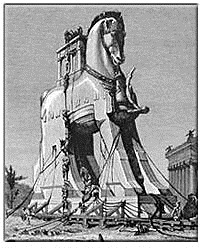
What is pragmatism? Basically it is a philosophy that says that results determine meaning, truth, and value — what will work becomes a more important question than what is true. As Christians, we are called to trust what the Lord says, preach that message to others, and leave the results to Him. But many have set that aside. Seeking relevancy and success, they have welcomed the pragmatic approach and have received the proverbial Trojan horse.

Let me take a few minutes to explain a little of the history leading up to the current entrenchment of the pragmatic approach in the evangelical church and to show you why it isn’t as innocent as it looks.

Recent History

The 1970s, for the most part, were years of spiritual revival in America. The spread of the gospel through the campuses of many colleges and universities marked a fresh, energetic movement of the Holy Spirit to draw people to salvation in Christ. Mass baptisms were conducted in rivers, lakes, and the ocean, several new versions of the English Bible were released, and Christian publishing and broadcasting experienced remarkable growth.

Sadly, the fervent evangelical revival slowed and was overshadowed by the greed and debauchery of the eighties and nineties. The surrounding culture rejected biblical standards of morality, and the church, rather than assert its distinctiveness and call the world to repentance, softened its stance on holiness. The failure to maintain a distinctively biblical identity was profound — it led to general spiritual apathy and a marked decline in church attendance.

Church leaders reacted to the world’s indifference, not by a return to strong biblical preaching that emphasized sin and repentance, but by a pragmatic approach to “doing” church — an approach driven more by marketing, methodology, and perceived results than by biblical doctrine. The new model of ministry revolved around making sinners feel comfortable and at ease in the church, then selling them on the benefits of becoming a Christian. Earlier silence has given way to cultural appeasement and conformity.

Even the church’s ministry to its own has changed. Entertainment has hijacked many pulpits across the country; contemporary approaches cater to the ever-changing whims of professing believers; and many local churches have become little more than social clubs and community centers where the focus is on the individual’s felt needs. Even on Christian radio, phone-in talk shows, music, and live psychotherapy are starting to replace Bible teaching as the staple. “Whatever works,” the mantra of pragmatism, has become the new banner of evangelicalism.

The Down-Grade Controversy

You may be surprised to learn that what we are now seeing is not new. England’s most famous preacher, Charles Haddon Spurgeon, dealt with a similar situation more than 100 years ago. Among churches that were once solid, Spurgeon and other faithful pastors noticed a conciliatory attitude toward and overt cooperation with the modernist movement. And what motivated the compromise? They sought to find acceptance by adopting the “sophisticated” trends of the culture. Does that sound familiar to you?

One article, published anonymously in Spurgeon’s monthly magazine The Sword and the Trowel, noted that every revival of true evangelical faith had been followed within a generation or two by a drift away from sound doctrine, ultimately leading to wholesale apostasy. The author likened this drifting from truth to a downhill slope, and thus labeled it “the down grade.” The inroads of modernism into the church killed ninety percent of the mainline denominations within a generation of Spurgeon’s death. Spurgeon himself, once the celebrated and adored herald of the Baptist Union, was marginalized by the society and he eventually withdrew his membership.

The Effects of Pragmatism

Many of today’s church leaders have bought into the subtlety of pragmatism without recognizing the dangers it poses. Instead of attacking orthodoxy head on, evangelical pragmatism gives lip service to the truth while quietly undermining the foundations of doctrine. Instead of exalting God, it effectively denigrates the things that are precious to Him.

First, there is in vogue today a trend to make the basis of faith something other than God’s Word. Experience, emotion, fashion, and popular opinion are often more authoritative than the Bible in determining what many Christians believe. From private, individual revelation to the blending of secular psychology with biblical “principles,” Christians are listening to the voice of the serpent that once told Eve, “God’s Word doesn’t have all the answers.” Christian counseling reflects that drift, frequently offering no more than experimental and unscriptural self-help therapy instead of solid answers from the Bible.

Christian missionary work is often riddled with pragmatism and compromise, because too many in missions have evidently concluded that what gets results is more important than what God says. That’s true among local churches as well. It has become fashionable to forgo the proclamation and teaching of God’s Word in worship services. Instead, churches serve up a paltry diet of drama, music, and other forms of entertainment.

Second, evangelical pragmatism tends to move the focus of faith away from God’s Son. You’ve seen that repeatedly if you watch much religious television. The health-wealth-and-prosperity gospel advocated by so many televangelists is the ultimate example of this kind of fantasy faith. This false gospel appeals unabashedly to the flesh, corrupting all the promises of Scripture and encouraging greed. It makes material blessing, not Jesus Christ, the object of the Christian’s desires.

Easy-believism handles the message differently, but the effect is the same. It is the promise of forgiveness minus the gospel’s hard demands, the perfect message for pragmatists. It has done much to popularize “believing” but little to provoke sincere faith.

Christ is no longer the focus of the message. While His name is mentioned from time to time, the real focus is inward, not upward. People are urged to look within; to try to understand themselves; to come to grips with their problems, their hurts, their disappointments; to have their needs met, their desires granted, their wants fulfilled. Nearly all the popular versions of the message encourage and legitimize a self-centered perspective.

Third, today’s Christianity is infected with a tendency to view the result of faith as something less than God’s standard of holy living. By downplaying the importance of holy living–both by precept and by example–the biblical doctrine of conversion is undermined. Think about it: What more could Satan do to try to destroy the church than undermining God’s Word, shifting the focus off Christ, and minimizing holy living?

All those things are happening slowly, steadily within the church right now. Tragically, most Christians seem oblivious to the problems, satisfied with a Christianity that is fashionable and highly visible. But the true church must not ignore those threats. If we fight to maintain doctrinal purity with an emphasis on biblical preaching and biblical ministry, we can conquer external attacks. But if error is allowed into the church, many more churches will slide down the grade to suffer the same fate as the denominations that listened to, yet ignored, Spurgeon’s impassioned appeal.

Make it your habitual prayer request that the Lord would elevate the authority of His Word, the glory of His Son, and the purity of His people in the evangelical church. May the Lord revive us and keep us far from the slippery slope of pragmatism.

Why is the charismatic movement to appealing to so many?

I found an interesting quote below in an article with a political bent at the American Thinker website. The article discussed the success of the Democrats to capitalize on human emotions and a few significant examples of Republicans missing good chances to do the same.

“People vote with hearts not heads. Statistics might make sense; yet, if your pitch has no emotional appeal, it’s a dead letter. Budweiser doesn’t sell adult beverages, beer companies sell tradition, babes, and parties. If your message doesn’t touch an emotional “g” spot, the product will not sell.” – G. Murphy Donovan

At the same time, I’ve finally finished listening to the audio from the Strange fire Conference (online here) at Grace Community Church, and have spent considerable time pondering a period of about five years I spent in a charismatic church and two reasons why I changed my own opinions about some things.

While I don’t really initiate conversations concerning those years, when I am asked about what changed my mind and opinion concerning various charismatic teachings, my first reply has to do with reading the Bible for myself, especially the scripture passages used to support charismatic ‘doctrine’.

Well, this blog post isn’t about why just reading the Bible ought to cause a pro-charismatic person to question some things, although serious Bible study certainly should generate some re-thinking. From what I’ve experienced, using that reasoning just doesn’t work with many die-hard charismatics. I actually tried to use that argument on one Web site and was answered with the old “if I had a nickel for every time someone has said that, I’d be a rich man” mantra. That response to ‘read the Bible’ points to a deeper issue going on here, and I think the ‘political’ quote expresses that issue quite accurately, if not exactly eloquently – “If your message doesn’t touch an emotional “g” spot, the product will not sell.”

In other words, get hold of a person’s emotions and the product DOES sell! I fear that much, if not the majority of ‘rebuttals’ to the Strange Fire Conference point to the Charismatic Movement’s validity based on having connected to human emotions, either through ‘personal’ pleasurable experiences, or appealing to excitement (another emotion) over thousands/millions having come to Christ, wonderful music having been produced by charismatics, some of them having been martyred, and other such appeals.

As I write this, I am listening to a response to John MacArthur by a Dr. Michael Brown in a 2-hour podcast that 1:17 into it has not addressed a single passage of scripture exegeted at the Strange Fire Conference, but has demonstrated everything in the previous paragraph. I am hearing callers, one after another, swearing to the reality of speaking in tongues just because it happened to them accompanied by a ‘feeling’ that confirmed the experience.

I think the personal experiences/emotions arguments are the easiest to refute from a careful study of familiar ‘charismatic’ passages taken out of their natural context(s). The “look at how many have been brought to Christ” argument is a bit more difficult to refute. After all, how CAN you argue against a movement that has brought so many to Christ? Having been in the movement for more than five years, I can begin by asking a single 2-word question: “Which Christ?”

While I am not indicting all charismatics, nor am I denying that many in charismatic circles have been brought to genuine faith in Christ, I ask that question with all seriousness. “Which Christ?” I remember my experience in a ‘conservative’ Pentecostal church (Assembly of God) having been highly focused on experiences, feelings, and the ‘gifts’. I remember reading tracts about how one can live in a state of ‘divine’ health, the alleged ‘words from God’ spoken in tongues, sometimes ‘interpreted’, and the ‘all we need is love’ type of gospel (emotions again).While there was great appeal to human experience/emotion, I don’t remember hearing any powerful sermons that addressed in a significant way the serious nature and problem of human sinfulness in an address from the pulpit.

If the ‘non-extreme’ segments of the Charismatic Movement appeal to experience and emotions above all else, the ‘extremes’ do so exponentially! Not only do they claim all sorts of things like regular conversations with God, Jesus and angels, they do some really weird things. I won.t go into any of the details here; you can listen to the Strange Fire audio for yourself. They claim to be ‘anointed’ apostles and prophets and even tell us we can have the same ‘anointing’. They make much of the ‘glory’ and ecstatic worship in the ‘glory cloud’ while when the manifested glory of God in the Bible put people on their faces, flat on the ground in shame for their sinfulness in it’s light. It’s all about experience and emotions.

Sadly, the calmer, saner charismatic leaders seem very reticent to speak against the Benny Hinns, Rick Joyners, Todd Bentleys, Mike Bickles and Cindy Jacobs (and the list goes on and on) types out there who claim to receive so much direct revelation from Jesus, angels and glory clouds, that one has to wonder if any person in the Trinity has any time for the rest of us regular folk! While they will confess to ‘extremes’ in the movement, they hesitate to expose the heretics in their midst.

The emotional appeal in the Charismatic movement is HUGE, and it works. However, being sinners saved by grace, and although we have a ‘new’ nature, the vestiges of the ‘old’ nature are strong enough and still as sinful as they ever were. The words spoken by the prophet Jeremiah are still true:

“The heart is deceitful above all things, and desperately sick; who can understand it? (Jer 17:9)

Having said all that (I hope it was understandable), let me say in all honesty that I once was sold on the charismatic movement and as anti-MacArthur as many are today. It does however escape me, at this point in my spiritual walk, how any thinking, rational, biblically literate Christian can swallow some of the ‘charismatic’ junk that’s not only on the street, but is also all over the airwaves. Unless of course it IS true that “People vote with hearts not heads” and subjective experiences and emotions tend to draw us away from the objective truth of scripture.

Food for serious thought. . .

May God bless you as you try and ‘process’ the Strange Fire Conference and the Charismatic movement for yourselves.

Aftermath of Strange Fire

EvangelZ's avatarThe Domain for Truth

Strange fire

Strange Fire ended not too long ago.  The audio and videos are up, but it seems that there still needs to be more clarity concerning the issues that were raised at the conference.  Here is an interview that Pastor John MacArthur did concerning Strange Fire.

1) Here is an interview he did with Challies: John MacArthur Answers His Critics

2) Here is the link to the audios and videos of Strange Fire: Strange Fire Conference

3) Here is an interview Pastor MacArthur did at a seminary concerning Strange Fire: Midwestern Baptist Theological Seminary

4) Pastor MacArthur’s Informed Response to Strange Fire: Informed Response to Strange Fire

5) Pastor Phil Johnson’s response concerning these buzz words: Pastor Phil Johnson on the Broad Brush

6) A detailed treatment of strange fire and miraculous gifts by Professor Nathan Busenitz: Strange Fire & Miraculous Gifts

View original post

Why will we focus our apologetics on Prosperity Gospel/Charistmatic Excess?

SLIMJIM's avatarThe Domain for Truth

The Strange Fire Conference is going on right now which you can see livestreamed here and of course the internet is buzzing.

charismatic chaos

We will be blogging a bit on this topic the next few days and Lord willing I myself want to focus a bit on some of the problematic Charistmatic/Prosperity Gospel in the Asian scene.  My concern is primarily centered on the issue of the Gospel and the worldliness of several proponents.

In this post I want to answer the question, “Why?”

Why should our blog tackle this issue when we can just focus on apologetics and only deal with Presuppositional apologetics and be happy with our niche?

Mennoknight over at his blog probably put it better in words than I could several days ago.  Although he writes this in the context of the problem of false teaching in Africa, I think the situation applies in the Asian context…

View original post 161 more words

The Gospel of ‘Life Change’ – Is It Gospel ‘Treason’?

I recently found this statement on a Christian leadership blog:

Jesus’s approach was (and is) to love people into life change. The Pharisee’s approach was to try to judge people into life change. I think more people have been loved into changethan judged into change. I think following the approach of Christ is the best and most rewarding way to go.” (Emphasis mine)

Right off the bat, know that I do not personally know the author of that comment. I am in no way standing in judgment over the statement’s author, or any other person. Neither do I doubt for a second the heartfelt sincerity behind the statement. I am making an observation concerning the state of evangelism in much of today’s professing church.

It seems that everywhere I turn in today’s evangelical environment appeals to believe in/accept/receive Christ are made almost solely on the basis of having one’s ‘life changed’. Don’t get me wrong, I think that on the surface, it’s a great appeal! Don’t we all want our lives changed at some level? I’d be a liar to assert that I don’t, that’s for sure. And doesn’t Jesus change lives? He sure does! Not a single person throughout all of history has come to Jesus and NOT had their life changed! And aren’t we supposed to share others how Jesus has changed our own lives? Of course we are!

So if Jesus does change lives, and testimonies of how Jesus changed our lives are important when witnessing to others, what’s all this about gospel ‘treason’?

I’m so glad you asked! Please bear with me.

I could answer that from several different perspectives, I could tell you that the first record of Jesus’ ministry tells us that he said “The time is now at hand…repent and believe the gospel” (Mark 1:15) I could tell you about the times we are told that Jesus specifically told someone to deal with their sin. I could tell you about the times Jesus spoke specifically about Hell. I am equally certain that for any of those arguments you would have some way of justifying your gospel of ‘life change’. I know them all, and have in times past used them. Therefore, I’m not going anywhere close to those arguments!

Rather, I rest my case on just two passages of scripture, the first of which are words spoken before the birth of our Savior:

“. . . and you shall call his name Jesus, for he will save his people from their sins.”

Matthew 1:21

Those are the words spoken by angel of the Lord, who appeared to Joseph, Jesus’ earthly father when he was having second thoughts about marrying Mary. Not only did the heavenly visitor deal with Joseph’s concern, he named the child to be born and stated the reason for his birth, that “he will save his people from their sins. The second passage comes much later, after Jesus’ death and resurrection, after Pentecost and the birth of the church, and confirm the reason given by the angel to Joseph:

“For I delivered to you as of first importance what I also received: that Christ died for our sins . . . was buried, (and) was raised on the third day. . .”

1 Corinthians 15:3-4

Those are the words of the Apostle Paul, in a letter to believers in the Corinthian church, reminding them of the gospel message he had previously preached to them, probably during one of his missionary journeys.

In two short passages we have the very reason Jesus came to earth and an apostolic affirmation that Jesus carried out His Divine mission.

So “Where’s the treason?” you ask again. I’ll tell you.

Alongside definitions of treason having something to do with overt acts to defy and overthrow one’s government, treason is also defined as simply “betraying a trust”.

Concerning the message of the gospel of Jesus Christ, those who tell us that Jesus came to earth for ‘life change’ are preaching, as Paul stated, ‘another gospel’. They betray a sacred trust to remain faithful to the true gospel, defined for us so clearly in two simple passages..

Furthermore, when that trust is betrayed, all the while knowing that ‘life change’ is nowhere given in scripture as a reason Jesus entered our world, lived a sinless life, was crucified, buried and resurrected, there is an open and ‘overt’ act involved in the betrayal.

Does that mean there’s an act of intentional betrayal? In all likelihood, I have to say no. Most of those who preach ‘life change’ as the principle purpose of Christ’s coming know that He died for the sins of men, but place that little tidbit of information on the stove’s back burner, as if it was merely something running in the background that needed to take place before we could all have our lives changed.

Am I personally calling anyone a traitor to the gospel? Most assuredly, I am not. How dare I, having once been that very traitor? I have no right to personally indict anyone for anything. What I do have, as a blood bought child of God, is a duty and desire to repent when the written, revealed word of God convicts me of sin. I have shared but two passages that convicted me of my ‘gospel treason’ and have long since repented.

Why not just keep my thoughts of ‘treason’ to myself, as a sort of personal lesson that doesn’t really apply to others?

Well, because these two passages, among many others, apply to each and every person who names the Name of Christ. Either they mean what they say, or they don’t. If they mean exactly what they say, to redefine the message of the gospel is to betray a sacred trust, and therefore ‘gospel treason’.

And as to why the gospel of ‘life change’ has almost completely saturated the evangelical landscape – that’s another topic for perhaps another blog post.

Genuine Church Growth–It’s NOT about Numbers

Church growth means that attendance/membership numbers are on the rise. An increase in numbers however does not necessarily indicate genuine church growth. By genuine church growth I mean an increase resulting from the addition of truly regenerate, saved sinners. Please allow me to explain.

“And I tell you, you are Peter, and on this rock I will build my church, and the gates of hell shall not prevail against it.” (Matthew 16:18)

Those are Jesus’ words, to Peter of course, and I ‘m convinced that those few words speak volumes about genuine church growth. I just want to share a few thoughts.

First of all we are told that there is a “rock” that is the foundation of the church. What is that “rock”? To understand “the rock” we need only examine the immediate context and a couple of other passages in the New Testament.

“He said to them (his disciples), "But who do you say that I am?" Simon Peter replied, "You are the Christ, the Son of the living God." And Jesus answered him, "Blessed are you, Simon Bar-Jonah! For flesh and blood has not revealed this to you, but my Father who is in heaven. And I tell you, you are Peter, and on this rock I will build my church, and the gates of hell shall not prevail against it.” (Matt 16:15-18)

With his words, Jesus was replying to what Peter had answered to the question he had posed to them “Who do you say that I am?”. Peter correctly responded by identifying Jesus as Christ, the  Messiah (deliverer) they had been looking for throughout Jewish history, and that Jesus was the Son of God. Because the Greek name ‘Peter’ is similar to the Greek word ‘rock’ there are those who will say that Peter himself was that rock of which Jesus spoke. Was he?

“So then you (believers) are no longer strangers and aliens, but you are fellow citizens with the saints and members of the household of God, built on the foundation of the apostles and prophets, Christ Jesus himself being the cornerstone.” (Eph 2:20) (Emphasis mine)

I assume we will all agree that the ‘household of God’ refers to the church on earth. Note that the apostles and prophets form the foundation of the church, and that Jesus himself is the chief cornerstone of the foundation. Peter was one of the apostles in the foundation, not ‘the rock’ of which Jesus spoke. The rock was Peter’s confession of Jesus as the Messiah, the one identified by the Apostle Paul (also part of the foundation) as the Chief Cornerstone.

What does that mean in terms of genuine church growth? Thanks for asking! Here’s the critical phrase from our beginning passage, Jesus’ words:

”. . .on this rock (Jesus is the Messiah) I will build my church.”

No rocket science here. Jesus claims ownership of the church and it is built on the truth that He is the Christ, the One who delivers us from our sins, who was crucified in our place. It is when a lost sinner makes the same confession as Peter, calls on the name of the Lord for salvation, that a new member is added to the church, the body of Christ. And just how does anyone come t the point of calling on the name of the Lord for salvation? We have the answer in Paul’s words to the church in Rome

“For "everyone who calls on the name of the Lord will be saved." How then will they call on him in whom they have not believed? And how are they to believe in him of whom they have never heard? And how are they to hear without someone preaching? And how are they to preach unless they are sent? As it is written, "How beautiful are the feet of those who preach the good news!" “(Romans 10:13-15)

Genuine church growth begins with the ‘preaching’ of the gospel by ‘sent’ ones,. equipped with Holy Spirit power. At least that was the pattern during the infancy of the church. When Stephen was stoned to death by an angry Jewish mob, great persecution arose and believers scattered from Jerusalem fulfilling what was spoken by the resurrected Christ to his disciples in Jerusalem:

“But you will receive power when the Holy Spirit has come upon you, and you will be my witnesses in Jerusalem and in all Judea and Samaria, and to the end of the earth." (Acts 1:8)

Then came Pentecost. The rest is history.

Does that mean numbers being added to a local church somewhere? Of course it does! The new birth generates a desire for fellowship with other believers. When lost souls are added to the universal church, the body of all believers, local churches grow. The numbers are a natural result of preaching the gospel to God-opened hearts. Numbers added to a local church are merely a by-product, and should never be the main goal of man-made schemes and methods. Jesus said “I will build my church.”

That being said, when I look around today’s evangelical landscape, I keep seeing all sorts of church growth conversations in which numbers themselves seem to be the main focus. I was at another site just recently that had a post titled “8 Reasons Your Church Won’t Get Past The 200 Mark.”While I’m convinced the author of that blog post genuinely  wants to see unsaved people saved, I am equally convinced that creating a church that the ‘unchurched’ (euphemism for lost, in bondage to sin, spiritually dead folks) love to attend is NOT the way Jesus intended HIS church to be built.

I think I pretty much explained Jesus’ method for church growth. I probably should say ‘non-model’. In Jesus’ ‘non-model’ there are no Peter Drucker management techniques being used, no state of the art entertainment productions that mimic Guns and Roses or AC/DC, no cheerleaders posing as worship teams to get folks all worked up (not all worship teams are like that), no Barna style surveys to isolate certain demographic segments for the church’s target audience, no leaving out the issues of sin and repentance. And the list goes on, and on, and on.

Genuine church growth comes from the preaching of the gospel – the one that Paul was not ashamed of, that “Christ died, was buried, and rose again for OUR sins for out sins” (See I Cor 15:1-4). That preaching can happen just about anywhere, in fact should happen more outside the church building than inside it, as believers are equipped to being ‘scattered’, and just like the N.T. believers, they preach the gospel wherever they are! (See Acts 8:4)

So what is the goal of genuine church growth, if not numbers?

Dear friends and fellow believers, the goal of church growth is to bring the ‘unchurched’ to the foot of the cross of Christ, NOT through the doors of our church!

Share