Charles H. Spurgeon. Soul Winning. Pensacola, FL: Chapel Library, July 1st, 2015. 16 pp. This is an adaptation from an 1869 sermon by the famous preacher Charles Spurgeon. Spurgeon’s message is b…
Author Archives: Dan C.
Free Booklet: Soul Winning by Charles H. Spurgeon
An excellent read!

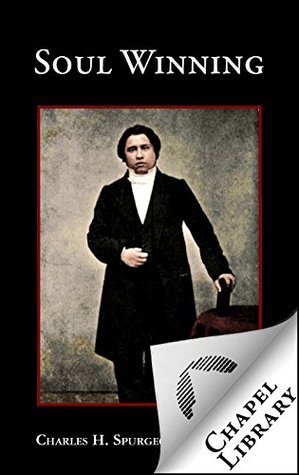
Charles H. Spurgeon. Soul Winning. Pensacola, FL: Chapel Library, July 1st, 2015. 16 pp.
This is an adaptation from an 1869 sermon by the famous preacher Charles Spurgeon. Spurgeon’s message is based upon Proverbs 11:30 which in the King James says “He that winneth souls is wise.” This booklet focuses on Christians evangelizing the lost. Spurgeon explains the term winning as understood in different context and lays out the reason why it is wise to engage in “soul winning.” I enjoyed reading this because it wasn’t addressed primarily towards Pastors but towards all the members of the church. He also gave practical suggestions on reaching the lost which I appreciated very much. Evangelism isn’t just only done on non-Sundays; he even talked about reaching people who are visiting the church in which one should talk to strangers about the sermon after the service is over. Again very practical and…
View original post 78 more words
Quote of the day – The Baptist Confession of Faith of 1689
Creeds and confessions have developed now and again throughout the history of the church, in order to Biblically articulate what we believe, Many, including the earliest ones in the church, were developed due to heresies and bad doctrine having arisen. They do not carry with them the same sort of Divine inspiration as the text of scripture, but when soundly biblical are very profitable for the well being of the church and its members. The 1689 Baptist Confession of Faith is one such Confession. Thanks to an online friend, here is a link to a portion of that Confession. There is a link to the entire document in the article itself. – Dan C.
. CONFESSION OF FAITH Put forth by the ELDERS and BRETHREN Of many CONGREGATIONS OF Christians (baptized upon Profession of their faith) in London and the Country . Chapter 2: Of God and of the H…
Source: Quote of the day – The Baptist Confession of Faith of 1689
Are NON-denominational churches really denominations unto themselves?
Let’s start with a definition from the Oxford Dictionary:
de·nom·i·na·tion
NOUN
1. a recognized autonomous branch of the Christian Church. synonyms: religious group · sect cult · movement · body · branch ·
2. the face value of a banknote, coin, or postage stamp: “a hundred dollars or so, in small denominations” synonyms: value · unit · size
3. Formal: a name or designation, especially one serving to classify a set of things
Questions:
1. Are non-denominational churches autonomous? Are they recognized?
2. They are not a bank note.
3. Does ‘non-denominational’ classify a ‘set’ of things (churches)?
Sounds rather silly, does it not? As well it might. Nondenominational churches tend to be autonomous, but so do churches within denominations, such as some independent Baptist churches. There is also ‘brand’ recognition, as a particular ‘set’ of churches.
My friend Ed would probably laugh at that, since he wears the ‘nondenominational’ badge quite proudly. And after all, isn’t it good to take a firm stand on something? I guess that depends. Should we stand on shaky ground? To answer that let’s look at what one nondenominational churches say about itself.
There is one particular nondenominational online organization called ‘The Interactive Bible’ (www.bible.ca) that just might be Ed’s church. The site uses ‘we’ a lot and so does Ed. Many of what is taught on site could have been written by my friend Ed.
This nondenominational church has a lot to say about itself at their ‘About Us’ page concerning their view of the Bible, way of life, doctrine, worship, organization, and how they are different than modern churches.
The last section, how they are different than modern churches, concludes with an invitation of sorts:
“You too can be just a Christian and serve God without belonging to any denomination bound by no (sic) denominational laws or obligations. If such freedom appeals to you, please visit us!”
Bad grammar aside (they should have left out “no” in front of denominational), they are offering “freedom” from human authority outside of yourself and your own interpretation of the Bible, while claiming to be a true New Testament church. I guess they don’t read the portions of the New Testament concerning church structure, organization, leadership, and things like church discipline.
What I find most interesting is all of the doctrine taught at some of their Web pages. Much is taught there, some of which will be discussed on another post or two. For now. . .
Yes, Virginia, NON-denominational churches ARE denominations unto themselves!
More About ‘Saving’ Faith and Its Origin
Needless to say, my friend Ed didn’t appreciate John Bunyan’s thoughts concerning faith that saves and faith that does not. After all, we don’t need other men (pastors / teachers /) to tell us what to believe. We can just read our Bibles and perfectly figure it all out for ourselves Aside from the naiveté of that sentiment, I would remind us that God gave pastors and teachers as gifts to the church. If we don’t need them, why did God give them to us?
But I digress. Here are some of Dan’s thoughts concerning ‘saving’ faith.
The point that there is a sort of faith that cannot save and a kind of faith that does result in salvation. Concerning faith concerning God, we can believe (have faith in / trust) certain things about God and Christ and yet never be convicted of our sin, repent, and believe in God’s provision for our salvation from our sin. That’s the short version of a much longer article. The concept of two kinds of faith isn’t rocket science. I might trust in the ability of. Boeing 747 to fly, but it’s another matter to board the plane, confident that it will get me safely to Los Angeles from my home in Colorado.
The logical next question might concern the origin of ‘saving’ faith. Are we born with it and just need to ‘decide for Christ’ and be saved? Or, is the power to ‘savingly’ believe originate outside of ourselves?
IF (note the hypothetical here) the very ability to savingly believe comes from outside of ourselves, is a completely unearned gift (grace), can our faith not also be considered a gift?
The final point for the moment is a passage from John, Chapter 3. “Unless a man is born again (regenerated / born from above) he cannot see the kingdom of God.” (John 3:3)
The word ‘see’ doesn’t just mean ‘make it to heaven’. It means ‘perceive, notice, discern, discover’. In other words, ‘regeneration’ must precede ‘saving’ faith. And that is the ‘gift’ at the very center of this discussion. God regenerates and people ‘see’ and believe. They are regenerated and presented as ‘love gifts’ from the Father to the Son. And. . .
“All that the Father gives me will come to me, and whoever comes to me I will never cast out.” Words of Jesus (John 6:37)
“ For by grace you have been saved through faith. And this is not your own doing; it is the gift of God,
not a result of works, so that no one may boast. “ (Eph 2:8-9)
Yes, it is our responsibility to believe. You could even say our believing is our doing, while our doing is still of God. Salvation is ALL of grace, even our believing.
I somehow doubt that Ed will see things any differently, but perhaps those of you who found John Bunyan a bit difficult will find the thoughts of an old soldier more easily understood.
🙂
Concerning ‘Saving’ Faith and Works
The following is for my friend Ed, who has told me and written on his blog that there is no such thing as saving faith. They are not my words, but those of John Bunyan, most known for the greatest Christian allegory ever written, Pilgrims Progress.
Saving Faith
by John Bunyan
When I write of justification before God, from the dreadful curse of the law, then I must speak of nothing but grace, Christ, the promise, and faith. But when I speak of our justification before men, then I must join to these, good works. For grace, Christ and faith, are things invisible, and so not to be seen by another, otherwise than through a life that becomes so blessed a gospel as has declared unto us the remission of our sins for the sake of Jesus Christ. He then that would have forgiveness of sins, and so be delivered from the curse of God, must believe in the righteousness and blood of Christ: but he that would show to his neighbours that he hath truly received this mercy of God, must do it by good works; for all things else, to them, is but talk. As for example; a tree is known to be what it is, namely, whether of this or that kind, by its fruit. A tree, it is without fruit; but so long as it so abideth, there is ministered occasion to doubt what manner of tree it is.
A professor is a professor, though he hath no good works; but that, as such, he is truly godly, he is ‘foolish’ that so concludeth (Matt. 7:17, 18; Jam. 2:18). Not that works make a man good; for the fruit maketh not a good tree; it is the principle, that is, Faith, that makes a man good, and his works that show him to be so (Matt. 7:16; Luke 6:44).
What then? Why, all professors that have not good works flowing from their faith are naught; are bramble bushes; are ‘nigh unto cursing, whose end is to be burned,’ (Heb. 6:8). For professors by their, fruitlessness declare, that they are not of the planting of God; not the wheat, but tares, and ‘children of the wicked one.’ (Matt. 13:37, 38).
Not that Faith needeth good works as a help to justification before God. For in this matter, Faith will be ignorant of all good works, except those done by the person of Christ. Here then the good man ‘worketh not, but believeth,’ (Rom. 5:3, 4, 5) for he is not now to carry to God, but to receive at his hand the matter of his justification by faith. Nor is the matter of his justification before God aught else but the good deeds of another man, namely, Christ Jesus. But is there, therefore, no need at all of good works, because a man is justified before God without them? or can that be called a justifying faith, that has not for its fruit, good works? (Job 22:2, 3; Jam. 2:20, 26). Verily good works are necessary, though God need them not, nor is that faith, as, to justification with God, worth a rush, that abideth alone, or without them.
There is therefore a twofold faith of Christ in the world, and as to the notion of justifying righteousness, they both concur and agree, but as to the manner of application, there they vastly differ.
The one, namely, ‘the non-saving faith, standeth in speculation and naked knowledge of Christ, and so abideth idle: but the other truly sees, and receives him, and so becometh fruitful.’ (John 1:12 ; Heb.. 11:13; Rom. 10:16). And hence the true justifying faith, is said to receive, to embrace, to obey the Son of God, as tendered in the gospel: by which expressions is showed both the nature of justifying faith, in its actings in point of justification, and also the cause of its being full of good works in the world. A gift is not made mine by my seeing it, or because I know the nature of the thing so given: but then it is mine if I receive and embrace it; yea, and as to the point in hand, if I yield myself up to stand and fall by it. Now he that shall, not only see, but receive, not only know, but embrace the Son of God, to be justified by him, cannot but bring forth good works; because Christ who is now received and embraced by faith, leavens and seasons the spirit of this sinner (through his faith) to the making of him capable so to do. (Acts 15:9; Chron. 26:18, 19; Heb. 11:11). Faith made Sarah receive strength to conceive seed, and we are sanctified through faith, which is in Christ. For faith hath joined Christ and the soul together, and being so joined, the soul is one spirit with him: not essentially; but in agreement, and oneness of design. Besides, when Christ is truly received and embraced to the justifying of the sinner, in that man’s heart he dwells by his word and Spirit, through the same faith also. Now Christ, by his Spirit and Word, must needs season the soul he thus dwells in. So then the soul being seasoned, it seasoneth the body; and body and soul, season the life and conversation.
We know it is not the seeing, but taking of a potion, that maketh it work as it should; nor is the blood of Christ a purge to this or that conscience, except received by faith (Heb. 9:14). Shall that then be counted right believing in Christ unto justification, that amounts to no more than to an idle speculation, or naked knowledge of him? Shall that knowledge of him, I say, be counted such, as only causes the soul to behold, but moveth it not to good works? No, verily (2 Cor. 3:18). For the true beholding of Jesus to justification and life, changes from glory to glory. Nor can that man that hath so believed, as that by his faith he hath received and embraced Christ for life before God, be destitute of good works. For, as I said, the Word and Spirit come also by this faith, and dwell in the heart and conscience. Now, shall a soul where the Word and Spirit of Christ dwell be a soul without good works? Yea, shall a soul that his received the love, the mercy, the kindliess, grace and salvation of God through the sorrows, tears, groans, cross and cruel death of Christ, be yet a fruitless tree!—God forbid. The faith is as the salt which the prophet cast into the spring of bitter water; it makes the soul good and serviceable forever (2 Kings 2:19-22).
If the receiving of a temporal gift naturally tends to making us move our cap and knee, and binds us to be the servant of the giver, shall we think that faith will leave him who by it has received Christ, to be as unconcerned as a stock or stone; or that its utmost excellency is to provoke the soul to a lip-labor, and to give Christ a few fair words for his pains and grace, and so wrap up the business? No, no; the love of Christ constraineth us thus to judge that it is but reasonable, since he gave his all for us, that we should give our all for him (2 Cor. 5:14).
Let no man then deceive himself, (as he may and will if he takes not heed) with true notions, but examine himself concerning his faith, first; Whether he hath any? and if some, Whether of that kind that will turn to account in the day when God shall judge the world.
I told you before that there is a twofold faith, and now I will tell you that there are two sorts of good works; and a man may be shrewdly guessed at with reference to his faith, even by the work that he chooseth to be conversant in. There are works that cost nothing, and works that are chargeable. And observe it the unsound faith will choose to itself the most easy works it can find. For example, there are reading, praying, hearing of sermons, baptism, breaking of bread, church fellowship, preaching, and the like; and there be mortification of lusts, charity, simplicity, openheartedness, with a liberal hand to the poor, and their like also. Now the unsound faith picks and chooses, and takes and leaves, but the true faith does not so.
There are a great many professors now that have nothing to distinguish them from the worst of men, but their praying, reading, hearing of sermons, baptism, church-fellowship, and breaking of bread. Separate them but from these, and every where else they are as black as others, even in their whole life and conversation. Thus they have chosen to them the most easy things to do them; but love not to be conscientiously found in the practice of the other; a certain sign their faith is naught, and that these things, even the things they are conversant in, are things attended to of them, not for the ends for which God has appointed them, but to beguile and undo themselves withal.
Praying, hearing, reading; for what are these things ordained, but that we might by the godly use of them, attain to more of the knowledge of God, and be strengthened by his grace to serve him better according to his moral law? Baptism, fellowship, and the Lord’s supper, are ordained for these ends also. But there is a vast difference between using these things, and using them for these ends. A man may pray, yea pray for such things, had he them, as would make him better in morals, without desire to be better in morals, or love to the things he prays for. A man may read and hear, not to learn to do, though to know; yea he may be dead to doing moral goodness, and yet be great for reading and hearing all his days. The people then among all professors that are zealous of good works are the peculiar ones to Christ (Tit. 2:14). What has a man done that is baptized, if he pursues not the ends for which that appointment was ordained? The like I say of fellowship, of breaking of bread, &c. For all these things we should use to support our faith, to mortify the flesh, and strengthen us to walk in newness of life by the rule of the moral law. Nor can that man be esteemed holy, whose life is tainted with immoralities, let him be what he can in all things else. I am of that man’s mind, as to practical righteousness, who said to Christ, upon this very question, ‘Well, master, thou hast said the truth; for to love the Lord our God with all the heart, and with all the understanding, and with all the soul, and with all the strength; and to love his neighbour as himself, is more than all whole burnt-offerings and sacrifices’ (Mark. 12:28, 33). To love my neighbour as myself, to do as I would be done unto, this is the law and the prophets. And he that is altogether a stranger to these things, how dwelleth the love of God in him? or how will he manifest to another, that his faith will save him?
Satan is afraid that men sbould hear of justification by Christ, lest they should embrace it. But yet if he can prevail with them to keep fingers off, though they do hear and look on, and practise lesser things, he can the better bear it; yea he will labor to make such professors bold to conclude they shall by that kind of faith enjoy him, though by that they cannot embrace him, nor lay hold of him. For he knows that how far soever a man engages in a profession of Christ with a faith that looks on, but cannot receive nor embrace him, that faith will leave him to nothing but mistakes and disappointments at last.
The gospel comes to some in word only, and the faith of such stands but in a verbal sound: but the Apostle was resolved not to know or take notice of such a faith (1 Thess. 1:4, 5; 1 Cor. 4:18, 19, 20). ‘For the kingdom of God (saith he) is not in word, but in power.’ He whose faith stands only in saying, ‘believe,’ has his works in bare words also, and as virtual is the one as the other, and both insignificant enough. ‘If a brother or a sister be naked, or destitute of daily food, and one of you say unto them ‘Depart in peace, be you warmed and filled;’ notwithstanding you give them not those things which are needful to the body, what doth it profit? Even so faith, if it hath not works, is dead, being alone’ (Jam. 2:16, 17). This faith, therefore, Satan can allow, because it is somewhat of kin to his own (Ver. 19).
Besides, what greater contempt can be cast upon Christ than is cast upon him by such wordy professors? These are the men that by practice say, ‘the gospel is but an empty sound.’ Yea, the more they profess, the louder they proclaim it thus to be, to his disgrace; while they, notwithstanding their profession of faith, hold and maintain their league with the devil and sin.
The Son of God was manifest that he might destroy the works of the devil; but these men profess his faith, and yet keep these works alive in the world (1 John 3). Shall these pass for such as believe to the saving of the soul? For a man to be content with this kind of faith, and to look to go to salvation by it, what to God is a greater provocation? The devil laugheth here, for he knows he has not lost his vassal by such a faith as this; but that rather he hath made use of the gospel, that glorious word of life, to secure his captive, through his presumption of the right faith, the faster in his shackles.
It is marvellous to me to see sin so high amidst the swarms of professors that are found in every corner of this land. Nor can any other reason be given for it, but because the gospel has lost its wonted virtue, or because professors want faith therein. But do you think it it because of the first? No, the word of our God, shall stand in its strength for ever. The faith of such, therefore, is not right. They have for shields of gold, made themselves shields of brass; or instead of the primitive faith, which was of the operation of God, they have got to themselves a faith that stands by the power, and in the wisdom of man (2 Chron. 12:9, 10; Col. 2:12; 1 Cor. 2:4, 5).
__________
The article can be found online here.
Quote of the day – James Montgomery Boice
. “In any logical presentation of doctrine, the wrath of God is the first truth we have to learn about him. Why didn’t Paul begin by saying that the love of God is revealed from heaven?…
Video: Scripture and the LGBT agenda by Dr James White
If you have been noticing since last year’s Supreme Court decision concerning gay marriage, the LGBT community has proceeded to go from bad to worst. Certain quarters of that movement have b…
Source: Video: Scripture and the LGBT agenda by Dr James White
The Bible and Hollywood
I firmly believe that the Bible was not intended to ‘entertain’ the Christian consumer, much less the lost millions who need a Savior from their sin. Nevertheless, Hollywood has discovered that there are untapped millions of dollars that are ripe for the taking from an all too willing ‘Christian’ audience eager and conditioned to think that God is all about satisfying our desires and temporal cravings.
There was probably a time when this was not the case, a time when going to church meant entering the house of a great big God who rightly deserves honor, worship, awe, respect, and fear. We sang God honoring hymns full of rich theology that spoke of what a mighty and merciful God had done on behalf of spiritually dead sinners. But I digress.
The change from humbly worshipping God in reverence and awe and listening to a precher actually exposit Scripture has been quite gradual. Over 100 years ago Charles Haddon preached a sermon titled “Feeding Sheep or Amusing Goats”. You can find it online. I’m not going to get into a long dissertation concerning the various stages of ‘The Downgrade’ (another Spurgeonism), but I challenge you to investigate the situation on yourmown.
Back to Hollywood and the Bible. What prompted this post was yet another ‘hotly anticipated’ Bible based movie; a Sundance production about Jesus and Satan in the desert.
We seem to have had a rash of Biblical epics of questionable Biblical accuracy in the last several years, interspersed with outright heresey (think tourist trips,to heaven).
Sadly (gross understatement), professing believers from all across the Christian spectrum flock to these movies, sometimes by the bus load, sponsored by their ‘churches’, whose ‘leaders’ have been the ones who ‘conditioned’ them to go ‘aflocking’.
Why balk at the idea of Hollywood entertaining usmwhen we have ditched sound doctrine and the reading and peaching of the Bible for the narcisistic eisegesis of todays ‘relevant’ faux pastor who mostly tells stories about himself (and ‘herself’ where Biblical roles for the life,ofmthemchurchmare,discarded)’ and twists/mangles the Holy Writ for his/(her) personal gain and sometimes great fame!
Of course the aforementioned narcigesis and scripture mangling really works well because it’s all designed to tickle itching ears and get folks lusting after their ‘dream destinies’. It used to be just about their ‘best lives now’, but catchy phrases wear out don’t ya know and periodically need to be kicked up a notch to keep the ‘tithes’ pouring in to pay for the big stage lighting, smoke machines, professional musicians, etc., ad nauseum needed to crank up the kids and get them ‘feeling’ really excited and ‘thinking’ The Glory of God is filling the place.
So why am I suprised that so much theologically vacuous supposedly ‘Christian’ entertainment is hitting the big screen? Well, I have news for you……I’m NOT surprised. I just figured it out with some degree of accuracy.
And BTW, I’m not preaching. Articulating my thoughts is quite helpful.
🙂
“So, what do you think about Todd Friel’s questions to ask someone who says they are a Christian?”
That title is in quotes because it was taken directly from a blog post over at the Spiritual Sounding Board and I wouldn’t want the host over there to think I had stolen something. The rest of the blog post was a statement :
“Todd Friel wants you to question whether or not a person is really a Christian.”
A graphic taken from Todd Friel’s Web site:

and the following:
“Julie Anne (SSB Host) posted this picture on the SSB Facebook page and wonders, “Should we be testing people when they tell us they are Christians?” What do you think?”
“As far as Kathi (post author?) is concerned, I cannot get past the name “Wretched.” To me it suggests guilt and shame. I’ve watched a few of Friel’s videos and I get that impression from him as well. If you don’t have the right doctrine, you are wretched.”
Not only is the above comment concerning Todd Friel and his ministry a complete fabrication, the majority of the 71 comments that follow are equally vacuous and frankly ,really embarrassing in terms of intellectual honesty. They mostly attack Todd Friel from the foot of a vary large straw man that is sure that the questions are direct challenges to the professed salvation of the Christian to whom they are addressed. I believe all three to be very reasonable questions for a couple of reasons.
First of all, not everyone who ‘professes’ Christ ‘possesses’ Christ. The preciousness of Christ to the professing Christian is an indicator of the depth of his or her faith . Spending time in personal Bible reading and study also indicates the depth of one’s faith, as well as being a genuine disciple who wants to learn from his/her master teacher.
None of the above questions would bother me. In fact, I would welcome them as opportunities to share with another believer what I believe and why I believe it, and at the same time grow closer to a brother. On the other hand, if I didn’t know what being ‘born again’ really meant, realized that Jesus wasn’t really very precious to me, or I rarely spent time alone with my Bible I would be offended, much like many of the commenters at the original blog at SSB.
Also I can envision asking all three questions from a heart burdened with the knowledge that many, many young people these days are coming to Christ for all of the wrong reasons and have been deceived into believing they are saved when they are far from it. They come to Christ because of the ‘worldly attractiveness’ of a local ‘seeker friendly’ church, from ‘’preachers in torn blue jeans and t-shirts to ‘worship ‘ that more closely resembles a rock concert , to being sold a bill of goods promising their ‘best life now’ or achieving their special purpose and/or ‘dream destiny’.
So yes, asking intuitive questions of a professing Christian is not necessarily bad, and in fact serves a couple of really good purposes, none of which are directly ‘challenging’ someone’s claim to be a Christian.
I only wish I had been able to comment at SSB. I seem to have been banned from SSB for quite some time, after I posted favorable comments concerning things I am supposed to dislike (Calvinism, John MacArthur, complementarianism, and a few others). At least I don’t get a ‘Comment’ option when I visit, which is actually rarely. It’s only because something from SSB popped up in my inbox that I ended up there early this morning.
At any rate, I did take the opportunity to answer the question about Todd Friel’s questions, just not at SSB (what spirit?), but here at The Battle Cry.
 The Battle Cry