by Eric Davis at The Cripplegate
 “But I’m telling you, I saw it! I was there and it really happened.”
Often miracle claims are brought before us. Fairly regularly, I hear of things like local, impromptu, evangelistic, healing events during which individuals were approached at random, prayed over, and healed of some various physical ailment. The claim might be followed by an individual testifying sincerely that it happened or a video documenting the healing miracle as undeniable proof that the pain departed, the crutches dropped, or the oppression lifted. Excitement erupts. God is at work. The Spirit is moving. It’s a God thing. How could it not be?
But is it? How should we respond to these things? After all, well-meaning and sincere professing Christians saw it and documented it, so how could it be denied? Why wouldn’t the Holy Spirit want to do that? And doesn’t that mean that the Spirit wants to use us in such ways?
It’s astonishing how flippantly we Christians sometimes claim miracles. Scripture beckons us to exercise great caution here. In this order, here is how I would generally respond to a friend’s miracle claim:
1. It’s probably best to avoid denying the individual’s experience.
Usually, it’s more profitable to avoid playing the “that-didn’t-happen” card. Granted, it may not have. But this can quickly deteriorate into a, “No it didn’t!” “Yes it did!” ping-pong match. And, something very well may have happened (see #7, 8, and 9 below).
Instead of bringing our negation to bear on their experience, we owe it to the individual to bring the word of God to bear. That way, the authority of inerrant Scripture, rather than our “Nuh-uhh,” becomes the issue.
Further, it’s helpful to ask, “What do you mean by a miracle?” Child-birth, for example, though remarkable, is not a miracle. A miracle is when God works contrary to his established laws of creation (e.g. raising the dead).
2. God can do miracles and it’s ok to pray for them.
 And praise him that he has, can, and does. Our God sits in the heavens and does whatever he pleases. It has pleased him to divide seas and rivers, rewind days, and cease storms. And though nature miracles have been, for the most part, limited to a few small clusters of history (Moses and Joshua, Elijah and Elisha, and Christ and the apostles), spiritual miracles have not been. The greatest miracle is turning depraved spiritual corpses into regenerate children of God.
And it’s ok to pray for miracles. Whether it be a debilitating disease, traumatic accident, or salvation, it’s loving to pray for miracles in these kinds of situations.
But the argument typically goes beyond this: “So you’re saying that God can’t/won’t do miracles?!” The case seems closed because we never want to say that God cannot do something. But the discussion is broader than that. The existence of Scripture as God’s authoritative word has massive implications on proper understanding of life’s experiences, especially the miraculous. Speaking of which…
3. When it comes to miracles, or any experience, our experiences and perceptions must not be our interpretive authority.
Our interpretive authority is that criteria by which we interpret experiences and perceptions so as to make absolute conclusions about them. Generally, there exist two interpretive authorities; God’s word and everything else (e.g. human reasoning, a textbook, famous philosophers, majority opinion, false religion). For example, if I interpret every bad dream I have as Satan attacking me because a friend told me it was so, my interpretive authority is that friend, not Scripture.
In each stream of life, we exercise some interpretive authority. When it comes to experiencing and perceiving miracles, Scripture is to be our interpretive authority. Why? Because of what Scripture is; God-breathed revelation (2 Tim. 3:16-17, 2 Pet. 1:20-21). The repercussions of what Scripture is are major. Since it is God-breathed, it is inerrant, authoritative, and sufficient as our interpretive authority (Ps. 12:6, 119:89; Prov. 30:5; John 17:17; Titus 1:2; 2 Pet. 1:3).
Much of this boils down to, “How do we know what we know?” It’s a question of knowledge and authority. And I wish that more of my miracle-claiming friends would dwell longer on this matter because this is the heart of the issue. Far more than being about, “I saw it!” or, “Come on, don’t you believe God can do miracles?!”, this is about how we know what we know.
Since Scripture is the word of God, it is authoritative in determining what we know. It overrides everything as our interpretive authority. Which is to say, God’s interpretation overrides man’s interpretation, no matter how intense the experience was. So, before confidently attributing a miracle to a thing that God seems to be doing, we need be prepared to submit to Scripture.
 Consider an example. Imagine that you unexpectedly lose your job and are short $1500 for a month’s budget. So, you and three friends fast for one day. At the end of the day, you pray together for an hour on top of a local mountain. The next day, an anonymous check shows up for $1500. If we used experience as our interpretive authority, we would conclude that fasting with three friends for a day and praying for an hour on a mountain is the means to get big prayers answered. If we used Scripture as our interpretive authority, we would find no such formula. We would find that God is good, sovereign over all things, and does as he pleases. Also, we would find individuals sometimes failing to receive what they ask for in prayer (e.g. 2 Cor. 12:8-9). Would this mean that we cease fasting and praying? No, because Scripture contains commands for both. More generally, our correlations must go no further than what Scripture permits.
Even the miracle-working apostle Peter took this route. In 2 Peter 1:16-21, he recalls the incredible experience of Christ’s transfiguration. But he concludes that Scripture is the “more sure” authority and source of knowledge (2 Pet. 1:19). In effect, Peter is saying, “Look, the Bible, rightly understood, is to be my absolute guide in determining what I should conclude about my experiences.” By application, then, Peter would say to us, “You and others seem to have experienced some healings? Ok, I have some miracle experience. But, before you celebrate, ‘These are real miracles! And the Spirit is working through us!’ go to the thing that can tell you exactly how to understand your experience; the Bible. Because there is more going on here than you might think.” And Peter might say, “Are you more interested in submitting to everything that the Bible has to say about miracles or being able to believe and tell others that a miracle happened?”
Scripture is to form my conclusions more than my opinions, desires, and even experiences. And if not, then, whether intentionally or not, I am saying, “Well, God, yes, you have spoken about this issue by your Spirit. But, I do not want to take into consideration everything you’ve said. So, I am going to hold to my biased, poorly informed view on this matter and call it a ‘God thing’ anyways.”
But this will not do. We are prohibited from interpreting miracles in a way contrary to Scripture.
And if it is determined that a miracle did occur, praise God! Give him glory. And stay focused on what Scripture commands, which does not include the chasing of, or fixation upon, miracles.
4. No one has the spiritual gift of miracles and healing as defined in Scripture.
 This not to say that miracles never happen through people (see #’s 7, 8, and 9 below). But it is to say that no one possesses the gift of miracles and healing as it is described in the NT. It’s at this point that many of my charismatic friends walk away from the conversation. But I would urge them to honestly study the issue from Scripture.
When the first century closed, the spiritual concrete had been poured for the footers and foundation of the church (Eph. 2:20). All that Jesus did through the apostles was poured into the forms upon which our church rests today. The apostolic gifts, the miracles, the ecclesiological pioneering, the inspiration of the canon—it all rests in the foundation giving the stability of the church for some twenty centuries so far.
And on a lesser note, if individuals did possess the NT gift of healing and miracles, then they should be flown every day to a different ICU around the world.
5. Miracle claims should be verified.
If actual physiological miracle-healings are occurring, then let’s get medical professionals involved. Let’s have them pull up the records, confirm the previous ailment, and verify physiologically that the healing occurred. Go get the X-Ray, MRI, CT, or exam from your regular GP. Have them compare your last physical and verify that the “miracle” was indeed so; that it is not regressing or a temporary pain relief that is coming back or some placebo effect. That way, they can see it for themselves, and, more importantly, here about the Jesus who propitiated the wrath of God due their sin in order to give them the miracle of the new birth. But of course, if they will not believe the more-sure Scriptures, then neither will a miracle convince them (cf. Luke 16:31).
Claims of miracles ought to be verified so that glory can be given to God.
6. Biblical miracles had distinct characteristics.
Healing miracles in Scripture were profound displays of God’s power. We could define a biblical healing as God’s power demonstrated through a human mediator with the result that a specific physiological ailment was instantaneously, completely, and undeniably healed. They were not gradual. No follow-up healing appointments were required. And they typically involved a major display of power. Quadriplegics walked. The blind saw. The dead were raised
When Peter did miracles (Acts 3:8, 9:40), he was not shooing away aches, adding an inch to a leg, or lifting emotional clouds. Nor did he have to repeat incantations in the name of Jesus with increasing force and volume to warm up the Holy Spirit. With a word, God repaired spinal cords, neurons, atrophied limbs, and death. Thus, we should compare our miracle claims to those of Scripture.
7. Miracles can be performed by those who worship false gods.
The presence of legitimate miracles is no sign that it is a God thing. In fact, it could be a Satan thing.
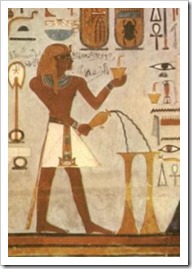 For example, prior to Israel’s exodus, the pagan Egyptian magicians were able to perform three of the miracles. They turned their staffs into snakes (Exod. 7:11-12), changed the Nile into blood (Exod. 7:22), and made frogs come up on the land (Exod. 8:7). And, during the Tribulation, Satan and his associates will perform various signs and wonders (cf. Rev. 13:3, 13).
I’ve heard miracle claims from both sides of redemption. For every one miraculous thing that someone’s uncle’s cousin’s co-worker’s son’s friend’s missionary friend whose name he can’t remember saw in an unverifiable African village in the name of God, there are three miraculous things that a close friend experienced in a verifiable pagan festival in our town in the name of Gaia. I’ve heard of many miracles from professing believers. And I’ve heard many from professing unbelievers.
I don’t know if these claims are authentic. But I do know this: Satan is an angel of light. He’s capable of doing powerful things through pagans. Unbelievers are, whether knowingly or not, servants of Satan. A miracle is not an automatic sign that God’s favor is among us.
8. God has used miracles to test individuals.
At times in history, God has permitted miracles, not to bless, but test. Israel was warned accordingly:
“If a prophet or a dreamer of dreams arises among you and gives you a sign or a wonder, and the sign or wonder that he tells you comes to pass, and if he says, ‘Let us go after other gods,’ which you have not known, ‘and let us serve them,’ you shall not listen to the words of that prophet or that dreamer of dreams. For the Lord your God is testing you, to know whether you love the Lord your God with all your heart and with all your soul. You shall walk after the Lord your God and fear him and keep his commandments and obey his voice, and you shall serve him and hold fast to him. But that prophet or that dreamer of dreams shall be put to death, because he has taught rebellion against the Lord your God…” (Deut. 13:1-5).
In 1 Kings 22, God permitted a “deceiving spirit” to enter some 400 prophets to give false counsel.
And Micaiah said, “Therefore hear the word of the Lord: I saw the Lord sitting on his throne, and all the host of heaven standing beside him on his right hand and on his left; and the Lord said, ‘Who will entice Ahab, that he may go up and fall at Ramoth-gilead?’ And one said one thing, and another said another. Then a spirit came forward and stood before the Lord, saying, ‘I will entice him.’ And the Lord said to him, ‘By what means?’ And he said, ‘I will go out, and will be a lying spirit in the mouth of all his prophets.’ And he said, ‘You are to entice him, and you shall succeed; go out and do so.’ Now therefore behold, the Lord has put a lying spirit in the mouth of all these your prophets; the Lord has declared disaster for you” (1 Kings 22:19-23).
Though not a miracle per se, the incident demonstrates that God has permitted teachers who profess faith in him to be led astray by satanic influence for retributive reasons. In this case, 400 supposed teachers of God’s word were caused to falsely prophesy. All of this suggests that we should exercise restraint with miracle (and prophecy) claims.
9. Miracles in the name of Christ by professing Christians are no sign of the presence of salvation or true Christian worship.
One of the most sobering passages in Scripture comes from Matthew 7.
“Not everyone who says to Me, ‘Lord, Lord,’ will enter the kingdom of heaven, but he who does the will of My Father who is in heaven will enter. “Many will say to Me on that day, ‘Lord, Lord, did we not prophesy in Your name, and in Your name cast out demons, and in Your name perform many miracles?’ “And then I will declare to them, ‘I never knew you; depart from Me, you who practice lawlessness’” (Matt. 7:21-23).
According to Jesus, not few, but many people assume that they are going to heaven, but will be turned away in the judgment. These will be individuals who professed Christ as Lord and performed “many miracles” in his name. They assumed that they believed in Jesus. They approached people, commanded healings in the name of Jesus, and experienced apparent miracles. Those were the things they often looked to and counted on as God’s blessing and the presence of the Spirit. However, Jesus says there will be a large number of such individuals who are sent to hell.
10. True signs of the Holy Spirit have nothing to do with miraculous healings.
Much of this issue centers on widespread, erroneous pneumatology in our day. Evangelicalism has capriciously assigned works to the Holy Spirit which God does not. Thus, it behooves us to carefully study who the Spirit is and what he does.
Miracles can be performed by devout pagans and Satan. Many individuals performing miracles in the name of Jesus will be turned away by Christ in the judgment. Therefore, the presence of miracles is no evidence that the Holy Spirit is at work.
11. Miracles were not part of Christ’s commanded mission, nor considered evangelism.
Often healing-evangelism is excitedly recounted as, “We were able to encourage many people with God’s healing love!” along with a report of the various healings. But more importantly, did those with departed back pain hear that God is willing to divert their due, eternal pain if they mourn their sin and surrender in faith to the Lord Jesus Christ? In other words, did evangelism occur? Which is to say, did we really love them?
 In the NT, the concept and doing of evangelism always has to do with preaching the content of Christ crucified in the place of sinful man that he might repent and be reconciled to God under the lordship of Christ. If our evangelism merely consists of telling people that God wants to heal and bless them, then we have fallen short of evangelism.
Proper understanding of miracle claims requires God’s word as our interpretive authority. A brief consideration of Scripture’s teaching on miracles demands we exercise caution with respect to their claims. We must interpret miracles in light of the many things which Scripture has to say about the matter. The miracle that we can say is the work of God with absolute certainty is salvation. Other than that, there are a variety of possibilities which must be carefully considered before we cry, “Miracle!”

 The Battle Cry