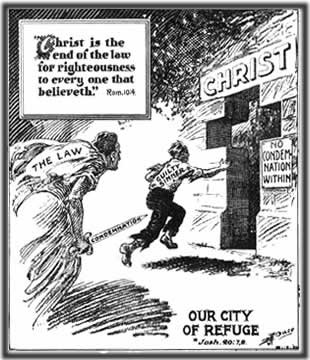
The Wrath of God By Arthur W. Pink – Part 3

“Because there is wrath, beware lest He take thee away with His stroke: then a great ransom cannot deliver thee” – Job. 36:18

One chief reason why God wrote the Bible was to warn the sinner of the awful consequences of sin, and to bid him flee from the wrath to come. Our text is one of these warnings. There are many such scattered throughout the Bible. We mention one or two at random. “Be sure your sin will find you out” (Num. 32:23). “It is appointed unto men once to die, but after this the judgment” (Heb.9:27). “Except ye repent, ye shall all likewise perish” (Luke 13:5). “How shall we escape if we neglect so great salvation?” (Heb. 2:3).

III. An Utter Impossibility

“Because there is wrath, beware lest He take thee away with His stroke, then a great ransom cannot deliver thee.”

Every member of Adam’s race richly merits God’s Wrath. Our sins which have mounted up to heaven; our profitless lives, spent in selfish gratification with no regard for God’s glory; our indifference and carelessness respecting our soul’s future welfare; our repeated refusals to respond to the invitations of God’s grace, all cry aloud for judgment to descend upon us. But God’s Mercy has provided a “Ransom” – a “covering” for sin – Christ! Our text speaks of this ransom as “great” – great in its value, great in its scope, great in its effectiveness, great because it delivers from so great a death and secures so great salvation. But great as this “ransom” is, it avails nothing for those who ignore and reject it.

“Beware lest He take thee away with His stroke, then a great ransom cannot deliver thee.” If this ransom be despised then there is no possible escape for the sinner. If Christ be rejected there remains nought but wrath. How this text shatters the “Larger Hope”! How it repudiates any possibility of a “Second Chance” in the next world! How effectually it closes the door of hope against all who die in their sins! Let the stroke of God remove such from this world and “then a great ransom cannot deliver” them. There are other Scriptures equally explicit. “He that being often reproved hardeneth his neck, shall suddenly be destroyed and that without remedy” (Prov. 29:1). For the sinner there is no remedy, no deliverance, no hope whatever beyond the grave.

“Then a great ransom cannot deliver thee.” Why? Because it is appointed unto man once to die, and after that – not a second chance, not a further probation – but the judgment. Why? Because at death the sinner goes immediately to Hell (Luke 16 :22, 23) and there there is no preaching of the Gospel and no Holy Spirit to quicken into newness of life. Why? Because there awaits all such nothing but “the resurrection of damnation” (John 5:29) and the judgment of the Great White Throne. “Then a great ransom cannot deliver thee.” Why? Because repentance then will be too late. “Therefore will I also deal in fury: Mine eye shall not spare, neither will I have pity: and though they cry in Mine ears with a loud voice, yet will I not hear them! (Ezek. 8:18). Then a great ransom cannot deliver thee. Why? Because, Whosoever’s name was not found written in the book of life, was cast into the Lake of Fire – and a “lake” has no outlet!

Here then is a solemn warning against indifference, “Because there is wrath.” Here is a solemn warning against procrastination, “Beware lest He take thee away with His stroke.” Here is a solemn warning against hoping in another chance after death. “Then a great ransom cannot deliver thee.” Here is a powerful plea for accepting Christ NOW. “How shall we escape if we neglect so great salvation?” We shall not! There will be no escape! Then “Seek ye the Lord while He may be found: Call ye upon Him while He is near.”

“Believe on the Lord Jesus Christ and thou shalt be saved.”

The Wrath of God By Arthur W. Pink – Part 2

One chief reason why God wrote the Bible was to warn the sinner of the awful consequences of sin, and to bid him flee from the wrath to come. Our text is one of these warnings. There are many such scattered throughout the Bible. We mention one or two at random. “Be sure your sin will find you out” (Num. 32:23). “It is appointed unto men once to die, but after this the judgment” (Heb.9:27). “Except ye repent, ye shall all likewise perish” (Luke 13:5). “How shall we escape if we neglect so great salvation?” (Heb. 2:3).

II. A Solemn Warning

In view of this terrific fact, “Because there is wrath, beware lest He take thee away with His stroke.”

Sinners are even now threatened with God’s wrath, yea, they are by nature “children of wrath.” It is true that God’s wrath now slumbereth for a while, because this is the day of salvation. It is true that the time for the full and final and open manifestation of it has not yet arrived. It is true that sinners often defy God now with apparent impugnity, and because of this the wicked spread themselves like green bay trees. “Therefore they say unto God, Depart from us; for we desire not the knowledge of Thy ways. What is the Almighty, that we should serve Him, and what profit should we have if we pray unto Him?” (Job. 21:14, 15). Let all such heed the Divine warning, “Because there is wrath, BEWARE lest He take thee away with His stroke.” Sinner, be not deceived, God is not mocked. “O that they were wise, that they understood this, that they would consider their latter end! For their rock is not as our Rock, even our enemies themselves being judges. For their vine is of the vine of Sodom and of the fields of Gomorrah: their grapes are grapes of gall, their clusters are bitter. Their wine is the poison of dragons, and the cruel venom of asps. Is not this laid up in store with Me, and sealed up among My treasures? To Me belongeth vengeance and recompense; their foot shall slide in due time: for the day of their calamity is at hand, and the things that shall come upon them make haste” (Deut. 32:29, 31-35). The sinner is treading a path more slippery than ice, and unless he forsake it, in due time his foot shall slide. The bow of God’s wrath is already bent: the arrow of His vengeance is even now fitted to the string, and nothing but His infinite forebearance stays its release. My reader, the only reason why you have not already been cast into Hell fire is because it has been the good pleasure of the Most High to stay your doom. Flee then from the wrath to come while there is yet time.

“And thinketh thou this, O man that thou shalt escape the judgment of God?” (Rom. 2:3). Did Adam escape the judgment of God? Did Cain, did Pharaoh, did Achan, did Haman? The only reason God has not “taken thee away with His stroke” before this is because He endures with much long-suffering the vessels of wrath fitted to destruction.

The time of the sinner’s opportunity for fleeing from God’s wrath is exceedingly brief and limited. The sad and tragic thing is that so few realize it. The sinner sees little cause for alarm and fails to apprehend his imperative need of promptly accepting Christ as his Saviour. He imagines himself secure. He goes on in his sin, and because judgment against an evil work is not executed speedily he increases in his boldness against God. But God’s ways are different to ours. There is no need for God to be in a hurry – all eternity is at His disposal. When one man robs another, instantly the cry is raised, “Stop thief!” lest he should soon be out of reach. When a murder is committed the hounds of the law at once seek to track down the guilty One. A reward is offered lest he should succeed in escaping justice. But it is different with God. He is in no haste to execute judgment because He knows the sinner, cannot escape Him. It is impossible to flee out of His dominions! In due time every transgression and disobedience shall receive “a just recompense of reward.”

“Because there is wrath, beware lest He take thee away with His stroke.” The immediate reference is to death – the removal of the sinner from this earth to suffer the vengeance of eternal fire. Scripture furnishes many solemn examples of God’s stroke “suddenly cutting off sinners out of the land of the living.” “And Nadab and Abihu, the sons of Aaron, took either of them his censor and put fire therein, and put incense thereon, and offered strange fire before the Lord, which He commanded them not. And there went out fire from the Lord and devoured them, and they died before the Lord” (Lev. 10:1, 2). Again, “Belshazzar the king made a great feast to a thousand of his lords, and drank wine before the thousand. In the same hour came forth fingers of a man’s hand, and wrote over against the candlestick upon the plaster of the wall of the King’s palace. And this is the writing that was written, Thou art weighed in the balances, and art found wanting In that night was Belshazzar the King of the Chaldeans slain” (Dan. 5). Unsaved reader, you may be enjoying the health and strength of youth, yet, thou knowest not how soon the dread summons shall come, “This night shall thy soul be required of thee.” Turning now to the last clause of our text, we have mention of:

“Because there is wrath, beware lest He take thee away with His stroke: then a great ransom cannot deliver thee” – Job. 36:18

The Wrath of God By Arthur W. Pink – Part 1

“Because there is wrath, beware lest He take thee away with His stroke: then a great ransom cannot deliver thee” – Job. 36:18

This is one of the danger-signals which God has placed across the sinner’s pathway to Hell. At every turn of the Broad Road there are notice boards giving warning of the Destruction which lies ahead. The Sunday School teacher, the prayers of godly parents, the sermons of faithful preachers, the little Gospel tract, the warnings of conscience, the innate fear of death, the declarations of Holy ‘Writ, are so many obstacles which God places in the way of the sinner-so many barriers to the Lake of Fire.

One chief reason why God wrote the Bible was to warn the sinner of the awful consequences of sin, and to bid him flee from the wrath to come. Our text is one of these warnings. There are many such scattered throughout the Bible. We mention one or two at random. “Be sure your sin will find you out” (Num. 32:23). “It is appointed unto men once to die, but after this the judgment” (Heb.9:27). “Except ye repent, ye shall all likewise perish” (Luke 13:5). “How shall we escape if we neglect so great salvation?” (Heb. 2:3).

Our opening text naturally divides itself under three heads:

I. A Terrible Fact

“Because there is wrath.”

The reference here is to God’s Wrath. In regard to the wrath of God let us now contemplate four things:

1. The Fact of God’s Wrath

Men try to forget that there is such a thing as Divine wrath. The realization of it makes them uneasy, so they endeavor to banish all thought of it. At times they are terrified at the bare mention of God’s wrath, hence their anxiety to dismiss the subject from their minds. Others try to believe there is no such thing. They argue that God is loving and merciful, and therefore God’s Anger is merely a bogey with which to frighten naughty children. But how do we know that God is Loving and Merciful? The heathen do not believe that He is. Nor does Nature clearly and uniformly reveal the fact. The answer is, we know God to be such, because His Word so affirms. Yes, and the same Bible which tells of God’s Mercy speaks of His Wrath, and as a matter of fact, refers more frequently (much more so) to His anger than it does to His love.

The fact of God’s Wrath is clearly revealed in the Scriptures. “He that believeth on the Son hath everlasting life; but he that believeth not the Son shall not see life; but the wrath of God abideth on him” (John 3:36). “For the wrath of God is revealed from heaven against all ungodliness and unrighteousness of men” (Rom. 1:18). “Let no man deceive you with vain words: for because of these things cometh the wrath of God upon the children of disobedience” (Eph. 5:6). In these, and in other passages too numerous to mention, the fact of the Divine wrath is affirmed. And now let us consider:

2. The Necessity for God’s Wrath

Wrath is one of the Divine perfections. If God did not punish evildoers He would be a party to evil doing, He would compromise with wickedness, He would condone sin. Of necessity God is a God of Wrath. Consider an argument from the less to the greater. In the human sphere he who loves purity and chastity and has no wrath against impurity and unchastity is a moral leper. He who pities the poor and defenseless and has no wrath against the oppressor who crushes the weak and slays the defenseless, but loves them too, is a fiend. Divine wrath is Divine Holiness in activity. Because God is holy He hates sin, and because He hates sin His anger burns against the sinner. As it is written, “Thou hatest all workers of iniquity” (Psalm 5:5). And again, “God is angry with the. wicked every day” (Psalm 7:11). And now-

3. The Manifestation of God’s Wrath

God’s wrath is not an abstract quality. God’s wrath is not some thing that is inactive and inoperative. During Old Testament times God’s wrath was openly displayed against evil-doers, notably at the Flood; in the destruction of Sodom and Gormorrah with fire and brimstone from heaven; on the Egyptians and their haughty king, when He visited their land with plagues, slew their first born and destroyed their armies at the Red Sea; and in His dealings with the Nation of Israel, in selling them into the hands of their enemies, sending them into captivity and destroying their beloved city. God’s wrath against sin was publicly manifested at the Cross, when all His billows and waves passed over the head of the blessed Sin-Bearer, “I am afflicted and ready to die from My youth up: while I suffer Thy terrors I am distracted. Thy fierce wrath goeth over Me: Thy terrors have cut Me off” (Psalm 138:15, 16) was His solemn cry. And now:

4. The Greatness of God’s Wrath

Human wrath is oftentimes an awful thing. Scripture likens the wrath of a king to the roaring of a lion. When a man’s anger gets the better of him and he allows his fury to burst all restraints; it is a fearful thing to behold. Scripture also speaks of the Devil having “great wrath because he knoweth that he hath but a short time” (Rev. 12:12). But what shall be said of the Wrath of God? To what shall we liken it? How indescribably awful must be the unrestrained and unmixed wrath of such a Being! With what shall we compare the wrath of Him who made the heavens and the earth by the word of His power, who spake and it was done, who commanded and it stood fast! What must the wrath of Him be like who shaketh the earth out of its place and maketh the pillars thereof to tremble! What must the wrath of Him be like who rebuketh the sea and maketh it dry, who removeth the mountains out of their places and overturneth them in His anger! What must the wrath of Him be like whose majesty is so terrible that no fallen man can live in the sight of it, and in whose presence the very seraphim veil their faces!

Scripture speaks of God’s wrath “waxing hot” (Exod. 23:14). It declares “Great is the wrath of the Lord” (2 Kings 22:13). It makes mention of “The fierceness and wrath of Almighty God” (Rev. 19:15). It refers to God’s wrath coming upon sinners “to the uttermost” (I Thess. 2:16). Everything about God is unique. His power is omnipotent. His wisdom is a great deep. His love is unsearchable. His grace is unfathomable. His holiness is unapproachable. And like all His other perfections and attributes God’s wrath is incomparable, incomprehensible, infinite. It will be the Wrath of the Almighty! And what will the wrath of the Almighty be like when it comes upon sinners “to the uttermost”? And what power of resistance will poor, frail creatures of the dust have for enduring the full weight of it? None. None whatever. It will overwhelm them. It will utterly consume them. It will crush them more easily than we can a worm beneath our feet. It will sink them into the lowest depths of hopeless despair. It will be intolerable and unbearable. And yet it will have to be endured – consciously endured – endured day and night for ever and ever! May these unspeakably solemn thoughts prepare the unsaved reader for the next division of our text.

Essential Characteristics of Genuine Revival by Erroll Hulse

1. The sense of God’s nearness and especially an awareness of His holiness and majesty.

This first feature is vital. It consists of what is sometimes referred to as the ‘Shekinah glory’ of God’s presence. In Exodus 40:34 and II Chronicles 7:1 we read of the cloud of the Lord’s presence filling the tabernacle and the glory of the Lord filling the temple. There may not be any visible cloud, but in all true revival, the presence of the Lord is sensed in an awesome way.

This phenomenon is important because it focuses on the fact that revival is God coming down on mankind, with the result that they are humbled. There are religious movements in Africa which involve huge numbers of people who sing in a very impressive way. One can easily get the impression that a great revival is in progress. But it is always essential for us to use our minds and analyze what is going on (Rom. 12:1,2). Some consider such questioning to be sinful, but it is not. I do not mean that we should be censorious, rather, that we are duty-bound to test everything by Scripture.

When there is great emotion, we need to ask ourselves about the source of that feeling. Is it some- thing that has been worked up by manipulators who are experts in controlling crowds, or is it something which is from heaven? Is there a glorying in patriotism, or nationalism, or tribalism? Often religion is used as a veneer to cover what is, in essence, idolatry.

Many modern-day religious movements are characterized by a strong emphasis on the emotions. In mass meetings, there is sometimes a deliberate attempt made to bring great crowds to a high point of excitement and exuberance. This is emotion worked up from within, whereas revival is the Holy Spirit coming down. When He comes down, there is a prostrating effect; the awesomeness and glory of God’s holiness are felt in an overwhelming way.

We see this illustrated in the personal experience of the patriarch Jacob when the Lord met with him at Bethel. Jacob’s response was expressed in these words: ‘How awesome is this place! This is none other than the house of God; this is the gate of heaven’ (Gen. 28:17).

An awareness of the nearness of God is the chief characteristic of all true revivals (Ps. 80; Isa. 64; John 14:17; I Cor. 14:24,25).

At Pentecost everyone was filled with awe (Acts 2:43). A realization of the holiness of God is also one of the hallmarks of revival. The initial experience of fear of God and conviction of sin is followed by intense joy and love.

The felt sense of the presence of God is reflected by this description of the revival at Northampton in 1735. Edwards writes, ‘Presently upon this, a great and earnest concern about the great things of religion, and the eternal world, became universal in all parts of the town, and among persons of all degrees and all ages. The engagedness of their hearts in this great concern could not be hid; it appeared in their very countenances. It then was a dreadful thing amongst us to lie out of Christ, in danger every day of dropping into hell.’

This sense of the fear of God is a vital element of true revival. It is the feature which is missing from contemporary evangelicalism.

2. A greatly intensified work of the Holy Spirit in conviction of sin and giving repentance and faith.

The second essential characteristic of genuine revival points us to the work of the Holy Spirit in regeneration.

This is illustrated by the description given by Edwards of the revival in Northampton: ‘There was scarcely a single person in the town, old or young, left unconcerned about the great things of the eternal world. Those who were wont to be the vainest and loosest, and those who had been most disposed to think and speak slightly of vital and experimental religion, were not generally subject to great awakenings. And the work of conversion was carried on in a most astonishing manner, and increased more and more; souls did, as it were, by flocks come to Jesus Christ.’

Yet by no means all who in times of revival profess to have faith and repentance prove to be genuine. Time alone proves whether they are or not. Satan seeks to counterfeit revival, and he is very active in genuine revivals to sow false seeds and promote false professions. Having witnessed revival, first in his own church in 1735, and then later, on a wider scale in the Great Awakening of 1740, Jonathan Edwards realized the need to provide principles by which we can distinguish the true from the false. He wrote two crucial works on this theme: the first, a short work, was called The distinguishing marks of a work of the Spirit of God, and the second, a much fuller and more detailed book, was entitled The Religious Affections. The latter, which is regarded as his best work and the most profound book ever written on the subject, is really an enlargement of the first. Edwards proceeds in a straight- forward way to describe what are not signs of true revival and then goes on to show what are the signs which characterize a true work of God.

In brief, Edwards shows that none of the following are true signs of a work of God: great emotions; great effects on the body, such as tears, groanings, loud cries; agonies or prostrations; an appearance of love, joy, or great excitement; much time and zeal spent in duty; great expressions of praise or moving testimonies. Edwards observed that people can exhibit all kinds of emotions and yet fall away after the true revival. So what then are the true signs?
A true sign of a work of God is a delight in the excellency of God, His holy character and His truth. True religious affections are attended by what Edwards calls ‘evangelical humiliation.’ The believer has a sense of his own utter insufficiency and the hateful nature of his own sin, from which he turns, coming to depend on God’s provision of righteousness. One of the true signs is a change of nature, the new birth, the creation of a new disposition which has the likeness of Jesus. A vital sign is fruit in Christian practice.

Marks of Revival by J. I. Packer

Awareness of God’s presence. The first and fundamental feature in revival is the sense that God has drawn awesomely near in his holiness, mercy, and might. This is felt as the fulfilling of the prayer of Isaiah 64:1ff: ‘O that thou wouldst rend the heavens and come down, that the mountains might quake at thy presence . . . to make thy name known to thine adversaries, that the nations may tremble at thy presence.’ God ‘comes,’ ‘visits,’ and ‘draws near’ to his people, and makes his majesty known. The effect is the same as it was for Isaiah himself, when he ‘saw the Lord sitting on a throne’ in the temple and heard the angels’ song — ‘Holy, holy, holy’— and was forced to cry, ‘Woe is me, for I am ruined! Because I am a man of unclean lips, and I live among a people of unclean lips’ (Is. 6:1-5). It is with this searching, scorching manifestation of God’s presence that revival begins, and by its continuance that revival is sustained.

Responsiveness to God’s Word. The sense of God’s presence imparts new authority to his truth. The message of Scripture which previously was making only a superficial impact, if that, now searches its hearers and readers to the depth of their being. The statement that ‘the word of God is living and active and sharper than any two-edged sword, and piercing as far as the division of soul and spirit, of both joints and marrow, and able to judge the thoughts and intentions of the heart’ (Heb. 4:12) is verified over and over again. God’s message—the gospel call to repentance, faith, and holiness, to praise and prayer, witness and worship—authenticates itself unambiguously to men’s consciences, and there is no room for half measures in response.

Sensitiveness to Sin. Deep awareness of what things are sinful and how sinful we are is the third feature of revival that calls for notice. No upsurge of religious interest or excitement merits the name of revival if there is no profound sense of sin at its heart. God’s coming, and the consequent impact of his word, makes Christians much more sensitive to sin than they previously were: consciences become tender and a profound humbling takes place. The perverseness, ugliness, uncleanness, and guilt of sin are seen and felt with new vividness. Under revival conditions consciences are so quickened that conviction of each person’s own sinfulness becomes strong and terrible, inducing agonies of mind that are beyond imagining till they happen. The gospel of forgiveness through Christ’s cross comes to be loved as never before, as people see their need of it so much more clearly.

But conviction of sin is a means, not an end; the Spirit of God convinces of sin in order to induce repentance, and one of the more striking features of revival movements is the depth of repentance into which both saints and sinners are led. Repentance, as we know, is basically not moaning and remorse, but turning and change. Peter’s listeners on the day of Pentecost were ‘pierced to the heart,’ which literally means to inflict with a violent blow, a vivid image of an acutely painful experience. Shattered, the congregation cried out, ‘Brethren, what shall we do?’ Peter showed them the way of faith, repentance, and discipleship through Jesus Christ, and three thousand of them took it (Acts 2:37-41). Revival always includes a profound awareness of one’s own sinfulness, leading to deep repentance and heartfelt embrace of the glorified, loving, pardoning Christ.

Expiation and Propitiation Defined. . .

The text of an excellent sermon delivered at Grace Valley Christian Center can be found here. Below is an excerpt from that sermon that discusses both expiation and propitiation:

“In the Greek, the word “to propitiate” is hilaskomai, which means to appease, to placate, to avert, to turn aside the wrath of an offended person by means of a sacrifice. Four things are involved in propitiation: First, there is an offended deity; second, an offending sinner; third, the offense committed; and fourth, the sacrifice which removes the offense and causes the offended person to be gracious to the one who offended him. Salvation, in the Christian sense of the term, requires one very definite type of sacrifice, namely, propitiation. It is directed toward God to turn away his wrath, which is revealed against our offense, that he may be gracious to us.

“For the past century and a half, the idea of a God who is wrathful and opposes sin and sinners has not been accepted by unbelieving theologians. They readily will choose the conception of God as love but want to forget about the idea that God is holy. The notion of an angry God, they say, is not Christian, but pagan. They say the God of Christianity, in their highly evolved conception of it, is always a loving, nice God. When they translate the Greek word hilasmos, as found in 1 John 2:2 and 4:10, they reject the word “propitiation,” preferring to use the word “expiation,” which has to do with the cancellation of sin, but has nothing to do with a sacrifice offered to God to turn away his wrath.

Expiation means that God has canceled our sin and now there is nothing to worry about, but it is not the same as propitiation. One scholar wrote, “Those who hold to the ‘fire and brimstone’ school of theology, who revel in ideas such as that Christ was made a sacrifice to appease an angry God, or that the cross was a legal transaction in which an innocent victim was made to pay the penalty for the crimes of others as a propitiation of a stern God, find no support in Paul. These notions came into Christian theology by way of the legalistic minds of the medieval churchmen.” We must ask: If Christ’s death on the cross was not propitiation, if this sacrifice was not offered to God to turn away his wrath that he may be gracious to us and forgive us our sins and restore us into his fellowship, if the liberals are right that God is love all the time and never angry at sinners, then what is the need for Christ’s death even as expiation? It is doing nothing to God. Why doesn’t God, being nice and loving, just forgive our sins almost automatically whenever we commit them?” Christ, Our Propitiation,1 John 2:1,2 | Sunday, January 14, 2001 By P. G. Mathew, M.A., M. Div., Th.M., Copyright © 2001 by P. G. Mathew

Works and Greater Works

Below is an excerpt from a really good article by Bob DeWaay:

“Jesus made the following promise as He prepared his disciples for His departure: “Truly, truly, I say to you, he who believes in Me, the works that I do shall he do also; and greater works than these shall he do; because I go to the Father” (John 14:12). Before we discuss the meaning of “works” and “greater works” in this verse, we should consider the significance of works in the Gospel of John. The previous verse tells us the key purpose of works: “Believe Me that I am in the Father, and the Father in Me; otherwise believe on account of the works themselves” (John 14:11). The works that Jesus performed were to lead us to faith in Him as being God incarnate. We are to believe that He is one in essence with the Father. Jesus states this elsewhere in John: “But the witness which I have is greater than that of John; for the works which the Father has given Me to accomplish, the very works that I do, bear witness of Me, that the Father has sent Me” (John 5:36). The works bear witness to the person and mission of Christ. This must be kept in mind as we contemplate the “works and greater works” of John 14:12.

. . .The ones who do the works are believers in general: “he who believes in Me.” This promise is not restricted to a special class of elite Christians or latter day apostles. This is an important consideration. The purpose of the works is to lead people to faith in Christ. Many mistakenly think that their purpose is to validate the person doing them. We are called to go to a special meeting to hear a great “miracle worker” and find relief from various afflictions. Testimonies of those who have been healed are used to promote the healer. This is not at all the purpose of signs and works of God in the Bible. The contention being made by Christ and His apostles was that He was God Incarnate, the promised Jewish Messiah, and that only He could bring us to the Father (John 14:6). John was called the greatest prophet (Matthew 11:9-11) yet he did no miraculous works (John 10:41). John bore witness to Christ through his preaching and fulfilled God’s purposes. It was John the Baptist who said: “He must increase, but I must decrease” (John 3:30). The purpose of the works was not to make great the fame and fortune of the prophet, but to bear witness to the person and work of Christ. . . .

The entire article can be found at Critical Issues Commentary. It is an excellent, Scripture based treatment of miracles, signs and wonders and their purpose.

Preaching: Nibbling at the Truth – A.W. Tozer

For do I now persuade men, or God? Or do I seek to please men? For if
I still pleased men, I would not be a bondservant of Christ. 
–Galatians 1:10

This is one of the marks of our modern time–that many are guilty of
merely “nibbling” at the truth of the Christian gospel.

I wonder if you realize that in many ways the preaching of the Word
of God is being pulled down to the level of the ignorant and
spiritually obtuse; that we must tell stories and jokes and entertain
and amuse in order to have a few people in the audience? We do these
things that we may have some reputation and that there may be money
in the treasury to meet the church bills….

In many churches Christianity has been watered down until the
solution is so weak that if it were poison it would not hurt anyone,
and if it were medicine it would not cure anyone!  I Talk Back to
the Devil, 30-31.

“Lord, don’t ever let me be guilty of watering down the truth or
playing to the crowds, concerned about my ‘reputation’ or ‘money in
the treasury.’ Amen.”

I have nothing to add to that tidbit from Tozer – Blessings to all! – B4B

Three Classes of People

In his book about the wonderful grace of God, Good News for Bad People, Roy Hession proposes that there are three classes of people:

1. “The bad who do not know they are bad. The great majority of us, whether we are in churches or out of them, do not regard ourselves as bad. Whatever our lifestyle or conduct, we have found some way to justify ourselves. . . . The fact that he may be religious only reinforces his good opinion of himself.”

2. “Bad people who are trying to be good. Sincere as their trying to be good may be, whatever direction their efforts may lie, it is vain for such [people to hope that it is going to improve their relationship with God at all, or that it will greatly change their personal experience.”

3. “The third class is composed of the group in whom the Holy Spirit has done a melting work, the bad humbly confessing to God that they are bad and not pleading any extenuating circumstances. As far as they are concerned, there is only one person at the bar before God and that is themselves. When they take that stand they immediately become candidates for the good news Jesus has for them and for the grace that is greater than all their sin. For them, Jesus is the end of their trying and the beginning of all their finding.”

Much of today’s evangelism, with all of the pop-psychology that is now part and parcel of it’s presentation either ignores the real problem of sin, or speaks of sin as if it’s some non-personal entity that merely separates us from God. Jesus died to remove the gulf or cloud between fallen man and God (expiation) rather than died in our place (propitiation).

I would offer the question – Which is it, expiation, propitiation, or are there elements of both to be found in scripture?

My Sins, My Sins, My Savior – Steve Camp

My Sins My Sins, My Savior

My sins, my sins, my Saviour! They daily battle me,
Deaf and dumb Thy servant is, save only Christ to Thee;
In Thee is all forgiveness, fully free abundant grace,
I find my hope and refuge, in Thine unchanging face.

My sins, my sins, my Saviour! How great on Thee they fall;
Seen through Thy patient mercy, I ought forsake them all;
Their penalty’s forgiven; yet their power suffers me
Their shame and guilt and anguish, they laid, my Lord, on Thee.

My sins, my sins, my Saviour! What cost to Thee ensued
Thy heel bruised in temptation, no Devil could subdue
Thou wrestled in the garden; and prayed the Cup would pass
Thy sanguine sweat, Thou trembled yet, embraced His will at last.

My sins, my sins, my Saviour! Thou perfect Sacrifice
Drained wrath’s chalice to the dregs; Thy Father satisfied.
O Holy Lamb of Glory, High Priest, Lord God and King
We worship Thee with reverence, Thy matchless Name we sing.

My songs, my songs, my Saviour! No grandeur theme shall know
They’ll trumpet of Thy glory, to wretched man below;
Thy righteousness, Thy favor, stream from Thy throne above
Sustain the hearts my Saviour that Thou hast lavished with Thy love.

These are the lyrics to a song written a few years ago by Steve Camp, for an album titled Desiring God. They were posted by Steve online as part of one of his blog posts here. If you have never heard Steve Camp’s music, I encourage you to give him a listen.