WORLD | A tale of two colleges | Oct. 4, 2014
Category Archives: Uncategorized
The Death of Thomas Cranmer
A brief sketch from the pages of Reformation history.

Four hundred fifty eight years ago, a crowd of curious spectators packed University Church in Oxford, England. They were there to witness the public recantation of one of the most well-known English Reformers, a man named Thomas Cranmer.
Cranmer had been arrested by Roman Catholic authorities nearly three years earlier. At first, his resolve was strong. But after many months in prison, under daily pressure from his captors and the imminent threat of being burned at the stake, the Reformer’s faith faltered. His enemies eventually coerced him to sign several documents renouncing his Protestant faith.
In a moment of weakness, in order to prolong his life, Cranmer denied the truths he had defended throughout his ministry, the very principles upon which the Reformation itself was based.
Roman Catholic Queen Mary I, known to church history as “Bloody Mary,” viewed Cranmer’s retractions as a mighty trophy in her violent campaign against the Protestant cause. But Cranmer’s enemies wanted more than just a written recantation. They wanted him to declare it publicly.
And so, on March 21, 1556, Thomas Cranmer was taken from prison and brought to University Church. Dressed in tattered clothing, the weary, broken, and degraded Reformer took his place at the pulpit. A script of his public recantation had already been approved; and his enemies sat expectantly in the audience, eager to hear his clear denunciation of the evangelical faith.
But then the unexpected happened. In the middle of his speech, Thomas Cranmer deviated from his script. To the shock and dismay of his enemies, he refused to recant the true gospel. Instead, he bravely recanted his earlier recantations.
Finding the courage he had lacked over those previous months, the emboldened Reformer announced to the crowd of shocked onlookers:
I come to the great thing that troubles my conscience more than any other thing that I ever said or did in my life: and that is, the setting abroad of writings contrary to the truth, which here now I renounce and refuse, as things written with my hand [which were] contrary to the truth which I thought in my heart, [being] written for fear of death, and to save my life.
Cranmer went on to say that if he should be burned at the stake, his right hand would be the first to be destroyed, since it had signed those recantations. And then, just to make sure no one misunderstood him, Cranmer added this: “And as for the pope, I refuse him, as Christ’s enemy and antichrist, with all his false doctrine.”
Chaos ensued.
Moments later, Cranmer was seized, marched outside, and burned at the stake.
True to his word, he thrust his right hand into the flames so that it might be destroyed first. As the flames encircled his body, Cranmer died with the words of Stephen on his lips: “Lord Jesus, receive my spirit. I see the heavens open and Jesus standing at the right hand of God.”
Online Source: The Cripplegate
The Osteen Predicament — Mere Happiness Cannot Bear the Weight of the Gospel
Wednesday • September 3, 2014

The evangelical world, joined by no shortage of secular observers, has been abuzz about the latest soundbite of note from the Pastors Osteen — this time offered by Victoria Osteen as her husband Joel beamed in the background. It is a hard video to watch.
In her message, Victoria Osteen tells their massive congregation to realize that their devotion to God is not really about God, but about themselves. “I just want to encourage every one of us to realize when we obey God, we’re not doing it for God–I mean, that’s one way to look at it–we’re doing it for ourselves, because God takes pleasure when we are happy. . . . That’s the thing that gives Him the greatest joy. . . .”
She continued: “So, I want you to know this morning — Just do good for your own self. Do good because God wants you to be happy. . . . When you come to church, when you worship him, you’re not doing it for God really. You’re doing it for yourself, because that’s what makes God happy. Amen?”
As you might predict, the congregation responded with a loud “Amen.”
America deserves the Osteens. The consumer culture, the cult of the therapeutic, the marketing impulse, and the sheer superficiality of American cultural Christianity probably made the Osteens inevitable. The Osteens are phenomenally successful because they are the exaggerated fulfillment of the self-help movement and the cult of celebrity rolled into one massive mega-church media empire. And, to cap it all off, they give Americans what Americans crave — reassurance delivered with a smile.
Judged in theological terms, the Osteen message is the latest and slickest version of Prosperity Theology. That American heresy has now spread throughout much of the world, but it began in the context of American Pentecostalism in the early twentieth century. Prosperity theology, promising that God rewards faith with health and wealth, first appealed to those described as “the dispossessed” — the very poor. Now, its updated version appeals to the aspirational class of the suburbs. Whereas the early devotees of Prosperity Theology prayed for a roof over their heads that did not leak, the devotees of prosperity theology in the Age of Osteen pray for ever bigger houses. The story of how the Osteens exercised faith for a big house comes early in Joel Osteen’s best-seller, Your Best Life Now.
According to Osteen, God wants to pour out his “immeasurable favor” on his human creatures, and this requires a fundamental re-ordering of our thinking. “To experience this immeasurable favor,” Osteen writes, “you must rid yourself of that small-minded thinking and start expecting God’s blessings, start anticipating promotion and supernatural increase. You must conceive it in your heart before you can receive it. In other words, you must make increase in your own thinking, then God will bring those things to pass.”
There is nothing really new in this message. Anyone familiar with the New Thought movement and later books such as Napoleon Hill’s Think and Grow Rich will see a persistent theme. The important issue is this — Prosperity Theology is a false Gospel. The problem with Prosperity Theology is not that it promises too much, but that it aims for so little. What God promises us in Christ is far above anything that can be measured in earthly wealth — and believers are not promised earthly wealth nor the gift of health.
But to talk of the promises of God to believers is actually to jump outside the Osteen audience. The Osteen message does not differentiate between believers and unbelievers — certainly not in terms of the Gospel of Jesus Christ. In their sermons, writings, and media appearances, the Osteens insist that God is well-disposed to all people and wills that all flourish, but there is virtually no mention of the Gospel of Jesus Christ. No reference to sin as the fundamental issue. No explanation of atonement and resurrection as God’s saving acts; no clarity of any sort on the need for faith in Christ and repentance of sin.
Instead, they focus on happiness and God’s “immeasurable favor” to be poured out on all people, if they will only correct their thinking.
As a thought exercise, let’s just limit the consideration to those people who have identified as Christians throughout the centuries. Does the Osteen message come close to their experience? Would it even make sense?
Just consider the fact that most Christians throughout the history of the church have been poor, and often desperately poor. They were not hoping to move into a suburban mini-mansion, they hoped to be able to feed their children one more day. That picture is still true for millions upon millions of Christians around the world today.
And that is just the start of it. What about all those who are even now suffering persecution for their faith in the Lord Jesus Christ? What about the loved ones of the martyrs in Mosul? What about the Christians forced out of their homes and threatened with genocide? What about the children of Christians slain in Iraq and Syria just in recent weeks, or those martyred by Boko Haram in Africa? How does Prosperity Theology work for them? Can anyone look them in the eye and say that God’s plan for believers in this life is to know Your Best Life Now?
In her recent work on Prosperity Theology, historian Kate Bowler traces the shift from what she calls the “hard prosperity” message of the early Pentecostals to the “soft prosperity” message of modern preachers like Joel Osteen. As Bowler explains, the new “softer” version of the prosperity message has “become the foremost Christian theology of modern living.”
Well, maybe. Prosperity Theology certainly sells books and draws crowds in the United States, but what does it possibly say to a grieving Christian wife and mother in Iraq? How can it possibly be squared with the actual message of the New Testament? How can any sinner be saved, without a clear presentation of sin, redemption, the cross, the empty tomb, and the call to faith and repentance? Prosperity Theology fails every test, and fails every test miserably. It is a false gospel, and one that must be repudiated, not merely reformatted.
Victoria Osteen’s comments fit naturally within the worldview and message she and her husband have carefully cultivated. The divine-human relationship is just turned upside down, and God’s greatest desire is said to be our happiness. But what is happiness? It is a word that cannot bear much weight. As writers from C. S. Lewis to the Apostle Paul have made clear, happiness is no substitute for joy. Happiness, in the smiling version assured in the Age of Osteen, doesn’t last, cannot satisfy, and often is not even real.
Furthermore, God’s pleasure in his human creatures centers in his desire and will that they come to faith in Jesus Christ and be saved. The great dividing line in humanity is not between the rich and the poor, the sick and the well, or even the happy and the unhappy. The great divide is between those who, in Christ, have been transferred from the kingdom of darkness into the kingdom of God’s glorious light.
Mere happiness cannot bear the weight of the Gospel. The message of the real Gospel is found in John 3:16: “For God so loved the world, that he gave his only Son, that whoever believes in him should not perish but have eternal life.” That is a message that can be preached with a straight face, a courageous spirit, and an urgent heart in Munich, in Miami, or in Mosul.
If our message cannot be preached with credibility in Mosul, it should not be preached in Houston. That is the Osteen Predicament.
________________________________________
I am always glad to hear from readers. Just write me at mail@albertmohler.com. You can follow me on Twitter at http://www.twitter.com/albertmohler
Kate Bowler, Blessed: A History of the American Prosperity Gospel (New York: Oxford University Press, 2013). Section cited is on page 78.
Driscoll Drama: To those who sold tickets | the Cripplegate
I don’t remember ever specifically airing my thoughts and opinions about the issue discussed in the below referenced Cripplegate article, nor will I do so now. I just think it’s a well written article that asks questions deserving serious reflection.
Driscoll Drama: To those who sold tickets | the Cripplegate
via Driscoll Drama: To those who sold tickets | the Cripplegate.
John Frame Extended Quote on What is Culture?

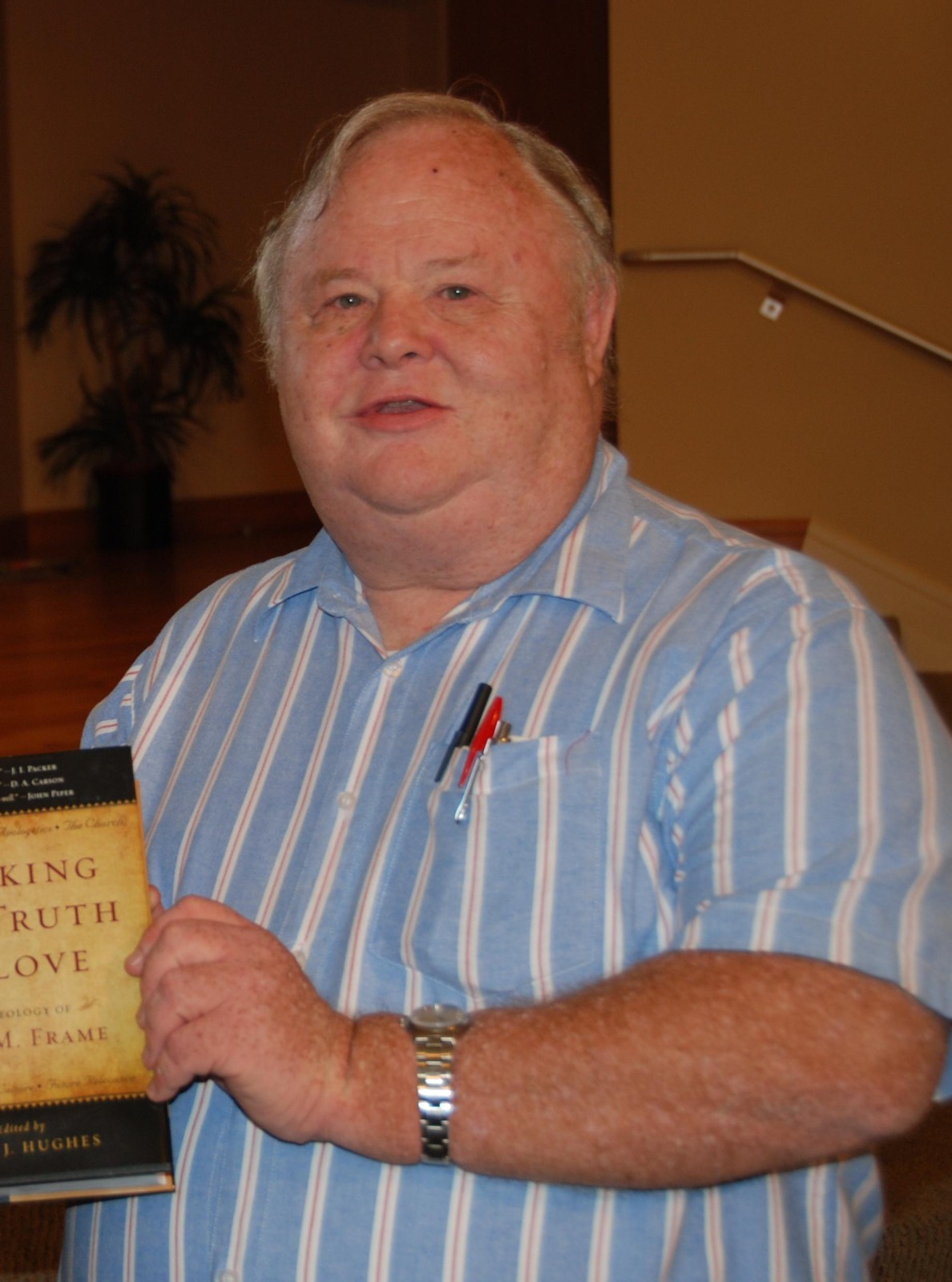
Here’s an extended quote from John Frame on defining culture. He begins first with two definitions of cultures given by others and work on a more nuance definition. It is important to make a good definition for culture if one is engage in cultural apologetics, Christian ethics and engage in the thinking of the Christian Worldview.
The Lausanne Committee on World Evangelism defined culture as “an intergrated system of beliefs, values, customs, and institutions which binds a society together and gives it a sense of identity, dignity, security, and continuity.” Ken Myers writes that culture is “a dynamic pattern, an ever-changing marix of objects, artifacts, sounds, institutions, philosophies, fashions, enthusiasms, myths, all embodied in individual people, in groups and collectives and associations of people (many of whom do not know they are associated), in books, in buildings, in the use of time and space, in wars, in jokes, and in…
View original post 106 more words
If I hadn’t been banned from commenting. . . .
Over at Patheos.com, in an article aout gay marriage being harmful, and after a response indicated that God had created two complimentary sexes, I received the following comment, among others, not quite as fuzzy in the logic department:
WilmRoget
" like God having created Adam and Eve,"
Ah yeah, the heterosexual couple who introduced sin into the world. The couple who raised the world’s first murderer, if Genesis is taken literally. The couple who brought down on humanity God’s first curse, which just happens to target the fruit of heterosexual intercourse.
Good example there. Not to mention the way Adam tries to blame it all on Eve, instead of standing up for her like a real man. And then he blames God.
"Jesus teaching on marriage?"
Like when He said that remarriage after a divorce for any reason other than adultery is adultery?
You think because you and your peers murder and rape and brutalize GLBTQ people, and then blame the Bible, it makes your sin any less evil?
I wanted to suggest that if God had created Adam and Steve, there would b e no WilmRoget. He has obviously read some Bible, for which I commend him. That his heart is hardened against God is deeply sad.
His final sentence is perhaps the most problematic. To that I wanted to say that both MY sin and HIS sin are equally deplorable in the sight of God and that we ALL have sinned and fallen short, but that there is redemption in Christ. But alas, I have been banned from commenting, which just might mean that something I said struck home and that the anger that banned me was provoked a small amount of Holy Spirit conviction.
Please join me in praying for WilmRoget, as well as all those trapped in their bondage to sin, as we all once were.
1 Kings 19 is one of the top three most abused, molested, eisegeted, twisted, and assumed verses in the entire Bible

But let me tell you how I REALLY feel.
Then He said, “Go out, and stand on the mountain before the Lord.” And behold, the Lord passed by, and a great and strong wind tore into the mountains and broke the rocks in pieces before the Lord, but the Lord was not in the wind; and after the wind an earthquake, but the Lord was not in the earthquake; 12 and after the earthquake a fire,but the Lord was not in the fire; and after the fire a still small voice” 1 Kings 19: 11-12. NKJV
If you grew up in any mainline protestant evangelical Church, it’s likely that you’ve been quoted that verse your whole life when being told and taught about prayer and hearing from God. That’s THE BIG ONE that people look to and reference as they tell you that when you pray you…
View original post 1,168 more words
RIP?
|
Posted: 13 Aug 2014 12:01 AM PDT at The Cripplegate
What did you think about when you heard of Robin Williams suicide? What was your first thought? For a friend of mine it was the following words: Everyday they pass me by, I can see it in their eyes. Empty people filled with care, Headed who knows where? On they go through private pain, Living fear to fear. Laughter hides their silent cries, Only Jesus hears. Love or hate Steve Green–but there’s a whole lot of truth to this song. We live in a world full of empty people. No-one is exempt. We live in a world full of hell-bound people. No-one is exempt. We live in a world full of souls, who will spend eternity somewhere. No-one is exempt. The moment someone’s life on earth ends it immediately continues. The moment someone’s life on earth ends they immediately stand before God. Like a runner sprinting for the finish line, the moment he crosses the line he immediately goes from being in a race to done with a race, but his life continues, his consciousness continues. So it is with death. It is a word we use for the ending of life on earth, but life does not end at death, it is just beginning. For that reason, it is disappointing, frustrating, and excruciating to see Christians say things (or post things, tweet things, etc.) that minimize the monumental truth that any one of the billions of people who have lived are all somewhere right now…very much existing. It brings tears to my eyes to think about the implications of death apart from Christ. Christian: You must understand that the words you say reveal what is in your heart. When well meaning Christians say things like: “Thank you Steve Jobs for “thinking outside the box!” A true game changer if there ever was one. RIP.” Or: “Robin thanks for all the laughs. Such a talented man! Thanks for providing me with indescribable joy. R.I.P. I want to challenge you to think about the implications of writing something like this. I am not claiming to know where each person is. Nor do I feel like guessing. The point I’m trying to make is did it even cross your mind that they are in eternity? When you think of death, and when you think about people, what is your first thought? Part of working towards being better evangelists is by changing our thinking. Culture dictates the way we talk, and we are used to saying certain things when certain things happen. But I have to wonder, is the Gospel on the forefront of your mind, if you are writing statements like this? When you see people walking around what do you see? Do you see a soul that will spend eternity somewhere? You must understand that Robin Williams and Steve Jobs are not in a coffin somewhere sleeping right now, but they are actively conscious. As I type. They are somewhere. No-one is exempt. The moment a human being is born he or she will never, ever stop being conscious. People need the Lord, people need the Lord. At the end of broken dreams, He’s the open door. People need the Lord, people need the Lord. When will we realize, people need the Lord? My prayer today is that Believers will live lives understanding the implications of the Gospel. That we would live lives devoted to Christ. that we would go all in. That we would start making decisions based on evangelism. That we say, as Paul did in 2 Corinthians 5:16: “From now on, we purpose to not think of anyone in a purely human way.” That we would choose what house to live in, or what city to move to, or what grocery store line to pay for my groceries, based on a love of Jesus and a devotion to telling people about Him. We are called to take His light To a world where wrong seems right. What could be too great a cost For sharing Life with one who’s lost? Through His love our hearts can feel All the grief they bear. They must hear the Words of Life Only we can share. Who else but you? God has sovereignly placed you uniquely somewhere where few other Christians can be–maybe none other than you. Whether its your neighborhood, job, college campus or family, chances are that you are one of the only Christians there. Who is going to let them know about Christ? Who is going to bring them the good news? Only you can. And when you live with that kind of urgency, you will not be inclined to see hear of someone who died, and think, “rest in peace.” People need the Lord, people need the Lord At the end of broken dreams, He’s the open door. People need the Lord, people need the Lord. When will we realize that we must give our lives, For people need the Lord. Give your life away! No Christian should be exempt from this kind of urgency. |

Kristallnacht: The end of Christianity in Iraq
 When the world’s attention shifted to Ukraine and Israel last week, the Islamic leaders in Iraq capitalized on the distraction. For weeks the functional government in central Iraq (ISIS) had told Christians they had to make one of four choices by this past Saturday: forfeit thier property as a “Christian” tax, convert to Islam, leave, or die. But a week ago ISIS revised their list, and said paying the “tax” was no longer an option.
When Friday came around, residents awoke to an Arabic “N” spray-painted on the houses, property, and farms of all suspected Christians. The government had come during the night to demonstrate that they knew who the Christians were, and the spray-painted N’s were a not-so-subtle reminder that the deadline to convert, flee, or die was only 24 hours away.
Why the N? Because in Arabic Christians are often simply called Nazarenes. And when this week began, so did the flight of the Nazarenes. All Christians were forced out of central Iraq, including Mosul, an historic city with some several churches 1700 years old. One church there had practiced communion every Lord’s Day for 1,600 years…until last Sunday.
As Christians left Mosul, ISIS set up checkpoints outside the city, robbing the fleeing masses (although ISIS points out they weren’t robbing them, but by their law they had a right to “confiscate” all of their property as part of their Christian tax).

An ISIS check point looking for fleeing Christians.
ISIS controls much of central Iraq and Syria. According the New York Times, which had a reporter embedded with ISIS, they took a church in Syria and converted it into a theater to show films of suicide attacks.
Ten yeas ago, Iraq had about 1.4 million people who identified as Christians and 300 different registered churches. Today there are only 50 churches left, and the number of Christians is probably closer 140,000 than 1.4 million. There are almost zero Christians left in Central Iraq, which used to be a hub of historic Christianity.
This decline not only signals an end to a Christian presence in central Iraq, but it also marks a profound turning point for Islam, which for over 1,000 years had as its goal the establishment of an Islamic state in cradle of the Euphrates River. Despite their intense effort, the possibility of completely eradicating crosses and churches from the area never seemed like a real possibility, until now.
In fairness, the Shari’a Law form of Islam that has now gripped Iraq is not looked upon favorably by most Muslims in Saudi Arabia, Iran, Egypt, or Turkey. So ISIS seems hedged in geographically. But it is the form of Islam embraced in much of Africa and Asia, especially in Pakistan. It is violent, and has as its goal the complete obliteration of Christians.

Christians fleeing Mosul on Saturday
The term Christian in Iraq is used to cover a small percentage of Roman Catholics, some Baptists, and some Orthodox Christians (very similar to Egyptian Christianity). But most of the churches were Assyrian Orthodox, which trace their roots to before the schism in Europe between East and West; in other words, they predated the Rome split from Constantinople, thus are not affiliated with either group.
And for that reason, this devastation of Christians does not garner much attention in the Western media. Many Evangelicals are slow to sympathize because they think “those people in Iraq are Christians by ethnicity, not by faith.” I’ve heard some believers say that as a way to guard their hearts—as if to think, “I don’t need to be grieved by what is happening there, because they don’t believe the same gospel I do.”
But remember, ISIS doesn’t understand nuances of Christian theology. They are not distinguishing between Catholics, Assyrians, Orthodox and Baptists. They are persecuting people who meet for worship in churches with crosses on the wall. They are exiling and executing those who at prayer time do not bow on rugs facing Mecca. They are killing people who refuse to say that Mohammad is greater than Jesus.
For the most part, the US government has remained silent about the elimination of Christianity in a place that was under American control only a few years ago. Ostensibly this is because drawing attention to the persecution there would only increase ISIS’ publicity, and make life even harder for Christians there (although it is difficult to imagine how that could possibly be the case). There are also obviously political and philosophical factors in play as well. The result though is that an entire religious group woke up last week to find a letter sprayed on their property, and then had only a day to flee for their lives or be slaughtered.
What can Christians do? There are several missions organizations in Turkey that minister to these Christian refugees (like this one, for example). We can give to those groups, we can give to missionaries who are trying to reach the Muslim world, and we can train up missionaries and send them to this part of the world. We can support political strategy that can protect religious freedom. But mostly, we can grieve that part of the church is under profound and unprecedented attack, and be moved to pray that the Lord would use this for his glory.
Pray that even in this persecution, many people would come to faith in Jesus.
____________________________
Jesse is the Teaching Pastor at Immanuel Bible Church in Springfield, VA.


 The Battle Cry