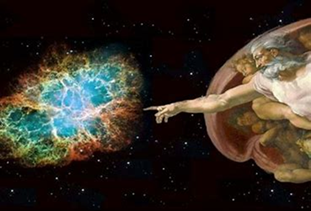
“Then you will know that I am the LORD”

image

That phrase, or a similar phrase appears 72 times in the book of Ezekiel![i]

A summary of the book of Ezekiel is provided below with the number of times our phrase is listed in each section:

In chapters 1-3, God commissions his servant Ezekiel. He receives visions, and his message is to confront God’s sinful nation, “I am sending you to the sons of Israel, to a rebellious people who have rebelled against Me; they and their fathers have transgressed against Me to this very day ” (2:3).

In chapters 4-24, Ezekiel delivered the message of doom to the captives. He told several parables, one that compared Israel to an adulterous woman (16:1-63). He taught them that God was cleansing His chosen nation, “You have borne the penalty of your lewdness and abominations’, the LORD declares” (16:58). (34 times)

From chapters 25-32, Ezekiel condemns judgment upon the nations who mocked YHWH, the God of Israel because of the captivity; they too would soon see their fate. These nations are Ammon, Moab, Edom, Philistia, Tyre, Sidon, and Egypt. (18 times)

In chapters 33-48, a message of deliverance and restoration is written. This includes not only the current nation of Israel but also the future of the coming Messiah, the Temple, and the Kingdom of God in the End age. In chapter 37, he writes the famous vision of the valley of bones, “He said to me, “Son of man, can these bones live?” And I answered, “O Lord God, You know” (37:3) (20 times)

The DanDee couple has been watching The Chosen series together, discussing the word-for-word accuracy of various characters quoting scripture throughout the series, as well as the teachings of Jesus.

In certain parts of the show’s story line questions arise, sometimes angrily, concerning why Jesus healed one person and not another or why Jesus raised one person from the dead and not another. In season 4 of the series Jesus agonizes over his followers not being able to understand what is really going on, and keep asking the “WHY?” question. Jesus explained exactly what he was doing when he responded to the Jews who wanted to stone Him for blasphemy, saying:

“If I am not doing the works of my Father, then do not believe me; but if I do them, even though you do not believe me, believe the works, that you may know and understand that the Father is in me and I am in the Father.”

(John 10:37-38)

Just as in the book of Ezekiel, Jesus was telling religious Jews, as well as his followers:

“I and my Father are one.”

(John 10:30)

Every one of Jesus’s miracles was a confirmation of God’s message and messenger!


[i] Ezekiel Summary

How Big is YOUR God?

image

Most, if not all of us are familiar with the story of Job, who was a righteous man who suffered greatly at the hand of God after Satan dared God to afflict Job and all that he had, sure that Job would then curse God! God gave permission to test Job and Job lost everything, even to the point that his wife challenged him to curse God and die. Not only that, Job had three main friends (plus a younger man who spoke later) who came to comfort him but ended up accusing him instead.

To make a longer story short, there was a series of conversations with his “friends” and the younger man. Job did not receive a direct answer to his suffering, but he came to a place of trust and humility before God. Instead of demanding explanations, he acknowledges God’s greatness and repents for questioning Him. As a result, God restored Job’s fortunes.

The section of the Book of Job that stands out the most in the heart of this old soldier is God’s response to Job (CHs 38-41), followed by Job’s repentance and humility (CH 42).

God’s response to Job consisted of a series of profound questions that emphasized His power, wisdom, and sovereignty over creation. There are 21 questions. Here are just a few of them:

“Where were you when I laid the foundation of the earth?” (Job 38:4)

“Does the hawk fly by your wisdom?” (Job 39:26)

“Shall a faultfinder contend with the Almighty?” (Job 40:2)

Why is this story so important to this old man? I’ll let A.W. Tozer, a Christian pastor and theologian answer that question. In his book, The Knowledge of the Holy, Tozer wrote:

“What comes into our minds when we think about God is the most important thing about us.”

Tozer believed that a person’s concept of God shapes their entire life, including their faith, character, and decisions. He emphasized that a low view of God leads to weak faith, while a high and reverent view of God leads to true worship and transformation.

So What?

You might be wondering how it might apply a specific area of your life. I’m sure that many hours could be spent thinking about different areas of our lives and asking ourselves if they truly reflect a high view of God. I’d like to share just one example – personal evangelism.

If sharing the Gospel of Jesus Christ with the lost world around us the main reason that God saved us (Matthew 28:16-20), it’s a good place to start. What does it mean to share the gospel with others with a ‘high’ view of God?

The short answer to that question is, in my view, “Get it right!” What does that mean?

I think it means that sharing the message of the gospel might not really begin with “God loves you and has a wonderful plan for your life!” You could hear, “Well, I love me too and I also have a wonderful plan for my life!” You have just told your listener that God’s highest priority in loving us is the “wonderful plan” He has for us. Is it?

When the angel of the Lord told a nervous Joseph that the child Mary was carrying in her womb was God’s child and not another man’s, he also told Joseph “You shall call His name JESUS, for He will save His people from their sins.”  You can read all about in Matthew, chapter 1.

It looks like the greatest demonstration of God’s love for us is God’s sending His Son to die for OUR sin! That probably should be the starting point of our sharing the gospel message with other. God’s wonderful plan for our lives is certainly ‘good’ news, but sending His Son to bear the punishment for OUR sin is the ‘greatest’ news of all!

I know it can be a bit scary to start sharing the gospel message with the bad news of sin instead of the good news of God’s wonderful plans for us, but shouldn’t we start our sharing of the gospel message where God started the gospel story?

So I’ll just leave you with the original question:

image

Be Blessed!

Sincere, but Sincerely Wrong – A. W. Pink

image

It is greatly to be feared that there are multitudes in Christendom who verily imagine and sincerely believe that they are among the saved, yet who are total strangers to a work of divine grace in their hearts.

  • It is one thing to have clear intellectual conceptions of God’s truth, it is quite another matter to have a personal, real heart acquaintance with it.
  • It is one thing to believe that sin is the awful thing that the Bible says it is, but it is quite another matter to have a holy horror and hatred of it in the soul.
  • It is one thing to know that God requires repentance, it is quite another matter to experimentally mourn and groan over our vileness.
  • It is one thing to believe that Christ is the only Savior for sinners, it is quite another matter to really trust Him from the heart.
  • It is one thing to believe that Christ is the sum of all excellency’, it is quite another matter to LOVE HIM above all others.
  • It is one thing to believe that God is the great and holy One, it is quite another matter to truly reverence and fear Him.
  • It is one thing to believe that salvation is of the Lord, it is quite another matter to become an actual partaker of it through His gracious workings.

Arthur Walkington Pink (1 April 1886 – 15 July 1952) was an English Bible teacher who sparked a renewed interest in the exposition of  Reformed Theology. Little known in his own lifetime, Pink became one of the most influential evangelical authors in the second half of the twentieth century.

Grandma’s House and God

image

When I was just a little boy (isn’t there a Simon and Garfunkle tune somewhere in there?) we would visit my Grandma ‘s house in Wisconsin, out in the country several miles away from the nearest town.

Among the memories of my grandparents’ farm, apart from all the great times playing in the barnyard, looking for arrowheads and picking fresh strawberries, peas and sweet corn from Grandma’s garden, are thoughts of God.

Two things in particular reminded me of God at Grandma’s house. The first was being outside and looking at the night sky and seeing so many stars! If you have ever been in the country where there aren’t any street lights, city lights, neon signs, etc., you know what I mean. My little mind would go WOW – God made ALL THAT!

The second thing that left a “God’ impression on my little heart was the little white country church with the tall steeple and stained glass windows, surrounded by tall fragrant pine trees, across the road from Gtandma’s house.   Well, not the church itself – I don’t remember the inside, the preacher or a Sunday school teacher. I remember being being outside on Sunday morning and hearing the organ and the hymn ‘Holy, Holy, Holy’, echoing through those tall pines and fill the atmosphere! It was awesome!

I knew I was just a little boy and just about everything and everybody was bigger than me (except kittens and puppies), but God was bigger than the whole WORLD and everything it!  It was kind of like Abraham’s attitude when he bargained for Sodom:

“Then Abraham spoke up again: “Now that I have been so bold as to speak to the Lord, though I am nothing but dust and ashes.” Genesis 18:27

It was a sense of my own smallness and God’s greatness. Well, that God is still my God , the God who is sovereign over all the affairs of men, the God who sent his own son to die for my sin and who will come one day to judge the earth.

It seems that somehow that much of the church today has made mortals bigger and God smaller. God seems more like a kindly grandfather that wants to ‘spoil’ us – that he lives just to gives us all the things we want in our quest for our ‘best life now’. Or, that God cannot imagine heaven without us in it, and that he sent his Son to die for us, hoping that some of us might (all on our own) someday choose him.

The Bible is full of this idea that God does everything he does first and foremost for his own glory – even our salvation! Listen to these few words from Ephesians.

Paul, an apostle of Christ Jesus by the will of God,
      To the saints in Ephesus, the faithful in Christ Jesus:

Grace and peace to you from God our Father and the Lord Jesus Christ.

Praise be to the God and Father of our Lord Jesus Christ, who has blessed us in the heavenly realms with every spiritual blessing in Christ. For he chose us in him before the creation of the world to be holy and blameless in his sight. In love he predestined us to be adopted as his sons through Jesus Christ, in accordance with his pleasure and will— to the praise of his glorious grace, which he has freely given us in the One he loves. In him we have redemption through his blood, the forgiveness of sins, in accordance with the riches of God’s grace 8that he lavished on us with all wisdom and understanding. And he made known to us the mystery of his will according to his good pleasure, which he purposed in Christ, to be put into effect when the times will have reached their fulfillment—to bring all things in heaven and on earth together under one head, even Christ.

In him we were also chosen, having been predestined according to the plan of him who works out everything in conformity with the purpose of his will, in order that we, who were the first to hope in Christ, might be for the praise of his glory. And you also were included in Christ when you heard the word of truth, the gospel of your salvation. Having believed, you were marked in him with a seal, the promised Holy Spirit, who is a deposit guaranteeing our inheritance until the redemption of those who are God’s possession—to the praise of his glory. Ephesians 1:1-14

Many years have come and gone since I visited Grandma’s house, but I NEVER want to lose that picture of God!

_______________________________________

This was the last post  published here at The Battle Cry in March, 2008 – the birth month of this little blog. I just wanted to post it again, but along with a picture (almost) of my Grandma’s house.

Be Blessed!

2022 State of Theology Summary

The following is extracted from an article posted online by Ligonier Ministries. I will let it speak for itself.

What do Americans believe about God, salvation, ethics, and the Bible? Ligonier Ministries and LifeWay Research partnered to find out. Every two years, we take the theological temperature of the United States to help Christians better understand today’s culture and to equip the church with better insights for discipleship. Read some of our key findings from 2022 below and explore the data for yourself.

Does God Change?

As we look at ourselves and at the world, it is clear that human beings, along with the rest of creation, undergo frequent changes. But does this principle of change apply to God as well?

The Bible affirms the truth that the triune God is both omniscient, meaning that He knows all things, and immutable, meaning that He cannot and does not change (Isa. 46:10; Mal. 3:6; James 1:17; 1 John 3:20). Despite this truth, the majority of adults in the United States believe that God both learns and adapts to different circumstances.

Despite the clear teaching of Scripture, this year’s survey reveals that approximately half of evangelicals believe that God learns and adapts to various situations, meaning that they believe that God does change.

STATEMENT NO. 4

God learns and adapts to different circumstances.

U.S. Adult Finding: 51% agree vs. 32% disagree

U.S. Evangelical Finding: 48% agree vs. 43% disagree

These results show that American evangelicals and the general U.S. population are essentially equivalent in their agreement with this statement. Nearly half of both groups believe that God changes by learning and adapting. This may indicate the influence of open theism (which denies God’s complete knowledge of future events) and process theology (which denies God’s omnipotence and asserts that He does undergo changes) within the evangelical church. This finding may also indicate a lack of clear, biblical teaching on the character of God in evangelical churches.

Are We Born Innocent?

When God created the world, everything He made was good (Gen. 1:10, 21, 25, 31). Yet through Adam and Eve’s rebellion in the garden of Eden, humankind became corrupted. The Bible teaches the concept of original sin, which means that since the fall, every human being inherits a sin nature from the time of their conception (Ps. 51:5; Rom. 5:12). In other words, we are not sinners because we sin; rather, we sin because we are sinners.

It is unsurprising that most U.S. adults believe that humans are born innocent, given the influence of humanistic philosophies and worldviews that teach self-determinism and a view of humankind as basically good.

STATEMENT NO. 15

Everyone is born innocent in the eyes of God.

U.S. Adult Finding: 71% agree vs. 21% disagree

U.S. Evangelical Finding: 65% agree vs. 32% disagree

The fact that almost two-thirds of evangelicals believe that humans are born in a state of innocence reveals that the biblical teaching of original sin is not embraced by most evangelicals. God’s Word, however, makes clear that all humans are “by nature children of wrath” (Eph. 2:3). This truth is foundational for an accurate understanding of the gospel and of our absolute need for the grace of God in salvation.

U.S. Evangelicals: Trends

The 2022 survey results for U.S. evangelicals reveal concerning trends related to the exclusivity and deity of Jesus Christ, the historicity and divine nature of Scripture, objective truth, gender identity, and homosexuality. At the same time, encouraging trends include evangelicals’ increasingly biblical views on abortion and sex outside of marriage.

God

Key to orthodox Christianity is Jesus’ own assertion that He alone is “the way, and the truth, and the life,” and that “no one comes to the Father except through [Him]” (John 14:6, emphasis added). Trends over time and the 2022 survey results reveal an increasingly unbiblical belief among evangelicals that God is pleased by worship that comes from those outside the Christian faith.

STATEMENT NO. 3

God accepts the worship of all religions, including Christianity, Judaism, and Islam.

U.S. Evangelical Finding:

2016: 48% agree
2018: 51% agree
2020: 42% agree
2022: 56% agree

This year’s survey also revealed a significant increase in evangelicals who deny Jesus’ divinity. Such a belief is contrary to Scripture, which affirms from beginning to end that Jesus is indeed God (John 1:1; 8:58; Rom. 9:5; Heb. 1:1-4).

STATEMENT NO. 7

Jesus was a great teacher, but he was not God.

U.S. Evangelical Finding:

2020: 30% agree
2022: 43% agree

Truth

Embracing the reality of objective truth is necessary to a right and proper understanding of the world. Scripture affirms that God is truth (Num. 23:19; John 1:14; 14:6; 16:13), and because the Bible is His Word, Scripture is truth as well (Ps. 119:160; John 17:17; 2 Tim. 2:15). Despite the testimony of Scripture, evangelicals increasingly believe that the Bible is not literally true.

STATEMENT NO. 16

The Bible, like all sacred writings, contains helpful accounts of ancient myths but is not literally true.

U.S. Evangelical Finding:

2016: 17% agree
2018: 23% agree
2020: 15% agree
2022: 26% agree

A rising disbelief in the Bible’s literal truth may help us understand why American evangelicals also increasingly believe that religious faith is a subjective experience rather than an objective reality.

STATEMENT NO. 31

Religious belief is a matter of personal opinion; it is not about objective truth.

U.S. Evangelical Finding:

2018: 32% agree
2020: 23% agree
2022: 38% agree

Sexual Ethics

The changes in sexual ethics in the United States are occurring at an alarmingly rapid pace. However, one encouraging finding is that evangelicals affirm a biblical view of fornication and adultery in greater numbers.

STATEMENT NO. 25

Sex outside of traditional marriage is a sin.

U.S. Evangelical Finding:

2016: 91% agree
2018: 89% agree
2020: 90% agree
2022: 94% agree

While evangelicals are more likely than U.S. adults in general to affirm a biblical sexual ethic, in the areas of gender identity and homosexuality, a significant rise of an unbiblical worldview is apparent, especially in the 2022 survey.

STATEMENT NO. 27

Gender identity is a matter of choice.

U.S. Evangelical Finding:

2016: 32% agree
2018: 30% agree
2020: 22% agree
2022: 37% agree

The rise of unbiblical views among American evangelicals on the subjects of gender and sexuality may indicate the influence of a secular worldview that is making greater inroads into the church.

STATEMENT NO. 28

The Bible’s condemnation of homosexual behavior doesn’t apply today.

U.S. Evangelical Finding:

2016: 19% agree
2018: 20% agree
2020: 11% agree
2022: 28% agree

Abortion

The Bible teaches the personhood of those in the womb (Ps. 139:13, 16; Luke 1:41, 44). As such, the practice of abortion is the murder of a human being who is an image bearer of God. Past survey results among evangelicals have remained fairly consistent since 2016, with an uptick in 2022 of more evangelicals asserting that abortion is a sin. While the reasons for this positive trend are unknown, it is encouraging to see more evangelicals affirming the personhood of human beings in the womb.

STATEMENT NO. 26

Abortion is a sin.

U.S. Evangelical Finding:

2016: 87% agree
2018: 88% agree
2020: 88% agree
2022: 91% agree

______________________

Evangelicals were defined by LifeWay Research as people who strongly agreed with the following four statements:

  • The Bible is the highest authority for what I believe.
  • It is very important for me personally to encourage non-Christians to trust Jesus Christ as their Savior.
  • Jesus Christ’s death on the cross is the only sacrifice that could remove the penalty of my sin.
  • Only those who trust in Jesus Christ alone as their Savior receive God’s free gift of eternal salvation.

Respondents can also be identified as evangelical in the State of Theology data explorer based on their supplied church affiliation.

Conclusion

The 2022 State of Theology survey reveals that Americans increasingly reject the divine origin and complete accuracy of the Bible. With no enduring plumb line of absolute truth to conform to, U.S. adults are also increasingly holding to unbiblical worldviews related to human sexuality. In the evangelical sphere, doctrines including the deity and exclusivity of Jesus Christ, as well as the inspiration and authority of the Bible, are increasingly being rejected. While positive trends are present, including evangelicals’ views on abortion and sex outside of marriage, an inconsistent biblical ethic is also evident, with more evangelicals embracing a secular worldview in the areas of homosexuality and gender identity.

These results convey the ongoing need for the church to be engaged in apologetics, helping unbelievers by providing a well-reasoned defense of the Christian faith, and helping believers by strengthening their clarity and conviction regarding why they believe what they do. Additionally, the people of God must continue to obey the Great Commission by communicating the whole counsel of God in biblical evangelism and discipleship. The need is great, but the power and promises of God can equip the church to bring truth and light to a deceived and dark world.
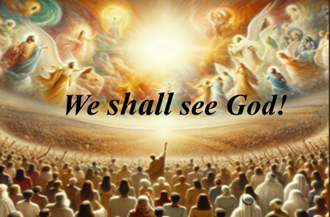
To Whom We Should Bow

With all the ‘bowing’ going on lately I thought a reminder would be in order. There’s a time coming when 

“So that at the name of Jesus every knee should bow, in heaven and on earth and under the earth, and every tongue confess that Jesus Christ is Lord, to the glory of God the Father.” Philippians 2:10-11

“For it is written, “As I live, says the Lord, every knee shall bow to me, and every tongue shall confess to God.”” Romans 14:11

“By myself I have sworn; from my mouth has gone out in righteousness a word that shall not return: ‘To me every knee shall bow, every tongue shall swear allegiance.’ “ Isaiah 45:23

We can repent of our sin now and bow before the King of Kings or we’ll bow to Him from the depths of hell, the former out of love and latter out of fear.

Albert Barnes Commentary:

Philippians 2:10

That at the name of Jesus every knee should bow – The knee should bow, or bend, in token of honor, or worship; that is, all people should adore him. This cannot mean merely that at the mention of the name of Jesses we should bow; nor is there any evidence that God requires this. Why should we bow at the mention of that name, rather than at any of the other titles of the Redeemer? Is there any special sacredness or honor in it above the other names which he bears? And why should we how at his name rather than at the name of the Father! Besides, if any special homage is to be paid to the name of the Saviour under the authority of this passage – and this is the only one on which the authority of this custom is based – it should be by bowing the knee, not the head. But the truth is, this authorizes and requires neither; and the custom of bowing at the name of Jesus, in some churches, has arisen entirely from a misinterpretation of this passage. There is no other place in the Bible to which an appeal is made to authorize the custom; compare Neal’s History of the Puritans, chapter 5. Ninth 5. The meaning here is, not that a special act of respect or adoration should be shown wherever the name “Jesus” occurs in reading the Scriptures, or whenever it is mentioned, but that he was so exalted that it would be proper that all in heaven and on earth should worship him, and that the time would come when he would be thus everywhere acknowledged as Lord. The bowing of the knee properly expresses homage, respect, adoration (compare the notes at Rom_11:4); and it cannot be done to the Saviour by those who are in heaven, unless it be divine.

Of things in heaven – ἐπουρανίων epouraniōn – rather of beings in heaven, the word “things” being improperly supplied by our translators. The word may be in the neuter plural; but it may be also in the masculine plural, and denote beings rather than things. Things do not bow the knee; and the reference here is undoubtedly to angels, and to the “spirits of the just made perfect” in heaven. If Jesus is worshipped there, he is divine; for there is no idolatry eta creature in heaven. In this whole passage there is probably an allusion to Isa_45:23; see it illustrated in the notes at Rom_14:11. In the great divisions here specified – of those in heaven, on the earth, and under the earth – the apostle intends, doubtless, to denote the universe. The same mode of designating the universe occurs in Rev_5:13; Exo_20:4; compare Psa_96:11-12. This mode of expression is equivalent to saying, “all that is above, around, and beneath us,” and arises from what appears to us. The division is natural and obvious – that which is above us in the heavens, that which is on the earth where we dwell, and all that is beneath us.
And things in earth – Rather, “beings on earth,” to wit, people; for they only are capable of rendering homage.

And things under the earth – Beings under the earth. The whole universe shall confess that he is Lord. This embraces, doubtless, those who have departed from this life, and perhaps includes also fallen angels. The meaning is, that riley shall all acknowledge him as universal Lord; all how to his sovereign will; all be subject to his control; all recognize him as divine. The fallen and the lost will do this; for they will be constrained to yield an unwilling homage to him by submitting to the sentence from his lips that shall consign them to woe; and thus the whole universe shall acknowledge the exalted dignity of the Son of God. But this does not mean that they will all be saved, for the guilty and the lost may be compelled to acknowledge his power, and submit to his decree as the sovereign of the universe. There is the free and cheerful homage of the heart which they who worship him in heaven will render; and there is the constrained homage which they must yield who are compelled to acknowledge his authority.

Philippians 2:11

And that every tongue should confess – Everyone should acknowledge him. On the duty and importance of confessing Christ, see the notes at Rom_10:9-10.

That Jesus Christ is Lord – The word “Lord,” here, is used in its primitive and proper sense, as denoting owner, ruler, sovereign; compare the notes at Rom_14:9. The meaning is, that all should acknowledge him as the universal sovereign.

To the glory of God the Father – Such a universal confession would honor God; see the notes at Joh_5:23, where this sentiment is explained.

__________

Albert Barnes (1798-1870) was an American theologian, born at Rome, New York, on December 1, 1798. He graduated from Hamilton College, Clinton, New York, in 1820, and from Princeton Theological Seminary in 1823. Barnes was ordained as a Presbyterian minister by the presbytery of Elizabethtown, New Jersey, in 1825, and was the pastor successively of the Presbyterian Church in Morristown, New Jersey (1825-1830), and of the First Presbyterian Church of Philadelphia (1830-1867).

Elihu Proclaims God’s Majesty

Elihu Proclaims God’s Majesty – Job 37

1 “At this also my heart trembles

    and leaps out of its place.

2 Keep listening to the thunder of his voice

    and the rumbling that comes from his mouth.

3 Under the whole heaven he lets it go,

    and his lightning to the corners of the earth.

4 After it his voice roars;

    he thunders with his majestic voice,

    and he does not restrain the lightnings[a] when his voice is heard.

5 God thunders wondrously with his voice;

    he does great things that we cannot comprehend.

6 For to the snow he says, ‘Fall on the earth,’

    likewise to the downpour, his mighty downpour.

7 He seals up the hand of every man,

    that all men whom he made may know it.

8 Then the beasts go into their lairs,

    and remain in their dens.

9 From its chamber comes the whirlwind,

    and cold from the scattering winds.

10 By the breath of God ice is given,

    and the broad waters are frozen fast.

11 He loads the thick cloud with moisture;

    the clouds scatter his lightning.

12 They turn around and around by his guidance,

    to accomplish all that he commands them

    on the face of the habitable world.

13 Whether for correction or for his land

    or for love, he causes it to happen.

14 “Hear this, O Job;

    stop and consider the wondrous works of God.

15 Do you know how God lays his command upon them

    and causes the lightning of his cloud to shine?

16 Do you know the balancings[b] of the clouds,

    the wondrous works of him who is perfect in knowledge,

17 you whose garments are hot

    when the earth is still because of the south wind?

18 Can you, like him, spread out the skies,

    hard as a cast metal mirror?

19 Teach us what we shall say to him;

    we cannot draw up our case because of darkness.

20 Shall it be told him that I would speak?

    Did a man ever wish that he would be swallowed up?

21 “And now no one looks on the light

    when it is bright in the skies,

    when the wind has passed and cleared them.

22 Out of the north comes golden splendor;

    God is clothed with awesome majesty.

23 The Almighty—we cannot find him;

    he is great in power;

    justice and abundant righteousness he will not violate.

24 Therefore men fear him;

    he does not regard any who are wise in their own conceit.”[c]

Footnotes:

Job 37:4 Hebrew them

Job 37:16 Or hoverings

Job 37:24 Hebrew in heart

Contradiction in God?

Silly question, right? Do any of us know any genuine Christians who would affirm that there might be contradictions in God? I don’t. With that in mind, consider the following:

First, here are two passages of scripture that seem to say the God wants every human being to come to repentance and belief in Christ. At least that’s the prevalent belief across most of the Christian church.

“This is good, and it is pleasing in the sight of God our Savior, 4 who desires ALL people (men) to be saved and to come to the knowledge of the truth.” – 1 Tim 2:3

“The Lord is not slow to fulfill his promise as some count slowness, but is patient toward you, not wishing that any should perish, but that ALL should reach repentance.” – 2 Pet 3:9

Now consider the following passages that say very clearly that God personally causes ‘some’ to believe lies, and/or consciously blinds the eyes and hearts of ‘some’ so that they would NOT believe.

“Therefore God sends them a strong delusion, so that they may believe what is false, 12 in order that all may be condemned who did not believe the truth but had pleasure in unrighteousness.” – 2 Thess 2:11-12

He (God) has blinded their eyes
    and hardened their heart
,
lest they see with their eyes,
    and understand with their heart, and turn,
    and I would heal them.” – John 12:40 quotes Isaiah 6:10

If it is true that God desires that ‘all’ men, without exception, be saved, and at the same time the same God causes ‘some’ to believe a lie and blinds ‘some’ to the truth, so that they will NOT believe, we could logically conclude that

A. God can and will act contrary to his nature / desires.

B. God doesn’t always get what he wants.

C. We have, in some way, misunderstood the text of 1 Tim 2:3 and/or 2 Pet 3:9.

If A or B is true, then C might be false, an outcome we would prefer. We don’t like to be told we haven’t correctly interpreted the Bible.

If A or B is false, then C just might be true, and we have indeed misinterpreted 1 Tim 2:3 and/or 2 Pet 3:9.

That brings up the final question for now, “IF we have misinterpreted either passage, how have we erred?

I suggest that we very well might have erred in interpreting “ALL” in these texts to mean every human being without exception. It could be that “ALL” means, in both cases, all kinds of people, i.e. rich men, poor men, leaders/rulers, ordinary folk, Jews and Gentiles.

I further suggest that if we define “ALL” to mean all kinds of people, our high and loft view of God’s power and immutability remains intact, and there is NO contradiction in God. After all, he IS GOD.

Food for thought. . . yours? The lines are open.

Who is God’s Candidate?

There are two sermons by Dr. John MacArthur that probably should be mandatory listening for all of us. There are two parts:

Part 1: https://www.gty.org/resources/sermons/90-489/who-is-gods-candidate-part-1

Part 2: https://www.gty.org/resources/sermons/90-490/who-is-gods-candidate-part-2

They might not be what you expect :).

On a personal level, I’m frankly tired and disgusted by so many things I see and read  and hear concerning the current election cycle. God doesn’t have a ‘political party’. God is for God and his own divine purposes. It might be that either candidate, when elected, represent God’s judgment against our sinful nation. Think about it.