Essential Characteristics of Genuine Revival

clip_image002

Well, regardless of whether or not the 2023 ‘Asbury Revival’ proves to be a genuine revival or not, it certainly has generated a lot of interest, both in Christian circles and the general press. Only time will tell if it’s genuine or not, and only God knows if any revival is actually a genuine revival.

Nevertheless, it is possible to define what we can call essential characteristics of a truly genuine revival. The revival research this old man has done through the years has revealed that opinions about what real revival is, and isn’t, vary. I read at least a half dozen articles about revival just today that I added to the revival folder in my files that already contained a sizable number of files from having examined revivals of the past.

Perhaps a good, if not the best approach to study revival might be to examine what happened on the Day of Pentecost in the city of Jerusalem.

Pentecost was originally one of the most important festivals of the Jewish calendar, commonly called the Feast of Weeks, and marked the end of the grain harvest. There was therefore a very large number of Jews from far and wide visiting the city in addition to the city residents.

In the New Testament, Pentecost marked the birth of the Christian Church. The Holy Spirit was poured out on Jesus’ disciples as they were gathered together in a room, away from the crowd. The Apostle Peter, filled with and empowered by the Holy Spirit, preached the first sermon of the new church to a large crowd gathered in the streets of Jerusalem.

After having read quite a bit of material concerning revival, I found that there are several characteristics common to genuine revival, no matter when it has occurred, or might be happening today.

Awareness of God’s presence, and especially an awareness of His holiness and majesty

A fundamental feature in revival is the sense that God has drawn awesomely near in his holiness, mercy, and might. As J. I. Packer explains, “God ‘comes,’ ‘visits,’ and ‘draws near’ to his people, and makes his majesty known.” It’s what we see in the prayer of Isaiah the Prophet recorded in Isaiah 64:1-2, “Oh that you would rend the heavens and come down, that the mountains might quake at your presence.” We see an example of that presence in the first few verses of Isaiah chapter 6, when Isaiah he ‘saw the Lord sitting on a throne’ in the temple and heard the angels’ song — ‘Holy, holy, holy’— and cried out, ‘Woe is me, for I am ruined! Because I am a man of unclean lips, and I live among a people of unclean lips’ (Is. 6:1-5). Revival begins with this searching, scorching manifestation of God’s presence begins and is sustained.

Responsiveness to God’s Word

When there is a sense of God’s presence, the authority and truth of God’s word is greatly magnified. The message of scripture searches the hearts of its hearers and readers and cuts to the very core of their being. That is exactly what happened on the day of Pentecost when Peter preached the new church’s first sermon! Peter had studied the Jewish scriptures and that is exactly what he presented to the gathered crowd! When Peter told them, “Let all the house of Israel therefore know for certain that God has made him both Lord and Christ, this Jesus whom you crucified.” (Acts 3:36), their immediate response was “. . . they were cut to the heart, and said to Peter and the rest of the apostles, “Brothers, what shall we do?”

Sensitiveness to Sin

Peter’s words had cut deep into the heart and soul of Jewish listeners. As Packer tells us, “No upsurge of religious interest or excitement merits the name of revival if there is no profound sense of sin at its heart.” Peter’s listeners on the day of Pentecost were ‘pierced to the heart,’ which literally means “to pierce thoroughly, that is, (figuratively) to agitate violently (“sting to the quick”), (Strong’s Concordance). Completely shattered, the congregation cried out, ‘Brethren, what shall we do?’ Knowing that conviction of sin is a means to an end, Peter responded, “Repent and be baptized every one of you in the name of Jesus Christ. . . .” Peter showed them the way of faith, repentance, and discipleship through Jesus Christ, and three thousand were saved that day! (Acts 2:37-41).


Liveliness in Community

Another characterization of a revived church is the life, joy and power of the Holy Spirit. Fellowship with Christ becomes the clear center of our worship and devotion. When the glorified Christ is shown, known, loved, served, and exalted, love and generosity abound. There is also a profound sense of unity and joy, assurance and boldness, a spirit of praise and prayer. We see all of this in the newly birthed church in Jerusalem:

42And they devoted themselves to the apostles’ teaching and the fellowship, to the breaking of bread and the prayers. 43And awe came upon every soul, and many wonders and signs were being done through the apostles. 44And all who believed were together and had all things in common. 45And they were selling their possessions and belongings and distributing the proceeds to all, as any had need. 46And day by day, attending the temple together and breaking bread in their homes, they received their food with glad and generous hearts, 47praising God and having favor with all the people. And the Lord added to their number day by day those who were being saved. (Acts 2:42-47, ESV).

Fruitfulness in testimony

Revival always results in evangelism, through personal witness as newly saved believers share the gospel message and their changed lives with others, and as God’s “sent ones”, such as the Apostle Paul not only preach the gospel message, establish new local churches wherever they travel. When God brings revival, “New life overflows from the church for the conversion of outsiders and renovation of society. Christians become fearless in witness and tireless in their Savior’s service. They proclaim by word and deed the power of the new life, souls are won, and a community conscience informed by Christian values emerges. Also in revival times God acts quickly; his work accelerates. Truth spreads, and people are born again and grow in Christ, with amazing rapidity.” (Packer)

In summary, there you have a pattern of revival that is common to all genuine revival. “Christians in revival are accordingly found living in God’s presence (coram Deo), attending to his word, feeling acute concern about sin and righteousness, rejoicing in the assurance of Christ’s love and their own salvation, spontaneously constant in worship, and tirelessly active in witness and service, fueling these activities by praise and prayer.” (Packer)

As for the Asbury revival? It’s been announced that it is “ending” this week. As one article reported “Life will return to normal on the campus of Asbury University and in the town of Wilmore once this week is through.”

Again, I’m reminded of something Jordan Standridge said in a Cripplegate article:

“Only God knows if a revival is taking place. These pastors (who declared it a true revival) can’t know. The skeptics can’t know. It is only God who can cause a revival and it is only God who can know if a revival is taking place.”

Please pray for everyone who has been involved with the events at Asbury University and beyond; that God will indeed bring salvation and lasting revival as He the invades hearts and minds of many during these times.

Be Blessed!

____________

Portions of this article were adapted from Marks of Revival, by J.R. Packer, and Essential Characteristics of Genuine Revival, by Erroll Hulse, both available online at Graceonlinelibrary.org

Ultimate Collection of Free Presuppositional Apologetics Lectures

SLIMJIM's avatarThe Domain for Truth

knight armor

The blog True Forms (http://trueforms.wordpress.com) used to have a popular post titled “Ultimate Collection of Free Presuppositional Apologetics Lectures” that was heavily promoted on Social Media.  Unfortunately the blog owner has recently deleted his blog account.  Which is unfortunate if you are looking for great lectures on Presuppositional apologetics online.

I’ve been digging around online to reconstruct that original list.  I have also decided to post the listing with further expansion of other lectures!  This is a work in progress.

Feel free to share this on Facebook, Twitter and other social networks.

Also if there are more resources that you feel should be included on here, please let us know in the comment box.

Camden Bucey
1. Defending the Faith

Shane Kastler
1. Expositional Apologetics

Fred Butler
1. Apologetics Evangelism 101

Jonathan Harris
1. Apologetics Sunday School Class 2011

Brian Rickett
1. Presuppositional Apologetics 2014 Paschal Lectures by Brian Rickett (Videos)
2.

View original post 714 more words

Resolutions, Resolutions!

Well, here we are again, nearing the beginning of 2023, and quite naturally, the subject of New Year’s resolutions surfaces once again for many of us. Some of us old guys have long since tried to put the subject behind us, having made them, only to break most of them along the way. A simple internet search of the term New Year’s resolutions will yield a veritable plethora of ideas and articles, as well as tips on keeping them.

The practice of making of New Year’s resolutions has a long history, going all the way back to days of the Babylonian empire, and had to do with making promises to various gods. Participation rates, along with success and failure rates varies depends on whose survey you are using. I’m sure we all have stories about resolutions we’ve made through the years.

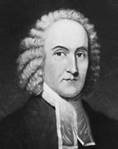
I’d like to set our personal experiences aside for now and talk about a set of resolutions crafted by a man who was perhaps the greatest theologian ever to grace American soil. His name was Jonathan Edwards. I we know about him at all, it is probably in connection with a famous sermon, Sinners in the Hands a of an Angry God., and/or the first Great Awaking in 18th century America.

Edwards was born in 1703, the son of a Puritan minister in Connecticut. His mother was the daughter of a minister from Massachusetts. While he delighted in religious studies from a very young age, it was when he was in his late teen years, that he experienced a turning point in his spiritual quest. In the Spring of 1721 he wrote:

“I was brought to a new sense of things, to an inward sweet delight in God and divine things, quite different from anything I had ever experienced before. I began to have a new kind of apprehension and idea of Christ and the work of redemption and the glorious way of salvation by him.”

A year later he began writing a series of life resolutions he felt would greatly assist his spiritual growth in grace and God-centered living. The first 21 resolutions were crafted in a single sitting in 1722, which were added to at various times until, in August 1723 the list included 70 resolutions. He then read them once a week for the rest of his life.

Who among today’s evangelicals would take up a such a lifelong commitment? Some of us might even call it a legalistic attempt to please God. That would be an erroneous assumption. Edwards himself acknowledged who could provide him with the ability to keep his resolutions, including a short preface to the resolutions themselves:

“Being sensible that I am unable to do anything without God’s help, I do humbly entreat Him by His grace to enable me to keep these resolutions, so far as they are agreeable to His will, for Christ’s sake.”

What follows is the list of resolutions, each one beginning with the word “Resolved.”, indicating a firm decision made with a soul deep gravity. Here are the first seven resolutions, to whet your appetite and arouse your interest.

1. Resolved, that I will do whatsoever I think to be most to God’s glory, and my own good, profit and pleasure, in the whole of my duration, without any consideration of the time, whether now, or never so many myriads of ages hence. Resolved to do whatever I think to be my duty and most for the good and advantage of mankind in general. Resolved to do this, whatever difficulties I meet with, how many soever, and how great soever.

2. Resolved, to be continually endeavoring to find out some new contrivance and invention to promote the aforementioned things.

3. Resolved, if ever I shall fall and grow dull, so as to neglect to keep any part of these Resolutions, to repent of all I can remember, when I come to myself again.

4. Resolved, never to do any manner of thing, whether in soul or body, less or more, but what tends to the glory of God; nor be, nor suffer it, if I can avoid it.

5. Resolved, never to lose one moment of time; but improve it the most profitable way I possibly can.

6. Resolved, to live with all my might, while I do live.

7. Resolved, never to do anything, which I should be afraid to do, if it were the last hour of my life.

If you are considering your own resolutions for this new year, and to follow Jonathan Edwards’ example, let these three simple principles resolutions be your guide:

1. Let the glory of God be the ultimate goal of any resolution you make.

2. Consider resolutions that will last a lifetime instead of just a year.

3. Like Jonathan Edwards, draw from God’s strength

You can find a complete list of the seventy resolutions here (Jonathan Edwards: Works of Jonathan Edwards, Volume One – Christian Classics Ethereal Library (ccel.org).

Have a divinely blessed New Year!

Why the Reformation Still Matters

As Reformation Day approaches, a timely reminder posted here a few years ago.

Dan C.'s avatarThe Battle Cry

by Michael Reeves

Last year, on October 31, Pope Francis announced that after five hundred years, Protestants and Catholics now “have the opportunity to mend a critical moment of our history by moving beyond the controversies and disagreements that have often prevented us from understanding one another.” From that, it sounds as if the Reformation was an unfortunate and unnecessary squabble over trifles, a childish outburst that we can all put behind us now that we have grown up.

But tell that to Martin Luther, who felt such liberation and joy at his rediscovery of justification by faith alone that he wrote, “I felt that I was altogether born again and had entered paradise itself through open gates.” Tell that to William Tyndale, who found it such “merry, glad and joyful tidings” that it made him “sing, dance, and leap for joy.” Tell it to Thomas Bilney, who found it…

View original post 1,536 more words

A Comparison of Arminianism and Calvinism

From 10+ years ago, and still relevant today.

Dan C.'s avatarThe Battle Cry

The information below provides an accurate and easily understood explanation of the central teachings of two schools of thought concerning the salvation of men. This post is not intended to promote one view or the other. The topics presented can certainly be discussed without labels connected to the men they represent, Jacob Arminius and John Calvin. However, they seem inextricably linked and therefore are used in this post. You are encouraged to further research both systems of thought, and to examine both in the light of Scripture.

Free-Will or Human Ability – Arminianism

Although human nature was seriously affected by the fall, man has not been left in a state of total spiritual helplessness. God graciously enables every sinner to repent and believe, but He does not interfere with man’s freedom. Each sinner possesses a free will, and his eternal destiny depends on how he uses it. Man’s freedom consists…

View original post 1,284 more words

“For while we were still helpless, at the right time Christ died for the ungodly.”

“For while we were still helpless, at the right time Christ died for the ungodly.”

— Read on reformeddoctrine.com/2022/09/27/for-while-we-were-still-helpless-at-the-right-time-christ-died-for-the-ungodly-2/

Who CAN (is able) come to Christ?

This is a blast from the past (2011) worthy of repeating…

Dan C.'s avatarThe Battle Cry

Is anyone and everyone able to come to Christ, solely in the strength of human will? What, if anything, does the Bible have to say about who can (has the ability) come to Christ? For the moment, lay any doctrinal position you already have aside and just focus on the words in the pages of Scripture.

No one cancome to me unlessthe Father who sent me draws him. And I will raise him up on the last day. It is written in the Prophets, ‘And they will all be taught by God.’ Everyonewho has heard and learned from the Father comes to me.” – John 6:44-45

Those who are drawn by the Father, and who have heard from and learned from the Father are able to come to Christ. We are in fact told that they will come.

“. . .no one can come to…

View original post 565 more words

“Unless You Believe. . .”

Jesus never said, “Come to me and you’ll have your best life now; believe in me and I’ll make things better for you.”  What He actually said was, “Unless you believe that I am He, you will die in your sins. (John 8:24) – Michael Horton, WhitehorseInn.org