What Does It Mean to Fear the Lord?

image

Key Verses

Genesis 20:11; Job 6:14; Psalm 19:9; Proverbs 1:7; 2:5; 3:7; 9:10; Jeremiah 32:40

“The fear of the Lord is the beginning of wisdom” is probably the best known verse in the Bible dealing with “fearing the Lord.” Fear is not something people normally desire to have. It is an emotion we would like to do without. Yet, the book of Proverbs says that the “fear of the Lord” is a good thing.

The Hebrew word yirʾah may mean “fear,” “reverence,” or “piety.” It comes from the root verb yareʾ, “to fear,” or “to be afraid.” The word indicates a genuine fear and respect for the Lord, but it is a fear that results in spiritual, moral and ethical health and wealth before both God and people in the book of Proverbs.

The word refers to the simple, but real fear of “briars and thorns” because of the physical damage they may cause (Isa. 7:25). The destructive judgments that God could bring upon a land or nation engendered fear among the people (Ezek. 30:13), fearing for their lives (Jonah 1:10, 16). The Lord put the fear of Israel upon the nations of Canaan so that they would not try to stand against His people—but rather stand in dread of them (Deut. 2:25).

The Lord came in an awesome epiphany at Mount Sinai to cause the people to fear Him so that they would not sin (Exod. 20:20). So from the beginning the fear of God made a moral and spiritual impression upon God’s people. The fear of Him engendered obedience to Him and righteous living. It was never to engender fear for fear itself.

Proverbs features the “fear of the Lord.” Those who hate knowledge are those who do not fear (yirʾah) the Lord. The person who fears the Lord shuns evil (Prov. 3:7)—in fact, the author says that to fear the Lord is to hate evil (Prov. 8:13). Because of the improvement in someone’s lifestyle when he or she fears God, that person’s mental and emotional condition and sometimes even his or her “length of life” improves (Prov. 10:27). The fear of God, rather than being a detriment to a full life, becomes a fountain of life (Prov. 14:27).

For the people of God, the fear of people can be detrimental. But the fear of God is always beneficial (Prov. 29:25). Paradoxically, the person who fears (yirʾah) God does not need to fear anything or anyone else. Jesus agreed with this Old Testament teaching. He told His disciples who they were to Job 6:14; fear—fear God, not man (see Luke 12:5).[1]


[1] Eugene E. Carpenter and Philip W. Comfort, Holman Treasury of Key Bible Words: 200 Greek and 200 Hebrew Words Defined and Explained (Nashville, TN: Broadman & Holman Publishers, 2000), 60.

What Does it Mean to Believe in Christ?

John  3_15

Believe

Greek expression: pisteuō, Pronunciation: pee STEW oh

Strong’s Number: 4100

Key Verses

John 1:7, 12; 2:23–24; 3:15–16, 36; 6:47; 11:25; 14:1; 20:31

“Believe me, you don’t want to go down that road,” is a common statement which all of us have heard at one time or another. The message is clear: though you can’t see what is down the road, the other person has knowledge of danger. That person is telling you to trust his word rather than experience the danger for yourself and suffer the consequences. If you don’t “go down that road,” you trusted the person. There was belief that what he said was true. The Greek word for believe, pisteuō, literally means “to place one’s trust in another.” It occurs over 90 times (always as a verb) in the Gospel of John alone. Quite often the verb denotes that one must accept that something is true—that is, simple credence or belief. For example, Jesus said, “Believe me that I am in the Father and the Father in me” (John 14:11) and, “If you had believed Moses, you would believe me” (John 5:46).

Even more significant is the special expression for pisteuō, “to believe into,” in the sense of putting one’s trust into another. The particular form of the expression is found only in the fourth Gospel. It expresses the strong sense of personal trust in the eternal Word made flesh. In John 3:16 whoever puts trust in Him has eternal life. “Believers” are given power to become sons of God—to be born of God (John 1:12). They will never thirst—they will live, even though they die (John 6:35; 11:25).

In other places, John speaks of belief or trust as an absolute, without referring to the one in whom trust is placed. In John 11:15 Jesus arrives after the death of Lazarus and He is glad “… so that you may believe.” Similarly in the prologue, John the Baptist bears witness to Jesus in order that through him all might have faith and believe (John 1:7). As Jesus satisfies the doubt of Thomas concerning the resurrection, he says, “Because you have seen Me, have you believed? Blessed are they who did not see, and yet believed” (John 20:29, nasb).

Belief and knowledge are closely related. In John 6:69, Peter says, “We have believed and have come to know that You are the Holy One of God.” In His priestly prayer, Jesus says that eternal life is that believers “may know Thee, the only true God, and Jesus Christ whom Thou hast sent” (John 17:3, nasb). The Bible says that he who has seen Jesus has seen the Father (John 14:9). No one has ever seen God and lived, but since Jesus has revealed the Father to us, we can see God through the eyes of faith (John 1:18). To believe is also expressed in the verb receive. Those who receive Christ are given power to become the sons of God (John 1:12). Trust is that form of knowing or seeing by which the glory of God (John 1:14; 17:4) is made present.[i]


nasb New American Standard Bible


[i] Eugene E. Carpenter and Philip W. Comfort, Holman Treasury of Key Bible Words: 200 Greek and 200 Hebrew Words Defined and Explained (Nashville, TN: Broadman & Holman Publishers, 2000), 234.

What’s in YOUR Worldview?

image

No, that’s not a spinoff of a popular credit card commercial. It’s an honest question, as well as a tremendously important one. It’s important because we live in the world, have individual perceptions of the world, and interact with the world around us on a daily basis.

So, what IS a worldview? Simply put, a worldview is:

A comprehensive framework of beliefs, values, and assumptions through which an individual or group interprets and interacts with the world. It shapes how people understand reality, make decisions, and approach life’s fundamental questions, such as the nature of existence, morality, knowledge, and human purpose. Worldviews can be shaped by culture, religion, philosophy, personal experiences, and education.

As Christians, shouldn’t we have a “Christian” worldview, shaped by our faith? (That’s a hypothetical question.) The bigger question might be “HOW do you develop a Christian worldview?”

clip_image002

If you haven’t already figured it out, a Christian worldview is directly connected to God’s Word! What does that mean? For an answer we can crank up the Bible’s way back machine to the Old Testament book of Joshua and the very first chapter!

1After the death of Moses the servant of the Lord, the Lord said to Joshua the son of Nun, Moses’ assistant, 2“Moses my servant is dead. Now therefore arise, go over this Jordan, you and all this people, into the land that I am giving to them, to the people of Israel. . . . 7Only be strong and very courageous, being careful to do according to all the law that Moses my servant commanded you.  Do not turn from it to the right hand or to the left, that you may have good success wherever you go. 8This Book of the Law shall not depart from your mouth, but you shall meditate on it day and night, so that you may be careful to do according to all that is written in it. For then you will make your way prosperous, and then you will have good success. 9Have I not commanded you?  Be strong and courageous.  Do not be frightened, and do not be dismayed, for the Lord your God is with you wherever you go.”

(Joshua 1:1-2; 7-9, ESV)

Joshua, a soldier, was commissioned by God to lead the Israelites into, and conquer the Promised Land (Canaan) after the death of Moses (vv.1-2). God then told Joshua that two things were of utmost importance: attitude (vv.7,9) and obedience (vv.7-8)!

What does that have to do with worldview? Thanks for asking!

Remember our definition of “worldview”? We were given a list of things that can shape our worldview. One of those was “religion”. In Joshua’s case it was the Law that had been given Moses for God’s people in the Pentateuch. In our case, it’s our Christian faith, based on the entire Bible and specifically, the New Testament.

God gave Joshua principles for living by the Law of Moses that also apply to us today.

This Book of the Law shall not depart from your mouth, but you shall meditate on it day and night, so that you may be careful to do according to all that is written in it.” (v.8) (Emphasis mine)

I love the way one modern translation phrases that passage:

“This set of instructions is not to cease being a part of your conversations. Meditate on it day and night, so that you may be careful to carry out everything that’s written in it, for then you’ll prosper and succeed.”

(International Standard Version) (Emphasis mine)

Did you notice the emphasis on meditating on God’s written word day and night? Of course, you did! This old soldier is convinced that it’s the key to developing a Christian worldview. Hear me out.

To meditate on God’s word means to read it, memorize it, and ponder it (think about it deeply and thoroughly). Our meditating in God’s word results in loving it more and more. Our loving God’s word more and more informs/shapes how we understand reality, make decisions, and approach all of life’s fundamental questions.

How long does it take to develop a truly Christian worldview? It’s a lifelong process!

The evidence that you are living with a Christian worldview is a passage or section of scripture coming to mind as you encounter ‘life’, or the question, “What does the Bible say about that?” when you aren’t sure what it says/teaches.

May God bless you richly as you continue to meditate on and live in his Word!

Was the 1611 KJV Divinely Inspired?

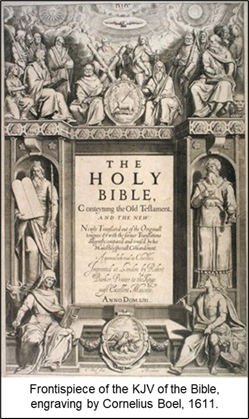
At the Hampton Court Conference, convened by King James I in 1603, John Reynolds, the head of the Puritan Church in England, proposed a new English translation of the Scriptures that would unite the churches and the people of England. Reynold’s goal was one universal authority or standard for all English-speaking Christians.[i]

I recently watched an excellent presentation addressing that question, by Dr. Gary Mann. I was pointed to it while listening to a KJV only  presentation that, while teaching that the KJV is the Bible we should be using, it’s translators were NOT divinely inspired, as some KJV Only proponents claim. Near the end of his presentation Dr. Mann asked four penetrating questions:

1. If the men of Hampton Court were inspired, why did it take them 7 years (1604-1611) to complete the translation?

2. If the men of Hampton Court were inspired, why the 6 different companies to translate and compare their work among themselves?

3. If the men of Hampton Court were inspired, why compare their work with earlier translations?

4. If the men of Hampton court were inspired, why did they consult with other people outside of their Companies?

Those questions capped an excellent presentation that made it’s case based on the very definition of “divine inspiration”.

Here is a link to the entire presentation:

Dr Gary Mann The Reasons Translations Are Not Inspired (youtube.com)

[i] The Translators of the King James Bible (biblebc.com)

Glimpsing the Gospel in Every Book of the Bible

image

Biblical literacy is ever important for Christians as we seek to understand how the Scriptures come together to tell the story of the gospel.

This is the one of a series of short summaries of books of the Bible (Genesis and Exodus to) to help place their content into the larger story of the Bible as a whole.

Genesis

Many readers miss the forest of God’s larger purposes when immersed in the trees of each individual story. In creation, God creates humanity in his own image as his representatives to fill and rule the earth on his behalf (Gen. 1:26–28). Even after Adam and Eve sin and are punished, the promise is given that the offspring of the woman will defeat the serpent and restore the earth (Gen. 3:15). This promise is traced throughout the book in its genealogies,3 which provide the backbone of the entire book. Key divisions are traced by “These are the generations of,” tracing out the stories of key figures, starting with “the heavens and the earth” (2:4–4:26), and going on to Adam (5:1–6:8), Noah (6:9–9:29), the sons of Noah (10:1–11:19), Shem (11:10–26), Terah (11:27–25:11), Ishmael (25:12–18), Isaac (25:19–35:29), Esau (36:1–37:1), and Jacob (37:2–50:26). The line of God’s blessing is emphasized (e.g., Adam, Noah, Terah, Isaac, Jacob), while the stories of other lines receive less attention (e.g., Ishmael, Esau). The individual stories of Abraham, Jacob and Joseph are illustrations of how the promise of Genesis 3:15 begins to be fulfilled.

God desires to bless the nations through a future king. Adam is portrayed in the image of God, a phrase probably signifying a royal representative of God. Abraham would become a “great nation” (Gen. 12:2), and “kings shall come from you” (Gen. 17:6). God’s original command to “Be fruitful and multiply and fill the earth” (Gen. 1:28) is fulfilled in microcosm4 as “Israel settled in the land of Egypt . . . and were fruitful and multiplied greatly” (Gen. 47:27; cf. 1:28).

Israel fails, however, in its calling to be a “kingdom of priests” (Ex. 19:6). This priesthood is ultimately fulfilled through the church in Jesus Christ as a “royal priesthood” of all nations (1 Pet. 2:9). Through this priesthood, God’s purposes for creation as detailed in Genesis 1–2 are finally accomplished, as is seen in Revelation 21–22.

Exodus

Whereas Genesis records God’s promise that Abraham would become a great nation (Gen. 12:2), Exodus describes the fulfillment of that promise (Ex. 1:6– 7). Moreover, God’s covenant with the patriarchs,3 in which he promised to give their descendants the land of Canaan (Gen. 15:18; 26:3; 35:12), is the reason God delivers Israel from Egypt (Ex. 2:24).

Although God gives Israel the law and comes to dwell in their midst, ultimately Israel will not be faithful to their covenant with him. Only in Jesus do we find a faithful Israelite who keeps God’s law while simultaneously embodying God’s presence with his people (John 1:14).

_____________________________________

Taken from Glimpsing the Gospel in Every Book of the Bible by Crossway ©, October 19, 2018. Used by permission of Crossway, a publishing ministry of Good News Publishers, Wheaton, IL 60187, www.crossway.org.

Here’s a link the the Crossway .org site that lets you browse through the same short summary for every book of the Bible: Glimpsing the Gospel in Every Book of the Bible | Crossway Articles

BE BLESSED!

It’s the Economy, Stupid!

We’ve all heard that one so many times, it probably seems a bit trite. It’s a phrase that was coined by James Carville in 1992, when he was a campaign strategist for Bill Clinton. His phrase was directed at the campaign’s workers and intended as one of three messages for them to focus on. Well, it seems like it’s a main theme for the ongoing campaign for the next U.S. President, and by both sides, at that! And after all, making a decent living and being able to afford some of life’s little extras while putting away something for the future is a huge concern for most, if not all Americans, especially for Ed and Norma Normally!

Before I get too far down this rabbit trail, let’s get to the point. How many of you ever been involved in a discussion about a passage of Scripture or particular topic in which your frustration level has risen to the point of wanting to scream “It’s in the text, stupid! I can’t lie. I have, and it’s not a demonstration of proper Christian behavior.

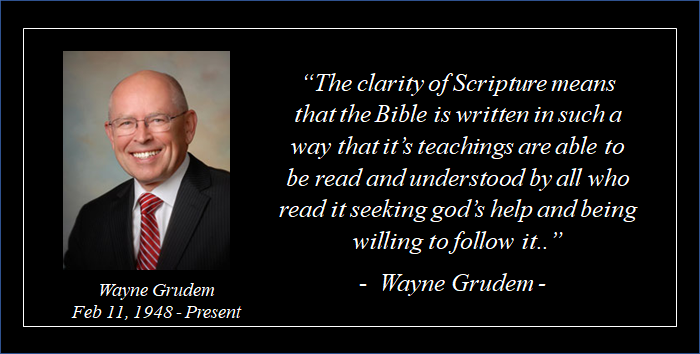
That brings me to the real topic of this article, the clarity of Scripture. There’s even a great theological term for it; “perspicuity”, meaning clarity or understandability. If we are talking about the text of Scripture we’re not just talking about a single passage or paragraph, but we are also talking about spiritual principles, and especially those that seem to say one thing in one place in the Bible, and something different in other places. Let’s get to it!

THE CLARITY OF SCRIPTURE

This principle tells us to let the Bible speak for itself. We should allow Scripture to interpret Scripture, since it is its own best interpreter and commentator. Move from the known to the unknown by interpreting unclear passages in the light of those which are clear. When wrestling with a difficult passage or seemingly contradictory passages consult other verses which deal with the same topic. Now that might seem simple in theory, but it’s always good to have some examples. We’ll look at just one example, having to do with a topic near and dear to our hearts, salvation.

1. Are we saved and justified by faith alone, or by faith plus works? Most, if not all of you are thinking “That’s easy, we are saved by faith!” You even have passages from the Bible already tucked away in your memory, waiting to be called upon at a moment’s notice. You’re standing at home plate, batting cleanup in the lineup, smiling at the opposing pitcher!

Then, either while reading your own Bible during your private time, or during a conversation with others, you come face to face with the following passages (NKJV):

“Thus also faith by itself, if it does not have works, is dead.” (Jas 2:17)

“You see then that a man is justified by works, and not by faith only.” (Jas 2:24)

“For as the body without the spirit is dead, so faith without works is dead also. (Jas 2:26)

What do you do? How do you respond to that curveball? First, stay calm, no matter how adamantly that guy in the Facebook group presses his point. Calm down and politely share the passages stored away for just such a moment, and others, if you have them:

“For by grace you have been saved through faith, and that not of yourselves; it is the gift of God, not of works, lest anyone should boast.” (Eph 2:8-9)

“So they said, “Believe on the Lord Jesus Christ, and you will be saved, you and your household.” (Act 16:31)

“Therefore, we conclude that a man is justified by faith apart from the deeds of the law.” (Rom 3:28)

“For God so loved the world that He gave His only begotten Son, that whoever believes in Him should not perish but have everlasting life”. (Joh 3:16)

Your conversation partner will either stubbornly stick by his guns and say to you, “You didn’t read James?. It’s right there in the text!” Or he might claim that some of the passages you shared don’t have the word “alone” and that Martin Luther added the word alone to Rom 3:28 and therefore works are required for salvation, or he might realize that both sets of passages MUST be true, since God wrote the book (the goal). The authors of those passages (James, Paul, and Luke) were divinely inspired to write what they wrote. It’s either that or somebody’s lying.

That still leaves one question that needs to be answered. What does ‘justification’ in James 2:24 mean? This is where the fun begins. Let’s examine the context of James, chapter 2, beginning with verse 14:

 18But someone will say, “You have faith, and I have works.” Show me your faith without your works, and I will show you my faith by my works. 19You believe that there is one God. You do well. Even the demons believe—and tremble! 20But do you want to know, O foolish man, that faith without works is dead? 21Was not Abraham our father justified by works when he offered Isaac his son on the altar? 22Do you see that faith was working together with his works, and by works faith was made perfect? 23And the Scripture was fulfilled which says, ‘Abraham believed God, and it was accounted to him for righteousness.’ And he was called the friend of God. 24You see then that a man is justified by works, and not by faith only. 25Likewise, was not Rahab the harlot also justified by works when she received the messengers and sent them out another way? 26For as the body without the spirit is dead, so faith without works is dead also.”

In that section of James, chapter 2 is there a connection between ‘faith’ and ‘works’? Is this a “DUH!!” moment, or what? Look again at verses 15-17 again: 

15If a brother or sister is naked and destitute of daily food, 16and one of you says to them, “Depart in peace, be warmed and filled,” but you do not give them the things which are needed for the body, what does it profit? 17Thus also, faith by itself, if it does not have works, is dead.” (emphasis mine)

James is most likely writing to predominately Jewish Christians in house churches outside of Palestine[i]. He is telling them that if there is someone in need among them and they just send them off with a blessing and don’t meet their need, their professed faith is dead, tot, Muerte!

Now back to verse 14:

14What does it profit, my brethren, if someone says he has faith but does not have works? Can faith save him?”

What does this, along with the rest of this section of Scripture, tell us? Genuine, saving faith will always produce works. Conversely, ‘professed’ faith that doesn’t result in works was dead in the water to begin with. The justification spoken of in James, chapter 2 is justification before our fellow men.

I know that was a bit lengthy, but those two bits of Scripture, while presenting what looks like a clear contradiction is one of the best demonstrations of the letting Scripture interpret Scripture that I know of.

So what about those “James Carvill” moments? They are opportunities for stepping back, taking a deep breath, and becoming more Christlike in our communication skills!

image

BE BLESSED!


[i] Introduction to James (blueletterbible.org)

An ‘Excellent’ KJV Question?

clip_image002I came across the following question on FB recently:

Q: Why is it that the King James version is hard to understand compared to the other versions of the Bible?

On its face, that’s an excellent question, so I provided my best short answer:

It was written in 17th century English, the common English of its time. The question was about the KJV compared to other, more modern versions, some of which are really very good translations. I actually compared a particular verse in two English Bibles (KJV & NIV), and modern language Spanish, German, & Polish Bibles. The NIV was the English Bible closest to the Greek meaning, and the other foreign languages were also close to the Greek meaning. The KJV was an excellent translation in terms of 17th century common English, however 17th century common English is not today’s common English.

Then I scanned a lot of the other answers. Sadly, most of the other answers had little or nothing to do with the original, honest question (I thought was honestly resented), or so I thought it was. Then I came across the answer from the man who asked the question:

A: It’s because it’s not the Word of God. The translators were clergymen from the church of England.

I had not expected such a ‘silly’ answer, but it turned out that the FB page that posed the question is one that seems to be more of an “opinion” free-for-all/digital “food fight” than honest objective discussion. Well, never mind that, it’s still a good question, and it prompted me to review the history of the KJV.

I found a short but informative of the KJV published by the Encyclopedia Britannica that provided some interesting background information, the preparation leading up to the first published version of the KJV, as well as some interesting tidbits of information I did not already know. I found out that King James had an approved list of 54 revisers, although 47 scholars worked on the actual revision, organized into six companies that worked on assigned sections of the Bible at Westminster, Oxford and Cambridge.[i]

I also found a really good article published at Christianity.com that discussed King James’ motives for the revision, centering on the need for a Bible in the language of 17th century common people. The commissioning of the new revision of the Bible took place in 1604 at the Hampton Court in Londin and the influence of various segments of 17th century Christianity in England. Specific rules were adopted for the monumental translation effort. One of those was Rule #6 that stated: “No Marginal Notes at all to be affixed, but only for the explanation of the Hebrew or Greek Words.” Also, James was looking for a single translation that the whole nation could rely on “To be read in the whole Church,” as he phrased it. He decreed that special pains be “taken for a uniform translation, which should be done by the best learned men in both Universities, then reviewed by the Bishops, presented to the Privy Council, lastly ratified by the Royal authority….”[ii]

Back to the Bible translation experimented I conducted in the mid-80’s when I was attending the Polish Language course at the Defense Language Institute in Monterrey, CA. I was attending a small church between Ft. Ord, where I was living, and Monterrey. The Pastor assisted by providing Greek language dictionaries.

I already summarized my little experiment at the top of this article, but I didn’t tell you what passage of scripture I used, John 1:5, KJV:

“And the light shineth in darkness; and the darkness comprehended it not.

The other English translation I used was the NIV:

“The light shines in the darkness, and the darkness has not overcome it.”

At first glance, there seems to be a slightly different meaning between the KJV and NIV. The former tells us that the darkness could not understand (comprehend) the light, while the NIV says that the darkness could not overcome the light. That was my 20th century brain kicking in.

What I found most interesting about that little bit of research was that the Polish modern language translation of that passage was closer to the original Greek than all of the other translations!

So What? What did I learn from that little FB question and the research from years ago?

1. As far as the original question is concerned, perhaps I need to not be so gullible when reading questions on FB posts. They often tend to be intentionally leading questions, designed with the ‘correct’ answer already in the mind of the questioner, who merely wants to demonstrate his/her deep and profound knowledge.

2. Concerning the 1611 KJV Bible and King James Onlyism, I remain convinced that to claim that one of the KJV versions (there are more than one) is as inspired as the original manuscripts/autographs is right up there with believing in a ‘flat’ earth, in more ways than one.

As a parting thought, or a Post Script, I would like you to read a small portion of the preface to the 1611 KJV itself and the words of the translators:

“The translators argue that all previous English translations can rightly be called the Word of God, even though they may contain some “imperfections and blemishes.” Just as the King’s speech which he utters in Parliament is still the King’s speech, though it may be imperfectly trans­lated into French, Dutch, Italian, and Latin; so also in the case of the translation of the Word of God. For translations will never be infal­lible since they are not like the original manuscripts, which were pro­duced by the apostles and their associates under the influence of inspira­tion. However, even an imperfect translation like the Septuagint can surely be called the Word of God since it was approved and used by the apostles themselves. But since all translations are imperfect, the Church of Rome should not object to the continual process of correcting and improving English translations of the Bible. Even their own Vulgate has gone through many revisions since the day of Jerome.”[iii]

You can read the entire preface online here.


[i] King James Version – Britannica Encyclopedia

[ii] Story Behind the King James Bible: How was it Created?

[iii] Detroit Baptist Theological Seminary The Embarrassing Preface to the King James Version – Detroit Baptist Theological Seminary (dbts.edu)

“ALL” Scripture

image

Listen to the words of the Apostle Paul to young Pastor Timothy, written from a dark and damp Roman prison cell, just before his death in AD 67.

12Yes, and all who desire to live godly in Christ Jesus will suffer persecution. But evil men and impostors will grow worse and worse, deceiving and being deceived. 14But you must continue in the things which you have learned and been assured of, knowing from whom you have learned them; 15 And that from childhood you have known the Holy Scriptures, which are able to make you wise for salvation through faith which is in Christ Jesus. 16All Scripture is given by inspiration of God, and is profitable for doctrine, for reproof, for correction, for instruction in righteousness 17that the man of God may be complete, thoroughly equipped for every good work (2 Tim:3:13-17 (ESV)

From his own prison cell in Rome, Paul reminds that all who desire to live a godly life in Christ Jesus will suffer persecution. Not might, but will. And why did Paul break this wonderful news to Timothy? It was because “evil men and imposters will grow worse and worse, deceiving and being deceived.” It looks like error feeds on itself, then and now.

Paul then counsels Timothy to continue in the things he had learned and been assured, in light of from whom he had learned them, beginning in his childhood. It’s time for a bit about Timothy and his childhood.

Timothy was the son of a Greek father and Jewish mother and had joined Paul during one of his missionary journeys and was considered by Paul as a “true son of the faith” (1 Tim 1:2). From his Roman prison cell, Paul told Timothy that he even remembered his genuine faith and from whom he had learned it; from his grandmother Lois and his mother Eunice. Two godly women had nurtured young Timothy from his youth and had taught him from the Jewish Scriptures, preparing him to be able to recognize the Messiah when Paul came preaching Jesus Christ.

As mentioned before, Paul reminded Timothy “to continue in the things he had learned” from his mother and grandmother “and been assured of” from the Jewish scriptures.

On to the title and major point of this blog post:

All Scripture is given by inspiration of God, and is profitable for doctrine, for reproof, for correction, for instruction in righteousness that the man of God may be complete, thoroughly equipped for every good work.” (v.16-17)

Paul states unequivocally that ALL Scripture is inspired (breathed out) by God and is profitable for anything that a man of God might need for every work he might perform in the service of his Lord and Master. Paul is referring first and foremost to the Jewish Scriptures – to the Old Testament, as well as the portions of the New Testament that had already been written and might yet be written. Paul is basically saying that “If it’s Scripture it applies to His children. If it’s in the Old Testament or the New Testament it’s “profitable” (helpful, advantageous) for us in our Christian lives.

Well, now that I have just told you what you probably already know, let me tell you why wrote this article. There is what seems to be a growing movement these days that will tell you differently than what Paul told young Timothy. It’s not a new movement, as it dates back to the late 19th century, but nevertheless it is growing today. Trust me, I’ve been to their Web site and Facebook pages. I’ve done extensive research to make sure that their outlandish claims were not fabrications. They will tell you exactly how God has dealt with both Jews and Gentiles throughout history, from creation, until now and through the end of time.

They have so separated the nation of Israel from the church that much of the Bible (Authorized KJB only, the rest are garbage) pertains only to Jews and the nation of Israel, and that only a portion of the New Testament is meant for Christians and the church!

The entire Old Testament, through the four Gospels and into the book of Acts, when Paul began his ministry (either in the middle of Acts or at the end of Acts) pertains to Jews and is about Israel. They will tell you that the books of Hebrews through Revelation also pertain only to and are about Israel. What’s left, from when Paul began his ministry to the Gentiles through his letter to Philemon pertains to the Christian church. Drum roll please. . . . .

We don’t need to be concerned with anything outside of Paul’s letters! Here’s the problem with that, and something I would love to share with my new ‘friends’, but I have either been banned from discussion these things with them, or I must pass through site admins to have anything posted.

1. Paul’s letters to Timothy are in ‘in bounds’, and important for Christians and the church.

2. Paul specifically told Timothy that ALL scripture was important and profitable for his life and the life of any child of God.

3. Therefore, the stark separation of Scripture into portions for only Jews and the rest only for the church, which the aforementioned movement calls “rightly dividing”, is utter nonsense!

I’ve made my point here. I’ve also tried to appeal directly to members of what’s been called hyper, or Mid-Acts Dispensationalism (Rightly Divided) to no avail. Perhaps the argument in this blog post will be helpful to you, should you encounter anyone in the movement I described.

Be Blessed!

2022 State of Theology Summary

The following is extracted from an article posted online by Ligonier Ministries. I will let it speak for itself.

What do Americans believe about God, salvation, ethics, and the Bible? Ligonier Ministries and LifeWay Research partnered to find out. Every two years, we take the theological temperature of the United States to help Christians better understand today’s culture and to equip the church with better insights for discipleship. Read some of our key findings from 2022 below and explore the data for yourself.

Does God Change?

As we look at ourselves and at the world, it is clear that human beings, along with the rest of creation, undergo frequent changes. But does this principle of change apply to God as well?

The Bible affirms the truth that the triune God is both omniscient, meaning that He knows all things, and immutable, meaning that He cannot and does not change (Isa. 46:10; Mal. 3:6; James 1:17; 1 John 3:20). Despite this truth, the majority of adults in the United States believe that God both learns and adapts to different circumstances.

Despite the clear teaching of Scripture, this year’s survey reveals that approximately half of evangelicals believe that God learns and adapts to various situations, meaning that they believe that God does change.

STATEMENT NO. 4

God learns and adapts to different circumstances.

U.S. Adult Finding: 51% agree vs. 32% disagree

U.S. Evangelical Finding: 48% agree vs. 43% disagree

These results show that American evangelicals and the general U.S. population are essentially equivalent in their agreement with this statement. Nearly half of both groups believe that God changes by learning and adapting. This may indicate the influence of open theism (which denies God’s complete knowledge of future events) and process theology (which denies God’s omnipotence and asserts that He does undergo changes) within the evangelical church. This finding may also indicate a lack of clear, biblical teaching on the character of God in evangelical churches.

Are We Born Innocent?

When God created the world, everything He made was good (Gen. 1:10, 21, 25, 31). Yet through Adam and Eve’s rebellion in the garden of Eden, humankind became corrupted. The Bible teaches the concept of original sin, which means that since the fall, every human being inherits a sin nature from the time of their conception (Ps. 51:5; Rom. 5:12). In other words, we are not sinners because we sin; rather, we sin because we are sinners.

It is unsurprising that most U.S. adults believe that humans are born innocent, given the influence of humanistic philosophies and worldviews that teach self-determinism and a view of humankind as basically good.

STATEMENT NO. 15

Everyone is born innocent in the eyes of God.

U.S. Adult Finding: 71% agree vs. 21% disagree

U.S. Evangelical Finding: 65% agree vs. 32% disagree

The fact that almost two-thirds of evangelicals believe that humans are born in a state of innocence reveals that the biblical teaching of original sin is not embraced by most evangelicals. God’s Word, however, makes clear that all humans are “by nature children of wrath” (Eph. 2:3). This truth is foundational for an accurate understanding of the gospel and of our absolute need for the grace of God in salvation.

U.S. Evangelicals: Trends

The 2022 survey results for U.S. evangelicals reveal concerning trends related to the exclusivity and deity of Jesus Christ, the historicity and divine nature of Scripture, objective truth, gender identity, and homosexuality. At the same time, encouraging trends include evangelicals’ increasingly biblical views on abortion and sex outside of marriage.

God

Key to orthodox Christianity is Jesus’ own assertion that He alone is “the way, and the truth, and the life,” and that “no one comes to the Father except through [Him]” (John 14:6, emphasis added). Trends over time and the 2022 survey results reveal an increasingly unbiblical belief among evangelicals that God is pleased by worship that comes from those outside the Christian faith.

STATEMENT NO. 3

God accepts the worship of all religions, including Christianity, Judaism, and Islam.

U.S. Evangelical Finding:

2016: 48% agree
2018: 51% agree
2020: 42% agree
2022: 56% agree

This year’s survey also revealed a significant increase in evangelicals who deny Jesus’ divinity. Such a belief is contrary to Scripture, which affirms from beginning to end that Jesus is indeed God (John 1:1; 8:58; Rom. 9:5; Heb. 1:1-4).

STATEMENT NO. 7

Jesus was a great teacher, but he was not God.

U.S. Evangelical Finding:

2020: 30% agree
2022: 43% agree

Truth

Embracing the reality of objective truth is necessary to a right and proper understanding of the world. Scripture affirms that God is truth (Num. 23:19; John 1:14; 14:6; 16:13), and because the Bible is His Word, Scripture is truth as well (Ps. 119:160; John 17:17; 2 Tim. 2:15). Despite the testimony of Scripture, evangelicals increasingly believe that the Bible is not literally true.

STATEMENT NO. 16

The Bible, like all sacred writings, contains helpful accounts of ancient myths but is not literally true.

U.S. Evangelical Finding:

2016: 17% agree
2018: 23% agree
2020: 15% agree
2022: 26% agree

A rising disbelief in the Bible’s literal truth may help us understand why American evangelicals also increasingly believe that religious faith is a subjective experience rather than an objective reality.

STATEMENT NO. 31

Religious belief is a matter of personal opinion; it is not about objective truth.

U.S. Evangelical Finding:

2018: 32% agree
2020: 23% agree
2022: 38% agree

Sexual Ethics

The changes in sexual ethics in the United States are occurring at an alarmingly rapid pace. However, one encouraging finding is that evangelicals affirm a biblical view of fornication and adultery in greater numbers.

STATEMENT NO. 25

Sex outside of traditional marriage is a sin.

U.S. Evangelical Finding:

2016: 91% agree
2018: 89% agree
2020: 90% agree
2022: 94% agree

While evangelicals are more likely than U.S. adults in general to affirm a biblical sexual ethic, in the areas of gender identity and homosexuality, a significant rise of an unbiblical worldview is apparent, especially in the 2022 survey.

STATEMENT NO. 27

Gender identity is a matter of choice.

U.S. Evangelical Finding:

2016: 32% agree
2018: 30% agree
2020: 22% agree
2022: 37% agree

The rise of unbiblical views among American evangelicals on the subjects of gender and sexuality may indicate the influence of a secular worldview that is making greater inroads into the church.

STATEMENT NO. 28

The Bible’s condemnation of homosexual behavior doesn’t apply today.

U.S. Evangelical Finding:

2016: 19% agree
2018: 20% agree
2020: 11% agree
2022: 28% agree

Abortion

The Bible teaches the personhood of those in the womb (Ps. 139:13, 16; Luke 1:41, 44). As such, the practice of abortion is the murder of a human being who is an image bearer of God. Past survey results among evangelicals have remained fairly consistent since 2016, with an uptick in 2022 of more evangelicals asserting that abortion is a sin. While the reasons for this positive trend are unknown, it is encouraging to see more evangelicals affirming the personhood of human beings in the womb.

STATEMENT NO. 26

Abortion is a sin.

U.S. Evangelical Finding:

2016: 87% agree
2018: 88% agree
2020: 88% agree
2022: 91% agree

______________________

Evangelicals were defined by LifeWay Research as people who strongly agreed with the following four statements:

  • The Bible is the highest authority for what I believe.
  • It is very important for me personally to encourage non-Christians to trust Jesus Christ as their Savior.
  • Jesus Christ’s death on the cross is the only sacrifice that could remove the penalty of my sin.
  • Only those who trust in Jesus Christ alone as their Savior receive God’s free gift of eternal salvation.

Respondents can also be identified as evangelical in the State of Theology data explorer based on their supplied church affiliation.

Conclusion

The 2022 State of Theology survey reveals that Americans increasingly reject the divine origin and complete accuracy of the Bible. With no enduring plumb line of absolute truth to conform to, U.S. adults are also increasingly holding to unbiblical worldviews related to human sexuality. In the evangelical sphere, doctrines including the deity and exclusivity of Jesus Christ, as well as the inspiration and authority of the Bible, are increasingly being rejected. While positive trends are present, including evangelicals’ views on abortion and sex outside of marriage, an inconsistent biblical ethic is also evident, with more evangelicals embracing a secular worldview in the areas of homosexuality and gender identity.

These results convey the ongoing need for the church to be engaged in apologetics, helping unbelievers by providing a well-reasoned defense of the Christian faith, and helping believers by strengthening their clarity and conviction regarding why they believe what they do. Additionally, the people of God must continue to obey the Great Commission by communicating the whole counsel of God in biblical evangelism and discipleship. The need is great, but the power and promises of God can equip the church to bring truth and light to a deceived and dark world.

The REST of the Verse – 2 Peter 3:9

It’s been said by some biblical scholars that the three most important rules for a proper and thorough understanding of the text of Scripture are Context, Context, & Context. By that we mean:

  • The immediate context in a section or chapter of Scripture
  • The larger context of a particular book in the Bible
  • The broad context of the entire Bible and God’s plan for his children

I freely admit that some passages of Scripture can be valuable in and of themselves as precious promises, words of comfort, or even admonition or warning. They can also be used to ‘prove’ one’s personal opinion or preferred interpretation. Examining context can therefore be not only profitable, but extremely edifying.

With that said, let’s examine 2 Peter 3:9.  

“The Lord is not slow to fulfill his promise as some count slowness, but is patient toward you, not wishing (“willing”, KJV) that any should perish, but that all should reach repentance”. (2 Pet 3:9, ESV)

We are not concerned so much with what we think it means or what we might want it to ‘prove’, but only what it is actually telling us in the three contexts mentioned above (chapter, book, the entire Bible). We can ask a few simple questions to accomplish our goal.

1. To whom is it written?

First of all, we know that the Apostle Peter wrote it, along with another, earlier letter (1 Peter) to a person or group of people called “you”. (The KJV and a few other translations use the term “us-ward”, or simply “us”.) If we look at the first chapters of 1 & 2 Peter letters’ greetings to his hearers, we are told exactly to whom they were written:

“Peter, an apostle of Jesus Christ, To those who are elect exiles of the Dispersion in Pontus, Galatia, Cappadocia, Asia, and Bithynia,” (1 Pet 1:1)

“Simeon Peter, a servant and apostle of Jesus Christ, To those who have obtained a faith of equal standing with ours by the righteousness of our God and Savior Jesus Christ:”(1 Pet 2:1)

From those two greetings we know that Peter was writing to a group of God’s chosen people scattered across Asia Minor (1 Pet 1:1) and that they were fellow believers (2 Pet 1:1). That’s important.

2. What does it mean that “God is not slow to fulfill his promise? What promise?

In addition to our subject verse (2 Pet 3:9), Peter also writes:

“. . .you should remember the predictions of the holy prophets and the commandment of the Lord and Savior through your
apostles,  knowing this first of all, that scoffers will come in the last days with scoffing, following their own sinful desires. “They will say, “Where is the promise of his coming? For ever since the fathers fell asleep, all things are continuing as they were from the beginning of creation.”(2 Pet 3:2-4)

“But the day of the Lord will come like a thief, and then the heavens will pass away with a roar, and the heavenly bodies will be burned up and dissolved, and the earth and the works that are done on it will be exposed.” (2 Pet 3:10)

When Peter said “The Lord is not slow to fulfill his promise” he was referring to the day of the Lord, and not wanting any of God’s chosen people (elect exiles) to perish, but that they all would come to repentance and been saved.

3. What about the context of the entire Bible concerning God’s chosen people and salvation? Is there a wider application to be found in 2 Peter 3:9?

Although there are numerous places in Scripture where God’s promises for his chosen people are  declared, I think Peter answered our third and final question quite clearly:

“Blessed be the God and Father of our Lord Jesus Christ! According to his great mercy, he has caused us to be born again to a living hope through the resurrection of Jesus Christ from the dead, to an inheritance that is imperishable, undefiled, and unfading, kept in heaven for you, who by God’s power are being guarded through faith for a salvation ready to be revealed in the last time” (1 Pet 1:3-5)

The Apostle Paul also summarized it even more succinctly:

 “And I am sure of this, that he who began a good work in you will bring it to completion at the day of Jesus Christ.” (Phil 1:6)

So regardless of what you have believed about 2 Peter 3:9, now you have. . .

. . .the REST of the verse!

Be Blessed!