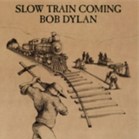
 I confess that I have been a Bob Dylan fan throughout his career. He was considered by some to be a prophet of his times, considered by many to be the most acclaimed and influential songwriter of the past half century, receiving a Pulitzer Prize in Literature in 2016, having been cited for his “profound impact on popular music and American culture, marked by lyrical compositions of extraordinary poetic power”, as early as 2008 by Variety Magazine. The album “Slow Train Coming” produced in 1979, was the first of a trilogy of gospel albums Dylan wrote and performed after his conversion to Christianity, which is quite a story in itself. The opening track on that album was Gotta Serve Somebody and actually won a Grammy Award for Best Rock Vocal Performance by a Male in 1980.
Gotta Serve Somebody, for this old timer, is still Dylan’s most memorable song. I first heard it during a period of my life when this prodigal son had returned to his Christian roots. The song contains multiple verses written in the second person describing in an almost light hearted manner the sort of person you might be, with each verse followed by a hard-hitting haunting chorus. Here is the first verse and the chorus:
Verse 1
“You may be an ambassador to England or France
You may like to gamble; you might like to dance
You may be the heavyweight champion of the world
You might be a socialite with a long string of pearlsChorus
But you’re gonna have to serve somebody, yes indeed
You’re gonna have to serve somebody
Well, it may be the Devil or it may be the Lord
But you’re gonna have to serve somebody
As Dylan’s first release during his “gospel” period, “Gotta Serve Somebody” was met with divisive reviews; John Lennon famously criticized the song and wrote a parody titled “Serve Yourself” in response. The popular magazine, Record World said that “Dylan’s fervent vocals, laced with a gospel female chorus, and subdued keyboard/guitar lines make this an important statement.” The song has been covered by over 50 additional artists.
What I found most intriguing about “Gotta Serve Somebody” is the fact that Bob Dylan was might have been absolutely correct in declaring that everyone serves either “the Devil or the Lord”, at least according the Apostle Paul. Please hear me out, especially if you are having problems with Dylan’s declaration. It can be a tough pill to swallow, even for professing Christians.
In his letter to Christians in Rome, as recorded in Romans, chapter 6, Paul spoke of believers being dead to sin and alive to God (vv. 1-14), and then gave thanks to God that those who had once been slaves to sin under the law were now slaves to righteousness and heartfelt obedience leading to sanctification because of God’s grace, having been saved by faith in Christ. (vv. 15-19).
“15 What then? Are we to sin because we are not under law but under grace? By no means! 16 Do you not know that if you present yourselves to anyone as obedient slaves, you are slaves of the one whom you obey, either of sin, which leads to death, or of obedience, which leads to righteousness? 17 But thanks be to God, that you who were once slaves of sin have become obedient from the heart to the standard of teaching to which you were committed, 18 and, having been set free from sin, have become slaves of righteousness. 19 I am speaking in human terms, because of your natural limitations. For just as you once presented your members as slaves to impurity and to lawlessness leading to more lawlessness, so now present your members as slaves to righteousness leading to sanctification.”
The Bible Knowledge Commentary has this to say about verses 17 & 18:
“This discussion reminded the Apostle Paul of what the grace of God had already accomplished in his readers’ lives and he burst forth in praise. Before they responded to the gospel they had been slaves to sin, but they wholeheartedly (lit., “out from hearts,” thus inwardly and genuinely, not merely externally) obeyed (cf. “obedience” in 1Pet 1:2) the form of teaching to which they were entrusted. Hearing the teaching of God’s Word, they committed themselves to those truths. That commitment was evidenced by their response to the gospel and their being baptized. The result was that they have been set free from sin and have become slaves (past tense in Gr.) to righteousness (cf. Rom 6:22).”
So What?
Assume for a moment that Dylan was right in declaring that we all serve somebody, either the Devil or the Lord?:
What are we, as Christians with the mission of sharing the gospel with a lost world, to do with the knowledge that those who are living apart from saving grace through Christ? We can apply that truth in at least two ways.
First, we should gaze inwardly and remember that every one of us who has embraced the Savior of the world once served sin and the Devil. Call it ‘remembering our natural roots’. In doing so, we won’t lose sight of the enormity of Christs sacrifice on our behalf. It had nothing to do with ‘our best lives now’! Sadly, you won’t hear a sermon about our true condition apart from Christ from many of today’s pulpits or entertainment venues masquerading as churches.
Secondly, the true condition of the lost that are all around us as servants of sin needs to inform our efforts at personal evangelism. While we should see our unsaved loved ones, friends, co-workers and neighbors in the same way Jesus saw the crowds that surrounded Him, both Jews and gentiles compassionately and as “harassed and helpless, like sheep without a shepherd” (Matt 9:36/Mark 6:34). Just as Jesus taught the crowds that surrounded him and followed him, we need to lovingly and truthfully share with others the problem of sin and the solution to its ‘slavery’ through repentance and belief in the message of the gospel.

 The Battle Cry