The KISS Principle and Evangelism

image

The acronym KISS (Keep it simple, stupid!) is said to have originated with one of Lockheed Martin’s lead engineers, Kelly Johnson, who worked for Lockheed Skunk Works, Lockheed Martin’s Advanced Development Programs division, that produced the U-2 and SR-71 spy planes, among many others.

Johnson came up with KISS during World War II. It was a way to remind his team that their state-of-the-art jets still had to be repaired by average mechanics with basic tools.[i]

Johnson died in 1990, but “Keep it simple, stupid” lives on as a valuable motto for all sorts of professionals. Web designers remember it to keep their sites navigable and fast-loading. Advertisers use it to make sure pitches are clear and direct. Communication strategists advise it to ensure presentations and talking points don’t distract from key messages.[ii]

The key principle, if it isn’t clear already, is that simplicity should be a key principle for whatever endeavor in which you are engaged. The manner in which the above-mentioned communication strategists advise its use is the closest to the topic of evangelism.

To evangelize simply means to announce or proclaim good news. The first “To” in the CMF motto is “To Win” (souls for Christ), and is the absolutely essential first step for the remaining terms in our motto “To Disciple, To Equip, To Win”.

So how does the “keep it simple” principle apply to personal evangelism? I’m so glad you asked!

First, understand how souls are ‘won’ for Christ. Remember that ‘winning souls’ is a ‘team’ effort. Our part as believers in Christ is to announce or proclaim (communicate) the good news, The other, and most important member of the ‘team’ is God himself! There’s a beautiful example of ‘soul winning’ in Acts, chapter 16, when Paul & company went down to the river to pray:

“ And on the Sabbath day we went out of the city to the riverside, where prayer was customarily made; and we sat down and spoke to the women who met there. Now a certain woman named Lydia heard us. She was a seller of purple from the city of Thyatira, who worshiped God. The Lord opened her heart to heed the things spoken by Paul. (Acts 16:13-14, NKJV) (emphasis mine)

Lydia, a Gentile, had come to learn of and worship the one true God of the Jews. God opened her heart, Paul preached, and the next thing that happened that day was Lydia’s baptism, along with members of her household! Souls were ‘won’ for Christ that day!

Do you see what needed to happen for a soul to be won? God opened Lydia’s ‘heart’ to hear, Paul explained the gospel of Christ, Lydia believed on Christ and was saved, result in her being baptized .

So it is with us today as we share the gospel with a lost world around us. Our part as believers is to share the simple message of the gospel that Christ, trusting that God has opened hearts to ‘hear’ and believe.

Second, make sure your presentation of the gospel message is simple, clear, and direct. Remember that the gospel of Jesus Christ is about the bad news of sin (Rom 3:23) and the good news of Jesus Christ; his death, burial, and resurrection (1 Cor 15:1-4). In fact, the bad news is SO bad that no amount of good works can save a man, but God can (John 3:16).

Finally, never forget your goal in sharing the gospel is to see a soul won for Christ! Your role is to present Christ Jesus to sinful people so that, through the power of the Holy Spirit, they may come to put their trust in God through Him.

Aren’t there a lot of other things about being a Christian that you could talk about? There sure are, but they can wait. That’s where the next part of the CMF motto, “To Disciple “comes in. At the same time, be ready to answer questions that might arise. For now, keep the main thing, the MAIN thing!

So dear friends, as you continue sharing the precious gospel of Jesus Christ with you families, co-workers, school mates, friends and acquaintances,

image

If you are currently serving in the military or are a military veteran, you can find out more about the CMF ministry at our Homepage:  Christian Military Fellowship – Serving Our Troops or by using the following address:  https://www.cmfhq.org/.


[i]The Business Story Behind the KISS Principle – Braithwaite Communications

[ii] ibid.

How Big is YOUR God?

image

Most, if not all of us are familiar with the story of Job, who was a righteous man who suffered greatly at the hand of God after Satan dared God to afflict Job and all that he had, sure that Job would then curse God! God gave permission to test Job and Job lost everything, even to the point that his wife challenged him to curse God and die. Not only that, Job had three main friends (plus a younger man who spoke later) who came to comfort him but ended up accusing him instead.

To make a longer story short, there was a series of conversations with his “friends” and the younger man. Job did not receive a direct answer to his suffering, but he came to a place of trust and humility before God. Instead of demanding explanations, he acknowledges God’s greatness and repents for questioning Him. As a result, God restored Job’s fortunes.

The section of the Book of Job that stands out the most in the heart of this old soldier is God’s response to Job (CHs 38-41), followed by Job’s repentance and humility (CH 42).

God’s response to Job consisted of a series of profound questions that emphasized His power, wisdom, and sovereignty over creation. There are 21 questions. Here are just a few of them:

“Where were you when I laid the foundation of the earth?” (Job 38:4)

“Does the hawk fly by your wisdom?” (Job 39:26)

“Shall a faultfinder contend with the Almighty?” (Job 40:2)

Why is this story so important to this old man? I’ll let A.W. Tozer, a Christian pastor and theologian answer that question. In his book, The Knowledge of the Holy, Tozer wrote:

“What comes into our minds when we think about God is the most important thing about us.”

Tozer believed that a person’s concept of God shapes their entire life, including their faith, character, and decisions. He emphasized that a low view of God leads to weak faith, while a high and reverent view of God leads to true worship and transformation.

So What?

You might be wondering how it might apply a specific area of your life. I’m sure that many hours could be spent thinking about different areas of our lives and asking ourselves if they truly reflect a high view of God. I’d like to share just one example – personal evangelism.

If sharing the Gospel of Jesus Christ with the lost world around us the main reason that God saved us (Matthew 28:16-20), it’s a good place to start. What does it mean to share the gospel with others with a ‘high’ view of God?

The short answer to that question is, in my view, “Get it right!” What does that mean?

I think it means that sharing the message of the gospel might not really begin with “God loves you and has a wonderful plan for your life!” You could hear, “Well, I love me too and I also have a wonderful plan for my life!” You have just told your listener that God’s highest priority in loving us is the “wonderful plan” He has for us. Is it?

When the angel of the Lord told a nervous Joseph that the child Mary was carrying in her womb was God’s child and not another man’s, he also told Joseph “You shall call His name JESUS, for He will save His people from their sins.”  You can read all about in Matthew, chapter 1.

It looks like the greatest demonstration of God’s love for us is God’s sending His Son to die for OUR sin! That probably should be the starting point of our sharing the gospel message with other. God’s wonderful plan for our lives is certainly ‘good’ news, but sending His Son to bear the punishment for OUR sin is the ‘greatest’ news of all!

I know it can be a bit scary to start sharing the gospel message with the bad news of sin instead of the good news of God’s wonderful plans for us, but shouldn’t we start our sharing of the gospel message where God started the gospel story?

So I’ll just leave you with the original question:

image

Be Blessed!

The MAIN Thing is STILL the Main Thing, Even on Super Bowl Sunday

image

This is the 6th post here at The Battle Cry with “The Main Thing” as the subject. There are links to the other posts at the bottom of today’s edition. We thought today (11 Feb 2024) would be a good day to reemphasize what is perhaps the world’s most important truth.

You simply cannot escape the excitement and fervent lead-up to the Super Bowl, each and every year. It’s non-stop for just about every media outlet you can imagine. The ‘Greatest Superbowl Ad Ever’ campaign is already underway, as well as innumerable opportunities to buy all sorts of San Francisco 49ers and Kansas City Chiefs ‘stuff’. Brittany Mahomes (wife of the Chiefs’ QB) is on the latest SI Swimsuit edition. Our daughter-in-law, an absolute sweetheart, even posted a picture of a 49ers cake she baked.

I confess that we (the DanDee couple) watched the playoffs in anticipation of one of our teams making it to the big one. That didn’t happen so maybe we’ll each pick a team and just enjoy watching the game. We still like watching, especially since it seems like some of the controversy over kneeling for the national anthem and ‘woke’ beer commercials have died down.

Having said all that, it might be important to mention that this year, with another presidential election in the near future, just might be the most significant period in the history of our nation, if regardless of which political party, if any, has your allegiance. It does seem like the Super Bowl and the upcoming election are the two topics dominating the national media, with the several international crises following right on their heels.

I don’t know about you, but I’ve become accustomed lately to reading headlines and skipping detailed articles. I’m not just talking about the above topics. You can add natural catastrophes, wars and rumors of war, rising crime, young children being ‘groomed’ to consider what is abomination to God completely acceptable and normal behavior, along with all the rest of the LGBTQ(??) and ‘woke’ agendas. Current issues and events can easily makes us fearful, angry, or both.

To summarize, it just seems like things are becoming worse and worse all across the planet. Christians shouldn’t be surprised, however, because the Bible does tell us that “lawlessness, as well as many other catastrophes and disasters will increase” as we approach the return of Christ, the removal of His church from this earth and His impending judgment. (Matthew 24:2-26). What are we, as followers of Christ to do? To borrow from Dr. Francis Shaeffer’s timeless masterpiece, “How Then Shall We Live?”.

First, it’s important to remember that all of the ills of our culture, our nation, and indeed the entire world are a result of the first Adam’s sin and fall in the Garden of Eden. It’s also self-evident that we cannot, as individuals, solve many of the problems and issue we face in today’s world.

We can however, when we realize that much of what ails us, our nation, and our world can be traced to the sin that resides in the hearts and minds of sinful fallen men, be positive change agents. And that, my friends brings us right back to ‘The Main Thing’ – the message of the gospel of Jesus Christ, in at least two ways.

1. It is only the gospel of Jesus Christ – his perfect life, death and resurrection for the sins of his people that can resolve the issue of sin! By his perfect life, death and resurrection Jesus paid the price for our sin, satisfying God’s just wrath toward the sins of his people.

“He (Jesus) is the propitiation for our sins, and not for ours only but also for the sins of the whole world.” (1 John 2:2, ESV)

2. God has entrusted his children with the mission of sharing the good news of the gospel of Jesus Christ with the world around us, making the Great Commission perhaps the greatest privilege the Creator has ever bestowed upon his creation!

With all that said, I ask myself, “How ya doin’ with that?”

Today, if not every day, is a good time to ask ourselves if we are keeping the main thing, the MAIN thing!

Be Blessed!

________

Links to the other “Main Thing” posts:

Keeping the Main Thing the Main Thing – What IS the Gospel?

Keeping the Main Thing the Main Thing – Christ died for OUR SINS

Keeping the Main Thing The Main Thing – What Happened on the Cross?

The Main Thing is STILL the MAIN THING

The Main Thing is Still the ‘Main Thing’

The movie/film series based on Dr. Schaeffer’s book can be viewed on YouTube at: How Should We Then Live (1977) | Full Movie | Francis Schaeffer | Edith Schaeffer (youtube.com)

Should We Reconsider How We Share the Gospel with Gen Z?

That question is also the title of an article by Mike Leak, at Christianity.com. We think it’s a good question, but first we need to define “Gen Z”. According to the article, “Generation Z, sometimes known as Zoomers, are those born between the mid-late 1990s and the early 2010s. For simplicity let’s say that it’s anyone born between 1997 and 2012.” Other sources agree. I checked. As a verified septuagenarian, I can be confused more easily that younger folks.

Zoomers are said to be the first generation to have grown up entirely online and can be referred to as “digital natives”. A Pew Research study tells us,

“The iPhone launched in 2007, when the oldest Gen Zers were 10. By the time they were in their teens, the primary means by which young Americans connected with the web was through mobile devices, WiFi and high-bandwidth cellular service. Social media, constant connectivity and on-demand entertainment and communication are innovations Millennials adapted to as they came of age. For those born after 1996, these are largely assumed.”

The article named above also talked about their unique characteristics, and their unique challenges, including challenges to the gospel. This is where I began do disagree with some of the author’s statements.

First of all, the author said that “. . . it’s helpful to remember that regeneration (repentance-faith-salvation, or new birth) is impossible with any generation. On it’s face, that simply is not true. Perhaps it was just a poor choice of words. Maybe he should have said that ‘sharing the gospel’ with any generation has its challenges. He did suggest a set of unique barriers to sharing the gospel with Generation Z, which are probably true.

· The digital noise and a short attention span make it difficult to even gain attention.

· Being constantly bombarded with information makes it difficult to show the exclusivity of Christ.

· There is a good chance they have little to zero church background.

· If they do have a perception of the church, it is likely negative.

· Prevalent secularism and materialism make questions of the afterlife seem foolish.

Then the author gets to the meat of his article:

How Should We Change How We Share the Gospel with Gez Z?

He correctly tells us that we should strive to “share the gospel message to help our receptors hear the good news in their own language.” We need to get away from ‘religious speak’ since the chances are good that they have little or no familiarity with religious concepts. So we change the way talk about the issues at stake. He then talked about an article written by Christian author and blogger Josh Chen, who presents three worldviews and how Jesus provides a solution:

1. Guilt and innocence: “Jesus Christ paid the penalty for my sin, allowing me access to heaven.”

2. Shame and honor: “Jesus Christ freed me from my shame and allows me to be who I was created to be.”

3. Fear and power: “Jesus Christ defeated the principalities of this world, freeing us from demonic oppression.”

Chen believes that we are currently moving out of the first cultural worldview, guilt and innocence, and into the second, shame and honor, which is the Gen Z culture. Therefore, when we talk about what Jesus did for us, we should say something like “Jesus freed me from my shame”, rather than “Jesus paid the penalty for my sin”. While all three cultural worldviews are valid, we need to “learn which conversation we need to have “so that the good news is heard as good news” (Emphasis mine).

Well, there seems to be a lot of that going around these days, going back probably a decade or so, at least. For example, the term sin has all but disappeared from today’s popular Christian worship music. You might hear it, but only occasionally. Just yesterday, on our 45 minute drive back home from a hospital procedure, listening to the SiriusXM “The Message” channel, we did hear the term ‘sin’ once. The song was one of those that contains a lyric from a classic hymn. The lyric, using the original tune from the hymn, and used as sort of a chorus, was:

“Grace, grace, God’s grace,
Grace that is greater than all my sin.”

They hymn has been a longtime favorite of mine. I don’t remember the other lyrics of the song that was played.

While CCM does use the Gen Z terms discussed above (shame and honor), talks about Jesus and what he has done for us, including salvation, we very rarely hear that Christ died for our ‘sins’, which is exactly why He died, (shame and guilt). During yesterday’s drive home, we even heard that “Jesus died for who I was”, with zero explanation of what that meant.

I am not saying that, in witnessing to Zoomers (or anyone else) we don’t need to use terms familiar to our gospel audience. What I am saying is that we should use familiar words and terms as a gateway to lovingly steering the conversation to the language of the Bible. That means defining terms that are offensive to the average unbeliever, like ‘sin’ and ‘repentance’.

If we have done our due diligence in prayer and asked God to open the hearts of our listeners, some will hear with their hearts the message of the gospel and turn to Christ, just like Lydia did in Acts 16. Others will be offended.

clip_image002

Dear friends, be faithful to the message and God will save His people, just as He has in every generation since the dawn of history!

Be Blessed!

Field Hands Needed!

image

35 Jesus went through all the towns and villages, teaching in their synagogues, proclaiming the good news of the kingdom and healing every disease and sickness. 36 When he saw the crowds, he had compassion on them, because they were harassed and helpless, like sheep without a shepherd. 37 Then he said to his disciples, “The harvest is plentiful but the workers are few. 38 Ask the Lord of the harvest, therefore, to send out workers into his harvest field.” – Matthew 9:35-38

Jesus’ statement to his disciples in the above passage that the harvest is plentiful but the workers are few brings to mind at least three questions:

1. Where is the harvest?

2. What is the harvest?

3. Who are the laborers?

Question 1: Where is the harvest?

If we are to use Jesus’ example in this passage to define the location of the harvest, we must include first of all, towns and villages, along with their synagogues in which Jesus taught both religious leaders and the ordinary people in attendance (v 35). Second, we should conclude that there is a harvest wherever Jesus saw crowds of needy people (v 36). Third, the harvest field might be described as being ‘out there’, since Jesus spoke of ‘sending’ laborers into the harvest field. In other words the ‘harvest’ is wherever there are people.

Question 2: What is the harvest?

On a macro level, the harvest is defined as a ‘field’. It’s interesting to note that in the passage, the terms harvest and field are singular. Perhaps Jesus was referring to God’s called out remnant people as a single entity, what we might call the universal invisible church. If so, it’s a really BIG field!

On the micro level, we can say that it’s a ‘people’ field, in the same way we might be driving through Illinois and see miles and miles of corn fields. The harvest Jesus spoke of is made up of people – people who are ‘harassed and helpless, like sheep without a shepherd.’ Where there is no shepherd to protect and care for the sheep, they are harassed by the wolves and are often become lunchmeat, as it were. In spiritual terms, everyone living apart from Christ (the good Shepherd) is being constantly ‘harassed’ by sin and ‘helpless’ to do anything about it. The difference between sheep and wolves on one hand, and people and sin on the other is that sheep are afraid of angry wolves and people apart from Christ love their sin.

Question 3: Who are the laborers?

Our passage from Matthew ends with Jesus telling his disciples to ‘ask the Lord of the harvest (God) to send laborers (field hands) into his (God’s) harvest field. Jesus didn’t tell his disciples that he would be sending them (which he did), he told them to pray that more laborers be sent! It seems to be a given that field hands be sent by God. Jesus didn’t say ‘pray for more workers’, he said ask the Lord to send more.

Then there is a matter of the qualification(s) required for working in God’s harvest field. Well, since the job defines the qualifications, and in our passage we have Jesus proclaiming the good news of the kingdom (the gospel), might we say that God’s laborers are those who know his gospel? And since Jesus looked upon the crowds with deep compassion should compassion for the lost be the mark of the most effective worker?

Now that we have described the laborer in the harvest as a compassionate proclaimer of the gospel, we need to ask if qualified ‘field hands’ are limited to those who are specially gifted preachers, teachers, evangelists, etc.? We say no, and here’s why. There are at least two groups of people in the New Testament who provide us examples. The first group is includes those who personally encountered Jesus and then told others. The woman at the well, the man born blind, and the women who went to Jesus’ tomb come immediately to mind. There are many more.

The second group would be those who, after Jesus’ resurrection, and beginning at Pentecost, heard the gospel and believed – several thousand in Jerusalem during the Feast of Pentecost followed by many, many more, in Judea, Samaria, and parts beyond. Read the book of Acts for an account of how and where the gospel was proclaimed, carried by gifted and empowered preachers, teachers and evangelists, but also shared by ordinary folks; Jews and Gentiles, slaves and free, soldiers and civilians, male and female, who had heard and believed the gospel.

My Christian brothers and sisters, the ordinary folks are US!

One last question: Are you a field hand, or just a consumer?

Be Blessed!

Dire Straits – The Natural State of the Unbeliever

The Apostle Paul, speaking to new Gentile believers in the city of Ephesus, called them to “remember” something:

11Therefore remember that at one time you Gentiles in the flesh, called “the uncircumcision” by what is called the circumcision, which is made in the flesh by hands—12remember that you were at that time separated from Christ, alienated from the commonwealth of Israel and strangers to the covenants of promise, having no hope and without God n the world. (Eph 2:11-12, ESV) (Emphasis mine)

Likewise, we who today profess the Name of Christ would also do well to remember from whence we came, “having no hope and without God in the world”, which is the state of anyone who lives without Christ. To be without Christ is to be without God because the only path to God is through Christ (John 14:6).

Additionally, as we go through life sharing the precious gospel with friends, relatives, associates and neighbors (sometimes called FRANgelism), we must keep in our hearts and minds the true state of those to whom we give witness to the saving grace of Christ. I fear that at times we can lose sight of the terrible reality of the natural state of the unbeliever, whether it was once us, or the current state of that one we would lead to Jesus. – the ‘dire straights’, if you will.

So what does the Bible have to tells us about each and every unbeliever, past, present, or future? I’ll let Scripture speak for itself:

1. They are dead in trespasses and sins and children of wrath.

“And you were dead in the trespasses and sins . . . and were by nature children of wrath, like the rest of mankind. (Ephesians 2:1-3)

2. They are living under the dark shadow of God’s just condemnation for their unbelief.

“Whoever believes in him is not condemned, but whoever does not believe stands condemned already because they have not believed in the name of God’s one and only Son. (John 3:18)

3. Their unbelieving, natural minds are blinded by Satan.

In their case the god of this world (Satan) has blinded the minds of the unbelievers, to keep them from seeing the light of the gospel of the glory of Christ, who is the image of God.”(2 Cor. 4:4)

4. They are hostile to God (God’s enemies) and they can do nothing to please Him.

“For the mind that is set on the flesh is hostile to God, for it does not submit to God’s law; indeed, it cannot. Those who are in the flesh cannot please God.” (Rom 8:7-8)

5. They are lost, destined for total destruction at the final judgment.

“For the Son of Man came to seek and to save the lost.” (Luke 19:10)

6. They slaves are of sin.

“Jesus answered them, “Truly, truly, I say to you, everyone who practices sin is a slave to sin.” (John 8:34)

7. In all this, they KNOW God exists, and have no excuse for denying Him.

“For the wrath of God is revealed from heaven against all ungodliness and unrighteousness of men, who by their unrighteousness suppress the truth. For what can be known about God is plain to them, because God has shown it to them. For his invisible attributes, namely, his eternal power and divine nature, have been clearly perceived, ever since the creation of the world, in the things that have been made. So they are without excuse. (Rom 1:18-20)

8. Although the unbeliever knows God exists, he still doesn’t seek Him:

as it is written: “None is righteous, no, not one; 1no one understands; no one seeks for God.”” (Rom 3:10-11)

9. Contrary to a popular belief, they are not God’s children.

Joh 1:12  But to all who did receive him (Jesus Christ), who believed in his name, he gave the right to become children of God,

The passages of Scripture quoted above are not intended to criticize, demean, or otherwise disparage those who deny God or do not believe in Christ. They are just clear descriptions of the dire straits of all unbelievers that are sometimes pushed to back burners of our minds, even as we share Jesus with our unsaved loved ones.

Given the really dire state of the unbeliever, what are we to do? For starters, we don’t need to blurt out any of the accusations that could be levied against a prospective convert. On the other hand, we need to remember a couple of things about how God saves sinners:

We need to remember that it is God who saves and who has given us the great privilege of sharing Christ with those who, by nature, hate Him and don’t want him.

We should remember Lydia in the book of Acts, Chapter 16. She was with a gathering of women near a river one day when the Apostle Paul showed up. We are told that God opened Lydia’s heart to pay attention to what Paul had to say (Acts 16:11-15) and that she was saved that day. You could say that God has a part in we have a part in the salvation of sinners. Simply stated, we share the message of the gospel (Christ died for our sins), and God saves.

That sounds rather simple, does it not? God opens a heart to hear, we present the gospel message, and God saves!

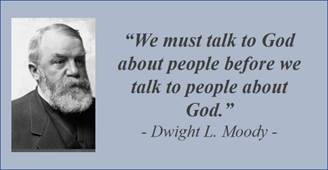
Lest I forget, remember something a famous evangelist had to say:

clip_image002

Mixed Messages

I was browsing Facebook recently and came across one of those “________ changed his cover photo” posts that displayed the following new cover photo.

clip_image002

Due to the reference to “MY Bible” set against a rainbow flag known primarily as meaning the LGBTQ community, it raised questions in this old guy’s mind, but not about God’s commandment to love others. Let me explain.

The author of the FB post was a Jewish military Chaplain, with whom I had a pleasant online conversation. The unstated reference was to the recent mass shooting here in Colorado Springs at a night club (the “Q Club”) catering to those identifying as part of the LGBTQ community, a fact which I did not know when I first saw the post.

Obviously the “MY Bible” was a reference to books of the Old Testament and not the New testament. I’m not sure why he felt the need for emphasizing the Bible he reads as an observant Jew because the NT also tells us to love our “neighbors”. In fact, in the books of Matthew and Luke there’s are passages quoting the Shema “Hear, O Israel: The LORD our God, the LORD is one. Love the LORD your God with all your heart and with all your soul and with all your strength” (Deuteronomy 6:4–5), both of which add the commandment to love our neighbors. (Matthew 22:37-39 & Luke 10:27).

What I wanted to gently clarify was the Chaplain’s position concerning the sinful lifestyles represented by the rainbow flag, so I replied to his post with the question: “Sir, Do you hate what God hates?” I probably flunked the “gentle” part, which led to further discussion with him, which, to a degree, clarified some things for me..

So here is the critical issue, from my point of view. I saw a message that could be, and is often misunderstood to mean that loving one’s neighbors also means approving or accepting of lifestyles that God unequivocally calls sin. It was posted by a military Chaplain. The message however, was, as I see it thr0ugh a Christian lens, was incomplete.

Those engaging in what God considers sin will call those who want to “love the sinner but hate the sin” (hate what God hates) will accuse anyone who disapproves of their behavior of hating them personally. As a result, some of us, and even entire churches, will, for a number of reasons, refuse to confront issues of sin. I’m not just talking about LGBTQ issues, although it is front page news again.

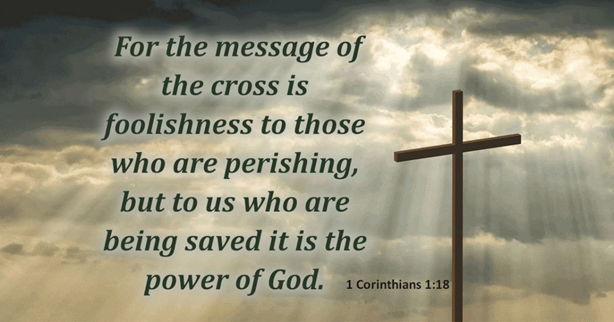
The excuses (yes, I said “excuses”) for minimizing sin are many, and quite “creative”. I’m not going to name any of them, but I do know that the Bible tells me that sinners love their sin (John 3:19) and I know that telling someone that what they love is wrong doesn’t go over very well. So we focus on the “love” of God, thinking that when people know how much God loves them they will run to the cross. We try and remove the “offense” of the Cross, that by nature offends those who do not yet believe in Christ (1 Cor 1:18).

I submit to you, dear friends that to minimize the issue of sin, whatever it might be, is to minimize the Gospel of Christ. And I submit to you that a minimized gospel is no gospel at all.

The Apostle Paul told young Pastor Timothy:

“This is a faithful saying and worthy of all acceptance, that Christ Jesus came into the world to save sinners, of whom I am chief.” (1 Tim 1:15).

Paul also defined very clearly the Gospel message of which he was not ashamed (Rom 1:16) and not afraid to preach:

“Moreover, brethren, I declare to you the gospel which I preached to you, which also you received and in which you stand, by which also you are saved, if you hold fast that word which I preached to you—unless you believed in vain.  For I delivered to you first of all that which I also received: that Christ died for our sins according to the Scriptures,  and that He was buried, and that He rose again the third day according to the Scriptures, .” (1 Cor 15:1-4)

My friends, if, for the sake of sounding loving and not being rejected as “haters”, we omit the issue of sin from our sharing of the Gospel of Jesus Christ, can we claim to be sharing the the message that saves sinners, no matter what the sin? The Apostle Paul answers that question quite clearly:

“I marvel that you are turning away so soon from Him who called you in the grace of Christ, to a different gospel, which is not another; but there are some who trouble you and want to pervert the gospel of Christ. But even if we, or an angel from heaven, preach any other gospel to you than what we have preached to you, let him be accursed. As we have said before, so now I say again, if anyone preaches any other gospel to you than what you have received, let him be accursed.” (Gal 1:6-9)

My brothers and sisters, let us indeed love our neighbors and demonstrate that love most supremely by sharing the complete gospel with those who live apart from Christ, with His love in our hearts! We don’t need to send mixed messages. If God has opened a heart to pay attention to the gospel we share, the gospel that is offensive to an unregenerate heart, salvation will surely follow!

Be blessed!

HOW to Share Christ with Someone

NOTE: What follows has been adapted from several lessons contained in Alistair Begg’s “Crossing the Barriers” series of lessons in personal evangelism.

“Christ is going after His lost sheep, and He wants to use our lips that they may hear His voice today, and our hands that they may feel His touch. He is the soul-winner. People are not won by us for Him. They are won through us by Him. He can win them without us, just as He can speak to them through the Bible quite apart from anything we might say. But He has chosen to work through us and with us.” – –Leith Samuel

In previous CMF Newsletters we ran a 4-part series about “Sharing Christ in a Hostile Culture”

In Part 1, Be Available, we shared real examples of how doors seem to just ‘open up’ for sharing the message of the gospel, and what can happen when there’s a willing and available gospel messenger ‘on location’. In Part 2, Situational Awareness, we compared our ‘Situation’ as believers in Christ – our status, and true citizenship, with our condition (situation) before repenting of sin and believing Christ. In Part 3, Our Duty, Our Great Privilege, Our Highest Calling, the focus was on understanding the nature of the believer’s role in sharing Christ with the world around us. In Part 4, How’s Your Weep? We talked about maintaining a heartfelt burden for the lost souls all around us.

Now that we talked ABOUT sharing Christ, it’s time to tackle HOW. Hopefully this article will be of help to you.

Concerning his followers, Jesus said, “My prayer is not that you take them out of the world but that you protect them from the evil one.” Jesus (John 17:15 NIV)

If we to draw a picture of that, it would look like this:

clip_image002

Following Jesus’ model of Christians ‘In Contact’ with the world, think of your gospel audience in terms of long-term and short-term contacts. Long-term contacts could be family, friends, co-workers, or neighbors. Short-term contacts could be those we meet standing in lines, shopping, travelling, bus stops, waiting rooms – people we might not ever see again.

Before you just jump in the deep end of the pool, remember this:

“We should remind ourselves frequently that effective witnessing begins when we are on our knees, not when we are on our feet.” – Alistair Begg

EXPLODING SOME MYTHS

1. IT TAKES A CERTAIN KIND OF PERSON. You don’t have to be a gifted evangelist or a natural extrovert. Think of Jesus’ first disciples. He chose all sorts of men to train and send to the mission field!

2. YOU NEED TO BE A WALKING BIBLE DICTIONARY. Anyone can share how his/her life has been changed by Christ, but it doesn’t stop with a changed life. The changed life testimony leads naturally to the message that discusses our sinful helpless condition before God and the answer found in repentance and believing in the one God sent.

3. I AM PERSONALLY RESPONSIBLE TO SPEAK TO EVERYONE. That myth leads to guilt and depression. You will feel compelled to speak to everyone you meet/see! We are to be fishermen, not salesmen.

IMPORTANT GUIDELINES

1. BE NATURAL. Don’t change speech patterns, how you talk, tone of voice or terminology. Use ordinary conversation to move to spiritual matters. Jesus merely showed up at the well to ask for a drink of water. NO evangelical jargon. Using Bible words is not synonymous with sharing Bible truths.

2. BE LISTENING. We learn much about the other person just by listening. Their likes, dislikes, interests, etc. Heartfelt listening shows that you care.

3. BE VULNERABLE. We need to get out of our Christian bubbles. Vulnerability creates opportunity with unexpected parties. Jesus was vulnerable. It wasn’t ‘kosher’ to speak with Samaritan women. As Alistair Begg might ask, “When does the salt help the mashed potatoes?”

4. BE BRAVE. “For the Spirit God gave us does not make us timid, but gives us power, love and self-discipline. “ (2 Tim 1:7)

The toughest of our non-Christian friends are more scared of us than we are of them, thus their ‘toughness’. Don’t worry about where the conversation might go. You can always stop/pause and continue later. It wasn’t ‘kosher’ to speak with Samaritan women.

5. BE IMAGINATIVE. Seize opportunities to share your faith. What’s the common topic of the day? War, sports, stress, etc. Don’t use the same lead-in every time. Walk on common ground.

6. BE DIRECT. As the Spirit leads, get to the gospel, but you don’t need to use a specific ‘method’. Let the conversation tell you the best method.

FUNDAMENTAL TRUTHS

No matter what method you use for sharing the message of the gospel, address these three truths, in the order given here.

1. THE HUMAN CONDITION

Things are messed up. Why? Ask questions. What’s in the newspaper? Magazines? Look at the music, dysfunctional families. Why do you think that is? Talk about it.

2. THE BIBLE’S DIAGNOSIS

Suggest that the Bible has a diagnosis. The heart of the problem is the human heart, which needs to change. Have a Bible and open it. Share favorite passages of scripture that speak of the condition of the fallen hearts of all men. You might use Romans 1:18 about God’s wrath, or Romans 3:23 and the fact that ALL have sinned and fallen short pf God’s standard of perfection. And sin brings consequences (Rom 6:23) – ‘The wages of sin is death. You might need to go back to Genesis and the sin of Adam. Just talk about it from the Bible and let God convict.

3. GOD’S REMEDY

Share that Christ died for OUR sins. It was prophesied in the OT and fulfilled in the NT (Isaiah 53:6, Matthew 1:21, John 3:16). Just keep sharing what the Bible simply says.

4. PERSONAL RESPONSE

The truths of the gospel message having already been discussed, it’s time to talk about the need for a personal response. Introduce, without directly asking for a response, the necessary steps.

1) Admit you are a helpless sinner. There are differences in degree of sin, but not the fact of sin. ALL have sinned enough to be condemned and lost.

2) Believe that Jesus Christ died on the cross to be the savior we have admitted we need. 1 Pet 3:18 – Christ died once for all.

3) Receive, by faith, (full confidence) the forgiveness of sin and cleansing from sin.

At this point 3 further questions may prove very beneficial in bringing clarity.

1. HAVE YOU PERSONALLY TRUSTED JESUS CHRIST OR ARE YOU STILL ON THE WAY?

Defines Christian as one who has personally received Jesus Christ and provides opportunity for Yes/No/Still on the way

2. HOW FAR ALONG THE WAY ARE YOU?

Critical point. Satan gets busy. This is where very personal/conditional topics might come into play. If the answer is ‘I want to home and think about it’, remember this might be the only time, hand them something like a tract, possibly. Be sensitive to ‘indicators’.

3. WOULD YOU LIKE TO BECOME A REAL CHRISTIAN AND BE SURE OF IT?

If the answer is yes, go back to the need for personal response.

ADD counting the cost of becoming a Christian. This is where the rubber meets the road. If they are not ready for a ‘revolution’, they are not ready to respond genuinely to the offer of salvation.

If they are ready, lead them to the Cross.

“Dear Lord Jesus, I admit I am a helpless sinner before you, I’ve tried many times and failed. I believe the bible is true in saying Jesus is the savior, I accept the cost, please forgive ME.”

Sharing Christ in a Hostile Culture, Pt. 4 – How’s Your Weep?

In Part 1 of this series of articles, Be Available, we shared real examples of how doors seem to just ‘open up’ for sharing the message of the gospel, and what can happen when there’s a willing and available gospel messenger ‘on location’.

In Part 2, Situational Awareness, we compared our ‘Situation’ as believers in Christ – our status, and true citizenship, with our condition (situation) before repenting of sin and believing Christ.

In Part 3, Our Duty, Our Great Privilege, Our Highest Calling, the focus was on understanding the nature of the believer’s role in sharing Christ with the world around us.

This fourth article of the series has to do with maintaining a heartfelt burden for the lost around us, thus the title “How’s Your Weep?” That title came to mind thinking about something that happened quite some time ago (30 years?) in Ft. Ord, California.

I was attending the Defense Language Institute in Monterrey, CA studying Polish and living on Ft. Ord. I had connected with the Ft. Ord chapel community and was involved in a small group weekly Bible study. During one of those evening studies (I don’t remember the exact topic), one of the young soldiers in attendance, with a look of sadness in her eyes, uttered a very simple yet profound statement:

“I’ve lost my weep!”

She was talking about her burden for lost souls. Something in our discussion that evening had triggered her sentiment. She seemed to have realized in that moment that while she once had a deep burden for the lost, for some reason it had gone by the wayside. Determined to find it again she took time off from work to get alone with God and learn to ‘weep’ again.

Hers was not an uncommon experience with Christians. We remember a time when we shared our faith, not only with excitement over what God has done in saving us, but also with a heartfelt burden for the lost with whom we live and work every day. That burden comes from knowing and understanding the dire straits of all who are living apart from Christ – “Sinners in the Hands of an Angry God” is how the great theologian, Jonathan Edwards described it.

Then ‘life’ happens and our burden for lost souls diminishes. Perhaps it’s the hectic pace of our jobs or scholastic endeavors. Family situations might demand more and more of us. Our social lives and desire for acceptance often distract us. And of course, there’s the possibility that some of those with whom you would share Christ are complete jerks! (in temporal terms). And the list of distractions (excuses?) can go on and on forever

Then one day you realize, like the young lady at our Bible study, that something is wrong. Sure, you share Jesus with others, but without the intense burden you once had for their souls. Maybe you’ve never experienced such a burden. So how can you find what you lost? How can you discover what you might never have had?

You can get away and get alone with God, like the young lady at our Bible study. You can pray and get into the word. Those are rather broad suggestions. Can we narrow it down a bit? We’ll try.

First, revisit and remember your own condition before you encountered Jesus as your savior and lord. Apart from Christ we were:

  • Dead in trespasses and sin, disobedient, under Satan’s control, concerned only with our own passions, and by nature children of wrath (Ephesians 2:1-3)
  • Enemies of God and unable to please God (Romans 8:7-8)
  • Unable to even understand the things of God (1 Corinthians 2:14)
  • Slaves of sin (John 8:34)
  • Already condemned (John 3:18)

That’s the short list, trust me. REALLY reflect on your condition apart from Christ. Read those passages in context. Let it sink deep into your mind and heart. That was YOU, that was ME! We were completely and utterly hopeless! (Ephesians 2:12).

Did it sink in? REALLY sink in? When it does. . .

Now take ALL of that and apply it to the lost all around you – to co-workers, family and friends, acquaintances, passersby. Even if they’re jerks.

As a final note, we’re not saying you must have a deep concern for or physically weep over lost souls to be an effective witness for Christ. Far from it. But just as Jesus wept over Jerusalem (Matthew 23:37-39), and Paul had a great love and burden for his fellow Jews (Romans 9:1-9), a genuine heartfelt burden for those to we share Christ will add a sincerity that will be unmistakable to the ears and hearts of our hearers!

Be blessed!

Lesson Links:

Sharing the Gospel in a Hostile Culture, Part 1 – Be Available | The Battle Cry

Sharing Christ in a Hostile Culture, Part 2 – Situational Awareness | The Battle Cry

Sharing Christ in a Hostile Culture, Pt 3– Our Duty, Our Great Privilege, and Our Highest Calling | The Battle Cry

Sharing Christ in a Hostile Culture, Pt. 4 – How’s Your Weep? | The Battle Cry

The Apostle Paul, a Veiled Gospel, and Blind Minds

2 Corinthians 4:1-6

The Light of the Gospel

“Therefore, having this ministry by the mercy of God, we do not lose heart  But we have renounced disgraceful ways. We refuse to practice cunning or to tamper with God’s word, but by the open statement of the truth we would commend ourselves to everyone’s conscience in the sight of God. . And even if our gospel is veiled, it is veiled to those who are perishing. In their case the god of this world has blinded the minds of the unbelievers, to keep them from seeing the light of the gospel of the glory of Christ, who is the image of God.” (2 Cor 4:1-4, ESV)

Paul’s letters to the church at Corinth were meant to deal with specific issues facing the young church. His first letter dealt with destructive divisions in the church, along with issues of immorality and carnality in the church. His second letter dealt, at least in part with having to answer the criticisms of false teachers who openly opposed him. In the short passage above Paul speaks of three things, his ministry, the gospel he preached being veiled (hidden) from some hearers, and ‘blind’ minds incapable of understanding the gospel.

We will briefly discuss each of these, in the order presented, with an eye to their application to personal evangelism.

The Apostle Paul

“But we have renounced disgraceful, underhanded ways. We refuse to practice cunning or to tamper with God’s word, but by the open statement of the truth we would commend ourselves to everyone’s conscience in the sight of God.” (2 Cor 4:2)

In this verse Paul renounces of disgraceful underhanded ways, asserts his refusal to practice cunning or to tamper with God’s word in presenting the gospel, and reaffirms his intent to merely speak the plain truth of the gospel. Paul’s message to this church, as well as to the others he planted was simple – “Christ and him crucified” for the sins of men. (1 Cor 2:1-4) No slick marketing campaigns, house to house surveys, or twisting of scripture in order to please itching ears.

A Veiled Gospel

“And even if our gospel is veiled, it is veiled to those who are perishing.” (2 Cor 4:3)

Here Paul, at his hypothetical best, tells us that if the message of the gospel is “veiled”, or hidden from anyone it would be those are who are “perishing” in their sin, Jesus referred to these unbelievers as “condemned already”. (John 3:18). Nowhere does Paul ever tell us not to preach the gospel, but he does tell us that the gospel we preach very likely won’t be understood by some of our listeners. Talk about a tough job! There’s an answer to that problem, and we’ll get to it.

Blind Minds

“In their case the god of this world has blinded the minds of the unbelievers, to keep them from seeing the light of the gospel of the glory of Christ, who is the image of God.” (2 Cor 4:4)

Here Paul tells us exactly WHY unbelievers cannot understand the gospel message. Their minds have been completely blinded to the spiritual truths underlying the message! Not only that, we are told that the one who has blinded the minds of unbelievers is “the god of this world”, or Satan himself! In John 12:31, he is called “the prince of this world.” In Ephesians 2:2, he is called “the prince of the power of the air.” And in Ephesians 6:12, the same bad influence is referred to under the names of “principalities, and powers,” “the rulers of the darkness of this world,” and “spiritual wickedness in high places.”

So what?

How should that impact personal evangelism?

1. Stick to the message – stay on point. And the whole point of the gospel message is that Christ died for the sins of men. Don’t sugar coat it. The gospel is a bad news/good news story. Present the problem (sin) followed by the solution (Jesus Christ).

2. Realize that there are those from whom the good news is veiled, or completely hidden. They cannot even understand it (1 Corinthians 2:14). Trust God to open hearts to hear it, understand it, and receive it.

3. Recognize that it is Satan who has blinded the minds of everyone who has yet to believe in Christ. We would probably equate having a ‘blind mind’ with a complete inability to process information. By all means use kind and persuasive speech as you share an ‘offensive’ truth, but let God open cold and spiritually dead hearts to hear and be saved.