“Of course  it’s true, it’s on the Internet!”

We laugh at that notion, as if no one with of a functioning brain would swallow such a ridiculous idea! Only a complete idiot would believe that!

At the same time, some of us who profess Christ would subscribe to a slightly different notion:

“The music is fantastic, it MUST be a great church!”

Well, don’t we? (Rhetorical question) Whether it’s tender lyrics that make us feel all loved and warm inside, electric guitar riffs accompanied by loud pounding drums reminscent of our non-believing days, or somewhere in between, we automatically assume we’re in a great church!

But is it true, or are we getting ‘Hooked on a Feeling’, like B. J. Thomas used to sing. (aging myself?)

At ths point I have to admit that I have two specific ‘churches’ in mind, Hillsong and Bethel. I recently visited family in Texas and the music of both was glowingly spoken of. A friend at work, when I asked him if he had a good weekend, said yes and going to the recently released Hillsong movie was part of it. If you don’t know, it was billed primarily as ‘experiencing’ worship. You can hardly find a church thesemdaysmthat doesn’t play Hillsong and Bethel music on a regular basis.

In case you think / this a Hillsong/Bethel bash fest, don’t worry, it’s not. I’ll leave it to you to investigate their respective ‘doctrines’, vision statements, etc.
Some of you won’t have an issue with Word of Faith, the prosperity gospel, glory clouds, gold dust, dead raising teams, etc.. If you are one of those, I encourage you to read the Bible, in context, and ask yourself if they are biblical.

In fact, I would ask us all to be a bit more discerning when it comes to both contemporary Christian music and the doctrine(s) held by the churches who have laid classical theology rich hymns aside in order to attract more of the ‘unchurched’. Hillsong and Bethel aren’t the only ones dispensaing spiritual junk food.

While you’re examining the church behind the music, also ask yourself if the preaching there is more about you and your felt needs, or God and his glory.

Happy discerning!

Responding to Miracle Claims

by Eric Davis at The Cripplegate

clip_image002“But I’m telling you, I saw it! I was there and it really happened.”

Often miracle claims are brought before us. Fairly regularly, I hear of things like local, impromptu, evangelistic, healing events during which individuals were approached at random, prayed over, and healed of some various physical ailment. The claim might be followed by an individual testifying sincerely that it happened or a video documenting the healing miracle as undeniable proof that the pain departed, the crutches dropped, or the oppression lifted. Excitement erupts. God is at work. The Spirit is moving. It’s a God thing. How could it not be?

But is it? How should we respond to these things? After all, well-meaning and sincere professing Christians saw it and documented it, so how could it be denied? Why wouldn’t the Holy Spirit want to do that? And doesn’t that mean that the Spirit wants to use us in such ways?

It’s astonishing how flippantly we Christians sometimes claim miracles. Scripture beckons us to exercise great caution here. In this order, here is how I would generally respond to a friend’s miracle claim:

1. It’s probably best to avoid denying the individual’s experience.

Usually, it’s more profitable to avoid playing the “that-didn’t-happen” card. Granted, it may not have. But this can quickly deteriorate into a, “No it didn’t!” “Yes it did!” ping-pong match. And, something very well may have happened (see #7, 8, and 9 below).

Instead of bringing our negation to bear on their experience, we owe it to the individual to bring the word of God to bear. That way, the authority of inerrant Scripture, rather than our “Nuh-uhh,” becomes the issue.

Further, it’s helpful to ask, “What do you mean by a miracle?” Child-birth, for example, though remarkable, is not a miracle. A miracle is when God works contrary to his established laws of creation (e.g. raising the dead).

2. God can do miracles and it’s ok to pray for them.

clip_image004And praise him that he has, can, and does. Our God sits in the heavens and does whatever he pleases. It has pleased him to divide seas and rivers, rewind days, and cease storms. And though nature miracles have been, for the most part, limited to a few small clusters of history (Moses and Joshua, Elijah and Elisha, and Christ and the apostles), spiritual miracles have not been. The greatest miracle is turning depraved spiritual corpses into regenerate children of God.

And it’s ok to pray for miracles. Whether it be a debilitating disease, traumatic accident, or salvation, it’s loving to pray for miracles in these kinds of situations.

But the argument typically goes beyond this: “So you’re saying that God can’t/won’t do miracles?!” The case seems closed because we never want to say that God cannot do something. But the discussion is broader than that. The existence of Scripture as God’s authoritative word has massive implications on proper understanding of life’s experiences, especially the miraculous. Speaking of which…

3. When it comes to miracles, or any experience, our experiences and perceptions must not be our interpretive authority.

Our interpretive authority is that criteria by which we interpret experiences and perceptions so as to make absolute conclusions about them. Generally, there exist two interpretive authorities; God’s word and everything else (e.g. human reasoning, a textbook, famous philosophers, majority opinion, false religion). For example, if I interpret every bad dream I have as Satan attacking me because a friend told me it was so, my interpretive authority is that friend, not Scripture.

In each stream of life, we exercise some interpretive authority. When it comes to experiencing and perceiving miracles, Scripture is to be our interpretive authority. Why? Because of what Scripture is; God-breathed revelation (2 Tim. 3:16-17, 2 Pet. 1:20-21). The repercussions of what Scripture is are major. Since it is God-breathed, it is inerrant, authoritative, and sufficient as our interpretive authority (Ps. 12:6, 119:89; Prov. 30:5; John 17:17; Titus 1:2; 2 Pet. 1:3).

Much of this boils down to, “How do we know what we know?” It’s a question of knowledge and authority. And I wish that more of my miracle-claiming friends would dwell longer on this matter because this is the heart of the issue. Far more than being about, “I saw it!” or, “Come on, don’t you believe God can do miracles?!”, this is about how we know what we know.

Since Scripture is the word of God, it is authoritative in determining what we know. It overrides everything as our interpretive authority. Which is to say, God’s interpretation overrides man’s interpretation, no matter how intense the experience was. So, before confidently attributing a miracle to a thing that God seems to be doing, we need be prepared to submit to Scripture.

clip_image006Consider an example. Imagine that you unexpectedly lose your job and are short $1500 for a month’s budget. So, you and three friends fast for one day. At the end of the day, you pray together for an hour on top of a local mountain. The next day, an anonymous check shows up for $1500. If we used experience as our interpretive authority, we would conclude that fasting with three friends for a day and praying for an hour on a mountain is the means to get big prayers answered. If we used Scripture as our interpretive authority, we would find no such formula. We would find that God is good, sovereign over all things, and does as he pleases. Also, we would find individuals sometimes failing to receive what they ask for in prayer (e.g. 2 Cor. 12:8-9). Would this mean that we cease fasting and praying? No, because Scripture contains commands for both. More generally, our correlations must go no further than what Scripture permits.

Even the miracle-working apostle Peter took this route. In 2 Peter 1:16-21, he recalls the incredible experience of Christ’s transfiguration. But he concludes that Scripture is the “more sure” authority and source of knowledge (2 Pet. 1:19). In effect, Peter is saying, “Look, the Bible, rightly understood, is to be my absolute guide in determining what I should conclude about my experiences.” By application, then, Peter would say to us, “You and others seem to have experienced some healings? Ok, I have some miracle experience. But, before you celebrate, ‘These are real miracles! And the Spirit is working through us!’ go to the thing that can tell you exactly how to understand your experience; the Bible. Because there is more going on here than you might think.” And Peter might say, “Are you more interested in submitting to everything that the Bible has to say about miracles or being able to believe and tell others that a miracle happened?”

Scripture is to form my conclusions more than my opinions, desires, and even experiences. And if not, then, whether intentionally or not, I am saying, “Well, God, yes, you have spoken about this issue by your Spirit. But, I do not want to take into consideration everything you’ve said. So, I am going to hold to my biased, poorly informed view on this matter and call it a ‘God thing’ anyways.”

But this will not do. We are prohibited from interpreting miracles in a way contrary to Scripture.

And if it is determined that a miracle did occur, praise God! Give him glory. And stay focused on what Scripture commands, which does not include the chasing of, or fixation upon, miracles.

4. No one has the spiritual gift of miracles and healing as defined in Scripture.

clip_image008This not to say that miracles never happen through people (see #’s 7, 8, and 9 below). But it is to say that no one possesses the gift of miracles and healing as it is described in the NT. It’s at this point that many of my charismatic friends walk away from the conversation. But I would urge them to honestly study the issue from Scripture.

When the first century closed, the spiritual concrete had been poured for the footers and foundation of the church (Eph. 2:20). All that Jesus did through the apostles was poured into the forms upon which our church rests today. The apostolic gifts, the miracles, the ecclesiological pioneering, the inspiration of the canon—it all rests in the foundation giving the stability of the church for some twenty centuries so far.

And on a lesser note, if individuals did possess the NT gift of healing and miracles, then they should be flown every day to a different ICU around the world.

5. Miracle claims should be verified.

If actual physiological miracle-healings are occurring, then let’s get medical professionals involved. Let’s have them pull up the records, confirm the previous ailment, and verify physiologically that the healing occurred. Go get the X-Ray, MRI, CT, or exam from your regular GP. Have them compare your last physical and verify that the “miracle” was indeed so; that it is not regressing or a temporary pain relief that is coming back or some placebo effect. That way, they can see it for themselves, and, more importantly, here about the Jesus who propitiated the wrath of God due their sin in order to give them the miracle of the new birth. But of course, if they will not believe the more-sure Scriptures, then neither will a miracle convince them (cf. Luke 16:31).

Claims of miracles ought to be verified so that glory can be given to God.

6. Biblical miracles had distinct characteristics.

Healing miracles in Scripture were profound displays of God’s power. We could define a biblical healing as God’s power demonstrated through a human mediator with the result that a specific physiological ailment was instantaneously, completely, and undeniably healed. They were not gradual. No follow-up healing appointments were required. And they typically involved a major display of power. Quadriplegics walked. The blind saw. The dead were raised

When Peter did miracles (Acts 3:8, 9:40), he was not shooing away aches, adding an inch to a leg, or lifting emotional clouds. Nor did he have to repeat incantations in the name of Jesus with increasing force and volume to warm up the Holy Spirit. With a word, God repaired spinal cords, neurons, atrophied limbs, and death. Thus, we should compare our miracle claims to those of Scripture.

7. Miracles can be performed by those who worship false gods.

The presence of legitimate miracles is no sign that it is a God thing. In fact, it could be a Satan thing.
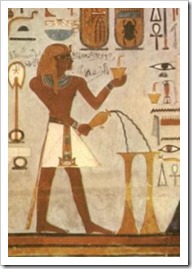
clip_image009For example, prior to Israel’s exodus, the pagan Egyptian magicians were able to perform three of the miracles. They turned their staffs into snakes (Exod. 7:11-12), changed the Nile into blood (Exod. 7:22), and made frogs come up on the land (Exod. 8:7). And, during the Tribulation, Satan and his associates will perform various signs and wonders (cf. Rev. 13:3, 13).

I’ve heard miracle claims from both sides of redemption. For every one miraculous thing that someone’s uncle’s cousin’s co-worker’s son’s friend’s missionary friend whose name he can’t remember saw in an unverifiable African village in the name of God, there are three miraculous things that a close friend experienced in a verifiable pagan festival in our town in the name of Gaia. I’ve heard of many miracles from professing believers. And I’ve heard many from professing unbelievers.

I don’t know if these claims are authentic. But I do know this: Satan is an angel of light. He’s capable of doing powerful things through pagans. Unbelievers are, whether knowingly or not, servants of Satan. A miracle is not an automatic sign that God’s favor is among us.

8. God has used miracles to test individuals.

At times in history, God has permitted miracles, not to bless, but test. Israel was warned accordingly:

“If a prophet or a dreamer of dreams arises among you and gives you a sign or a wonder, and the sign or wonder that he tells you comes to pass, and if he says, ‘Let us go after other gods,’ which you have not known, ‘and let us serve them,’ you shall not listen to the words of that prophet or that dreamer of dreams. For the Lord your God is testing you, to know whether you love the Lord your God with all your heart and with all your soul. You shall walk after the Lord your God and fear him and keep his commandments and obey his voice, and you shall serve him and hold fast to him. But that prophet or that dreamer of dreams shall be put to death, because he has taught rebellion against the Lord your God…” (Deut. 13:1-5).

In 1 Kings 22, God permitted a “deceiving spirit” to enter some 400 prophets to give false counsel.

And Micaiah said, “Therefore hear the word of the Lord: I saw the Lord sitting on his throne, and all the host of heaven standing beside him on his right hand and on his left; and the Lord said, ‘Who will entice Ahab, that he may go up and fall at Ramoth-gilead?’ And one said one thing, and another said another. Then a spirit came forward and stood before the Lord, saying, ‘I will entice him.’ And the Lord said to him, ‘By what means?’ And he said, ‘I will go out, and will be a lying spirit in the mouth of all his prophets.’ And he said, ‘You are to entice him, and you shall succeed; go out and do so.’ Now therefore behold, the Lord has put a lying spirit in the mouth of all these your prophets; the Lord has declared disaster for you” (1 Kings 22:19-23).

Though not a miracle per se, the incident demonstrates that God has permitted teachers who profess faith in him to be led astray by satanic influence for retributive reasons. In this case, 400 supposed teachers of God’s word were caused to falsely prophesy. All of this suggests that we should exercise restraint with miracle (and prophecy) claims.

9. Miracles in the name of Christ by professing Christians are no sign of the presence of salvation or true Christian worship.

One of the most sobering passages in Scripture comes from Matthew 7.

“Not everyone who says to Me, ‘Lord, Lord,’ will enter the kingdom of heaven, but he who does the will of My Father who is in heaven will enter. “Many will say to Me on that day, ‘Lord, Lord, did we not prophesy in Your name, and in Your name cast out demons, and in Your name perform many miracles?’ “And then I will declare to them, ‘I never knew you; depart from Me, you who practice lawlessness’” (Matt. 7:21-23).

According to Jesus, not few, but many people assume that they are going to heaven, but will be turned away in the judgment. These will be individuals who professed Christ as Lord and performed “many miracles” in his name. They assumed that they believed in Jesus. They approached people, commanded healings in the name of Jesus, and experienced apparent miracles. Those were the things they often looked to and counted on as God’s blessing and the presence of the Spirit. However, Jesus says there will be a large number of such individuals who are sent to hell.

10. True signs of the Holy Spirit have nothing to do with miraculous healings.

Much of this issue centers on widespread, erroneous pneumatology in our day. Evangelicalism has capriciously assigned works to the Holy Spirit which God does not. Thus, it behooves us to carefully study who the Spirit is and what he does.

Miracles can be performed by devout pagans and Satan. Many individuals performing miracles in the name of Jesus will be turned away by Christ in the judgment. Therefore, the presence of miracles is no evidence that the Holy Spirit is at work.

11. Miracles were not part of Christ’s commanded mission, nor considered evangelism.

Often healing-evangelism is excitedly recounted as, “We were able to encourage many people with God’s healing love!” along with a report of the various healings. But more importantly, did those with departed back pain hear that God is willing to divert their due, eternal pain if they mourn their sin and surrender in faith to the Lord Jesus Christ? In other words, did evangelism occur? Which is to say, did we really love them?

clip_image011In the NT, the concept and doing of evangelism always has to do with preaching the content of Christ crucified in the place of sinful man that he might repent and be reconciled to God under the lordship of Christ. If our evangelism merely consists of telling people that God wants to heal and bless them, then we have fallen short of evangelism.

Proper understanding of miracle claims requires God’s word as our interpretive authority. A brief consideration of Scripture’s teaching on miracles demands we exercise caution with respect to their claims. We must interpret miracles in light of the many things which Scripture has to say about the matter. The miracle that we can say is the work of God with absolute certainty is salvation. Other than that, there are a variety of possibilities which must be carefully considered before we cry, “Miracle!”

Biblical Fundamentalism*

By Pastor Gary Gilley, Southern View Chapel

Think on These Things Articles

(Volume 22, Issue 2, Mar/Apr 2016)

I am a Fundamentalist. There I said it. And yet, although I inherited a few guns I don’t know where the bullets are. I don’t hate anyone, not even my neighbor whose cat keeps my songbird population thinned out. Knowing my own weaknesses and sinfulness I refrain from being particularly judgmental of others. Some might call me a “Bible-thumper” but I have not actually thumped anyone with a Bible since junior high when I was trying to impress the girls (I learned many years later that punching girls did not impress them nearly as much as I originally thought). I have some strong preferences and opinions about everything from politics to entertainment (just ask me), but I recognize that not everyone shares all my views and I am at peace with that. I believe in separation from sinful practices and compromising associations, but I do not hide out in a wilderness refuge in an effort to stay as far away from “sinners” as I can. And horrors of horrors, I will tune into CNN as much as Fox News – which may cause me to lose my Fundamentalist membership card in the eyes of some. Nevertheless, I, and those like me, are among the most despised, marginalized, suspected, criticized and misunderstood people on the planet. So it is with good reason that few today want to identify with the label Fundamentalist. When asked how we would like to be identified we might say we are evangelicals, but that term lost all its meaning many years ago. Perhaps “conservative evangelicals” might be better. Yet Fundamentalism is a good word, when properly understood and biblically informed. Unfortunately, even among many Christians, Fundamentalism is an unattractive term and much of the blame lies with Fundamentalists. Part of the problem is this – too often biblical Fundamentalism has been highjacked by cultural Fundamentalists, and few know the difference. But before we look at the important distinctions in more detail we should back up and take an overview of the historical development of Fundamentalism.

Roots of Fundamentalism

The 1800s proved to be years in which evangelicalism was radically changing, especially in English-speaking societies. As the world moved into the nineteenth century, the effects of the Great Awakening under Jonathan Edwards and George Whitefield in the 1730s-1740s in America and the Evangelical Revival under the Wesleys in England were largely a memory. Those reading the accounts of these earlier movements of God longed for something similar but many seemed willing to settle for the outward emotionalism of revivalism [1] rather than follow the content-oriented approach of their fathers. Thus, when the so-called Second Great Awakening began in Cane Ridge, Kentucky, in 1800, subsequently spreading throughout much of New England and parts of the American south, it had a very different flavor from what Edwards and his peers experienced. Edwards believed the Great Awakening was a true revival sent by the Lord, but he also knew that intermingled were excesses, pretenders and “false spirits.” What took place in the first half of the nineteenth century flipped the ratio. While there were undoubtedly true conversions and fervor for the Lord, there was much that was little more than fleshly passion. Nineteenth century believers longed for a spiritual experience that the camp revivals and traveling evangelists seemed to provide. A good motivational speaker, such as Charles Finney, could draw huge crowds to hear his messages which often provided sensational, if temporary, results. Churches would be packed during “revivals,” but sadly, after the evangelists had moved on, life returned to normal and church attendance did as well. It did not take pastors long to figure out that if they wanted large, enthusiastic meetings they would have to dump their more subdued method of teaching the Bible and offer revival-style services complete with “new means” that were field-tested and handed down by Finney and other lesser-known revivalists. This soon led to a predictable pattern. People would be whipped into emotional frenzies by evangelists and pastors through the use of new and creative techniques which were devoid of solid biblical content. When the emotions subsided, a new round of similar methods was needed to bring back the “revival.” One critic of the Finney-style revivals wrote in 1858, “Singing, shouting, jumping, talking, praying, all at the same time… in a crowded house, filled to suffocations, which led to people having fits and giving their names as converts but, as soon as the excitement was over, falling away.” [2]

This cycle became so common that certain sections of New England, especially the state of New York, became known as the “Burnt-over District” where the fire of revival meetings had swept so often through some areas that people ultimately had grown resistant to the things of God. To this day, these regions remain perhaps the most spiritually hardened parts of the American landscape. It is interesting, however, that in the mid-1800s many of the major cults that are prominent today emerged from the “Burnt-over District.” In addition, numerous utopian societies arose at the same time and place, each offering some form of heaven on earth. All of these things appear to be the direct result of revivalism of the early 1800s which heavily promoted emotional excesses while minimizing the study of the Scriptures.

Developing Fundamentalism

All these things dovetailed to create much confusion and division within Christian circles. By the mid-1800s, some were seeing a need to push back and establish criteria by which a true evangelical could be identified. In 1846 “the Evangelical Alliance was formed to bring together the Protestants all over the world who were the heirs of the awakening of the previous [18th] century.” [3] The Evangelical Alliance confirmed the standard conservative doctrines of the faith but offered four important hallmarks of an evangelical:

  • Belief in the inspiration, authority and sufficiency of Scripture,
  • Acknowledging the centrality of the cross upon which the sacrifice of Jesus provided the way of salvation for men,
  • Affirming the need for conversion in which by repentance and faith a sinner becomes a new creature in Christ through the power of the Holy Spirit, and
  • Activism in which the child of God is busy presenting the gospel and ministering to those in need. [4]

Those who rejected the doctrinal orthodoxy of the World Evangelical Alliance (as it was also called) attempted to infiltrate it with liberal theology, but when that failed they withdrew in 1894 to form their own organization, The Open Church League, which later was renamed the National Federation of Churches and Christian Workers in 1900. By 1950 the National Federation was reorganized as the National Council of Churches. [5] This breaking away by the liberal factions and the forming of their own organization led ultimately to the demise of the World Evangelical Alliance. It is noteworthy, in light of the common misunderstanding that conservative Christians are the source of most ecclesiastical disunity, that it was the liberals “who separated from the evangelicals to found their own organizations to promote church union among those who rejected the authority of Holy Scripture.” [6] Liberals, both in the past and today, desire unity, but do so at the expense of doctrinal purity. They are happy to join hands with any except those who insist on certain essential truths remaining foundational to unity.

The Great Divide

By the last decades of the 1800s liberal theologians (known as modernists in the late 1800s) were bringing German rationalism into English speaking churches, especially in America. Many in these churches, pastors and laymen alike, had long since abandoned the careful study and teaching of Scripture, allowing their churches to become fertile ground for heretical ideas, especially since the liberals often disguised their teachings by using the same words that evangelicals used but giving those words new meanings. Added to these factors was a move from Enlightenment thinking with its preciseness to Romanticism with its impreciseness and emphasis on feeling and experience over theology and Scripture. [7] All of these threads were drawn together during the second half of the nineteenth century to produce a radical makeover in Christianity. The cardinal doctrines held dear by evangelicals since at least the Reformation were now being jettisoned. And with the denial of essential biblical truth came a shift in the focus and purpose of the church. If the incarnation was in doubt and the Scriptures suspect and theology itself under attack, then that left social action as the mission of the church. And thus was born what would be called the “social gospel.”

By the early 1900s, most theological liberals had made social concerns central to their understanding of the gospel. Historian George Marsden writes, “While not necessarily denying the value of the traditional evangelical approach of starting with evangelism, social gospel spokesmen subordinated such themes, often suggesting that stress on evangelism had made American evangelicalism too other-worldly… and individualistic… Such themes fit well with the emerging liberal theology of the day.” [8] “The theology of the day” was increasing acceptance of Darwinian theories, higher critical attacks on the Scriptures and Freudian redefining of human nature. In light of these modern challenges to the Bible and conservative evangelical thought, liberal theologians believed Christianity needed to change to survive. That which was unacceptable to modern man, such as the incarnation, the atonement, creationism, inspiration and authority of Scripture, etc., had to be rejected. That which was acceptable and appreciated by the culture was to be retained and emphasized. Western societies had little problem with the social agenda, and as time moved forward the church accommodated such thinking. Of course not everyone was in lockstep with the social gospel, but by the turn of the 20 th century virtually all the major denominations, schools, seminaries and Christian agencies had been infiltrated by liberal thinking, and by the 1920s they had capitulated almost entirely. The test of orthodoxy had shifted from what one believed to how one lived. As Marsden states it, “The key test of Christianity was life, not doctrine.” [9] Drawing from Friedrich Schleiermacher, the father of Christian liberalism, what increasingly mattered was experience and not truth. Renald Showers observes:

“Liberal Protestant advocates of the social gospel declared that the church should be concerned primarily with this world. It should divert its efforts from the salvation of individuals to the salvation of society. The church should bring in the kingdom of God on earth instead of teaching about a future, theocratic kingdom to be established in Person by Jesus Christ… The Church was to save the world, not be saved out of it.” [10]

Conservatives fought against the modernistic drift of Christianity through various means such as booklets entitled The Fundamentals and the writings of such men as Princeton professor J. Gresham Machen. Machen, in his classic book Christianity and Liberalism, called liberalism a different religion altogether. Machen warned during this turbulent period, “What is today a matter of academic speculation begins tomorrow to move armies and pull down empires.” [11] His insight has proven all too sadly to be true. But neither Machen nor other conservatives were able to rescue the denominations and schools, as Princeton itself officially rejected its doctrinal roots and adopted liberalism in 1929. It was left to the conservatives to either stay within their systems and work to redeem them or separate and start new denominations, schools, churches and ministries. Many took this latter route, with Machen himself starting Westminster Theological Seminary in 1929 and the Orthodox Presbyterian Church in 1936. Many others from all denominations would follow suit resulting in the founding of the Independent Fundamental Churches of America, the Conservative Baptists, and the General Association of Regular Baptist Churches. Mission agencies, seminaries such as Dallas Theological Seminary and numerous parachurch organizations would be started during this era. According to Marsden, 26 schools tied to Fundamentalism were founded during the Great Depression. [12] The conservatives focused on evangelism, theological training and discipleship, while the liberals were increasingly defined by the social gospel accompanied by their view of the kingdom. To the liberals the “kingdom was not future or otherworldly, but ‘here and now.’ It was not external, but an internal, ethical and religious force based on the ideas of Jesus.” [13]

The Second Great Divide

The colossal differences between liberals and conservatives were crystallized around the turn of the century with the subsequent division of the two camps occurring in the 1920s and 1930s. At this point the conflict was often referred to as the Fundamentalist-Modernist controversy but, as the years rolled by, another division was looming, this one among the Fundamentalists. By the 1940s the question of cultural and social engagement had arisen within the Fundamentalists’ camps. The original Fundamentalists, perhaps oversensitive to the social gospel that was at the heart of liberalism, often pushed away from any form of social action. In time, some felt that they had gone too far and needed to become more involved with the culture and improve society, as well as preach the gospel. This ultimately led to a split within the conservative camp. The Fundamentalists would take on more separatists’ views, that is, they would separate from any who taught false doctrines and, rather than try to infiltrate society, they would live as lights of the gospel calling people to Christ. On the other hand, the opposing position would be termed new (or neo) evangelical. Neo-evangelicals believed that the church had the mandate not only to win and disciple the lost but to engage the culture and make the world a better place to live by changing social structures that cause grief and suffering. Many see 1957 as the year of the official rupture between Fundamentalists and neo-evangelicals, for it was that year that the two groups divided over Billy Graham accepting an invitation to conduct a crusade in New York City sponsored by a consortium of conservative and liberal churches. The Fundamentalists opposed Graham while neo-evangelicals made him the face of their movement. [14] Since that time neo-evangelicals have become better organized, more influential, and more widely funded as they have united over many causes, both spiritual and cultural. Evangelicals, however, have not been without their problems. The movement has continued to spread and broaden theologically to the point that defining the word “evangelical” has become an exercise in futility. Conservatives, Pentecostals, Prosperity Gospel proponents, and even many Roman Catholics are all claiming the title evangelical, although the doctrinal beliefs between these factions differ widely. Fundamentalists, on the other hand, perhaps because of their very nature as separatists, have been increasingly marginalized and content to go about the business of fulfilling the Great Commission.

As we have now made the turn into the 21st century we can look back with some insights and some questions. Liberalism, which seemed to have won the day as the 20th century dawned, has lost most of its steam. Evangelicals make most of the waves today, but in order to do so, they have had to increasingly widen their views, practices and doctrines to include those they would have deemed heretical in the mid-1900s. They seem to be united mostly over social action rather than the Great Commission. Without question, it is the Fundamentalists who have been able to safeguard the gospel and the Scriptures, even as they have lost influence in society. As one student of the church has correctly observed, “At root, however, it is a question of how to engage the culture without losing one’s soul. Fundamentalism feared losing its soul and did not engage the culture; evangelicalism feared being different from the culture and is in danger of losing its soul.” [15]

In the 1920s and 1930s differences between conservative and liberal churches came to a head in America. Out of that controversy came new denominations, fellowships, schools, missions, etc., which separated from those who no longer believed in biblical Christianity. These organizations were founded by believers who desired to hold fast and “contend earnestly for the faith” (Jude 3). One of the big problems at that time (as it is today) was developing a consensus concerning the essentials of the faith. That is, what doctrinal truths were absolutely necessary? What did all Christians who claimed to be orthodox believe and, conversely, what could be left to individual convictions? In other words, what was non-negotiable in the faith? A series of volumes, published originally in 1909 entitled The Fundamentals for Today (mentioned earlier in this article), were an attempt to answer those questions. Written by some of the finest conservative scholars and church leaders of the day, The Fundamentals addressed the doctrines of Christology and soteriology, but almost one third of the essays concerned the reliability of Scripture. What emerged from this has become known as the Fundamentalist movement. A Fundamentalist was simply one who adhered to the fundamentals of the faith, primarily as described in The Fundamentals. One of those fundamentals was the belief in an infallible and inerrant Bible.

As time moved on, those who would become known as evangelicals split from Fundamentalism. Evangelicals still held to the fundamentals of the faith, but believed there was more room to compromise and work with those who denied some of the essentials. Of course, today there are many sub-groupings under these titles, but that is not our subject. Our point is that, by definition, all Fundamentalists and evangelicals supposedly adhere to the belief that the Bible is the only authoritative revelation from God to man, without error in the original, and is correct in all that it affirms. So how do the two differ?

Definitions

The primary caricature of Fundamentalism is that it is in essence legalism. Legalism is one of the hot-button words that everyone seems to use and few know what it is – they just “know” they are not personally legalistic (almost no one would say he identifies himself as legalist). In declaring Fundamentalists as legalistic the most common comparison offered is with that of the Pharisees, with the idea that Fundamentalists are modern day Pharisees hung up on external rules, comparisons and judgmentalism. Jesus certainly condemned the Pharisees’ hypocrisy and judgmentalism but the heart of Pharisaic legalism had more to do with their handling of Scripture than rule-keeping. In Mark 7:1-13 (and the parallel passage in Matthew 15:1-9) Jesus’ concern ran much deeper than the practices of the Pharisees – all the way to their handling, or should I say, mishandling of the Word of God.

The encounter (as recorded in Mark 7) between Jesus and the Pharisees took place somewhere in Galilee, probably after the feeding of the 5000. The Pharisees, as a religious sect, followed the teachings of the scribes, who were the official interpreters of the Mosaic Law and the guardians of its sanctity. Their interpretations formed the basis for the practices of the Pharisees. In verses 3-4 Mark, who is writing primarily to Gentiles, adds a footnote of sorts because he realizes that many of his readers will not understand why the Pharisees were angry at Jesus. We are at the same disadvantage. In dispute was the tradition of the elders (v.5). This was a body of minute regulations passed down orally by leading rabbis. Later these traditions were recorded in the Mishna; later still a commentary on the Mishna called the Gemara was added. Together they would make up the Talmud, a Jewish religious book that, in reality, became more important to the Jews than the Scriptures. The oral tradition probably started with the best of intentions. The rabbis, during the intertestamental period, sought to protect the sacred law of Moses by “putting a fence” around it in the form of detailed rules which would regulate every aspect of daily conduct. They developed extremely detailed rituals concerning ceremonial washings of hands and the body. The Law itself required such purification only for the priests under certain circumstances (Lev 16:4, 24, 26; 22:6), and for others on specific occasions such as purification from disease (Lev 14:8-9; 15:5-27). The Pharisees apparently decided that if it was good enough for the priest it was good enough for everybody. And so an elaborate system of washing (the Mishna devotes no less than 30 chapters to the cleansing of vessels) was established. By the time of Jesus, any Jew who wanted to be considered pious followed the Pharisee’s oral tradition.

Today Christians do not officially have an authoritative oral tradition or a written Mishna, but it is not uncommon to develop their own traditions and standards that are elevated to biblical proportions. We will fight, split churches, and demonize fellow believers over styles of music, theater attendance, versions of the Bible, whether women can wear slacks, holiday observances and myriad of other issues. Like the Pharisees we have convinced ourselves that our convictions have the support of Scripture and therefore to not follow them is equal to disobedience to God. When we do so we have moved into the realm of legalism. At this point it is important to determine how Jesus described legalism in Mark seven. According to Jesus legalism is:

  • Hypocrisy (v. 6a): The ancient word for hypocrite was used for actors on the stage who wore masks. In other words they were play actors. Hypocrites are people who are radially inconsistent with what they claim to be.
  • Lip-service not heart service (v. 6b). While they make great boasts about how much they love the Lord, and how they worship and honor Him, the truth is they do none of these things with their hearts.
  • Elevating man’s ideas to the level of doctrine (v. 7). When we confuse our opinions, convictions, and traditions with the doctrines of God we magnify ourselves and degrade God. Before long we can no longer distinguish between what is from God and what is our own creation.
  • Neglecting the commandments of God (v. 8). Legalism is not obedience to God; it is just the opposite. When the opinions and rituals of men begin to dominate the spiritual lives of people, they inevitably lead to neglect of the commandments of God.
  • Invalidating the Word of God (v. 13). Going one step further, legalists have abandoned and devalued the Word of God by replacing it with their own opinions, preferences and convictions, which undermine God’s Word.

Legalism is not having strong convictions, loving traditions or being sticklers for rules. Legalism happens anytime people take away from or trump the Word of God with their own opinions, ideas, convictions or traditions. This would mean that both theological liberals and conservatives could be legalist. The liberal invalidates the Word by saying it is unimportant, old fashioned, out of date, not politically correct or not really God’s Word. Therefore they subtract from the Word and replace it with their own ideas. The conservative, who claims to have a deep love for the Bible, can add his own views and convictions to the Divine Revelation and elevate them to the level and authority of Scripture. Both are legalists, and both are guilty of the sins that Jesus identifies as being the sins of the Pharisees. Today some theological conservatives have fallen into the legalistic trap. These could be defined as “cultural Fundamentalists.”

Distinctions

We are happy to be described as biblical Fundamentalists, but we are anxious to distinguish ourselves from cultural Fundamentalism. We see a number of important differences between the two.

Authority : Biblical Fundamentalism draws its understandings from the clear record of Scripture and believes God’s Word is the final authority on everything it touches (2 Tim 3:16-4:5). Cultural Fundamentalism, much like the Pharisaic legalism described above, tends to add personal, or corporate preferences and convictions to the inspired revelation and, in reality, these additions hold more weight than Scripture in matters of practice.

Sanctification : While cultural Fundamentalism emphasizes rules and regulations either as a means of spiritual growth or a measure of it, biblical Fundamentalism seeks to emphasize walking in the Spirit as outlined in texts such as Galatians 5:16-25.

Leadership : Some Fundamentalists exercise an authoritarian or dictatorial style of leadership which is often characterized by harshness. Biblical Fundamentalists see the importance of leadership but seek to live out the servant leadership style Jesus modelled and espoused in the Upper Room (Luke 22:24-27).

Attitude toward others : Whereas Fundamentalists are often accused of being judgmental and condemnatory toward those who do not measure up to their standard, biblical Fundamentalists seek to call one another to godly living with grace. They recognize their responsibility to restore those who struggle or have fallen into sin, but they also recognize that only the grace of God keeps them from similar failures (Gal 6:1-2). Therefore they desire to show the same grace as the Lord shows them, without minimizing the importance of obedience. Romans 14:1-4 makes clear that even the strongest of believers will differ over certain preferences and convictions which are not clearly defined in Scripture. We are not to look down upon those who do not agree with us nor judge them, for they are servants of Christ.

Separation : All Fundamentalists recognize the importance of the scriptural doctrine of separation (2 Cor 6:14-18) – it is one of the marks that distinguish them from many who call themselves evangelicals. But biblical Fundamentalists do not believe in isolation. They want to be engaged with this world, rescuing people from this “present evil age” (Gal 1:4), being lights in the world who reflect the love, grace and truth of Christ (Matt 5:14-16). The common criticism of Fundamentalists, that they don’t care about this present world, is not true of the biblical Fundamentalist.

Fear : Sadly, some within Fundamentalism have used intimidation to keep the troops in line. As a result the fear of man can be prominent. The biblical Fundamentalist seeks to guard their steps so as to not be a stumbling block to weaker believers (1 Cor 8:1-13), but their main concern is the fear of the Lord and pleasing Him (1 Cor 5:9).


* Recently I was asked to write an article for Voice magazine, the official organ of the IFCA International. This is basically the same article.

[1] Revivalism could be defined as an attempt to orchestrate a spiritual awakening through man-made techniques, and manipulation in contrast to revival which is often defined as a genuine movement of God.

[2] David W. Bebbington, The Dominance of Evangelicalism, the Age of Spurgeon and Moody (Downers Grove: InterVarsity Press, 2005), p.106.

[3] Ibid., p.21.

[4] See ibid., pp.22-40.

[5] Robert Lightner, Church-Union, a Layman’s Guide (Des Plaines, Illinois: Regular Baptist Press, 1971), pp.31-32.

[6] Ibid., p.62.

[7] See Bebbington, p.166.

[8] George M. Marsden, Understanding Fundamentalism and Evangelicalism (Grand Rapids: Eerdmans, 1991), p.29.

[9] Ibid., p.34.

[10] Renald E. Showers, What on Earth Is God Doing? (Bellmawr, NJ: Friends of Israel, 2005), pp.79-80.

[11] George M. Marsden, Fundamentalism and American Culture (New York: Oxford University Press, 1980), p.137.

[12] Ibid., p.194

[13] Ibid., p.50.

[14] George M. Marsden, Understanding Fundamentalism and Evangelicalism, p.73.

[15] John H. Armstrong, General Editor, The Compromised Church (Wheaton: Crossway Books, 1998), p.27.

Spurgeon on the Holy Spirit

FROM A SERMON DELIVERED ON LORD’S-DAY MORNING, OCTOBER 6, 1872,

BY C. H. SPURGEON,

AT THE METROPOLITAN TABERNACLE, NEWINGTON. (NO. 1074)

“I will pray the Father, and He shall give you another Comforter,

that He may abide with you forever.”

John 14:16

Dear Brothers and Sisters, honor the Spirit of God as you would honor Jesus Christ if He were present! If Jesus Christ were dwelling in your house you would not ignore Him, you would not go about your business as if He were not there! Do not ignore the Presence of the Holy Spirit in your soul! I beseech you, do not live as if you had not heard whether there were a Holy Spirit. To Him pay your constant adorations. Reverence the august Guest who has been pleased to make your body His sacred abode. Love Him, obey Him, worship Him!

Take care never to impute the vain imaginings of your fancy to Him. I have seen the Spirit of God shamefully dishonored by persons—I hope they were insane—who have said that they have had this and that revealed to them. There has not, for some years, passed over my head a single week in which I have not been pestered with the revelations of hypocrites or maniacs. Semi-lunatics are very fond of coming with messages from the Lord to me and it may save them some trouble if I tell them once and for all that I will have none of their stupid messages. When my Lord and Master has any message to me He knows where I am and He will send it to me direct, and not by mad-caps!

Never dream that events are revealed to you by Heaven, or you may come to be like those idiots who dare impute their blatant follies to the Holy Spirit. If you feel your tongue itch to talk nonsense, trace it to the devil, not to the Spirit of God! Whatever is to be revealed by the Spirit to any of us is in the Word of God already—He adds nothing to the Bible, and never will. Let persons who have revelations of this, that, and the other, go to bed and wake up in their senses. I only wish they would follow the advice and no longer insult the Holy Spirit by laying their nonsense at His door.

At the same time, since the Holy Spirit is with you, Beloved, in all your learning ask Him to teach you. In all your suffering ask Him to sustain you. In all your teaching ask Him to give you the right words. In all your witness-bearing ask Him to give you constant wisdom and in all service depend upon Him for His help. Believingly reckon upon the Holy Spirit. We do not continually take Him into our calculations as we should. We reckon up so many missionaries, so much money and so many schools—and so conclude the list of our forces. The Holy Spirit is our great need, not learning or culture! Little knowledge or great knowledge shall answer almost as well if the Spirit of God is there—but all your knowledge shall be worthless without Him.

___________________________

The entire sermon can be found in PDF format and downloaded here.

Youth Targeted Calvinism?

What????!!!! There’s a conspiracy afoot to ‘target’ our young people with Calvinism? Whatever does that mean? Are young people being singled out (targeted) by wickedly smiling evil men in order to corrupt their little minds and hearts? Don’t laugh. It appears that in the ranks of Southern Baptist Convention (SBC) youth groups, that exact thing is happening today (probably minus the wicked evil smiling). There are youth ministers who are teaching Calvinistic doctrine to their charges, enticing them away from the traditional doctrines of their parents! The shame of it!!!!!!!!!!!!!!!!

Here’s an excerpt from the SBC Today website that explains it all (and it’s just Part 1):

“Southern Baptist youth groups are filled with young people converting away from the traditional doctrines held by their parents in favor of more Calvinistic views on salvation, church, culture and ministry. At first glance, this trend seems harmless. If anything, the students converting in spellbound droves to the doctrinal views of Calvinism take their faith far more seriously than their parents do. What Christian parent is going to oppose a movement that actually encourages their child to read the Bible and study theology?. . . And yet, there are legitimate reasons for traditional Southern Baptist parents and church youth group leaders to view this trend as a dangerous development. . . . .”

The rest of the article is filled with some of the standard arguments against Calvinism, but I’m not going there. These interesting arguments are followed by a discussion of the aforementioned ‘targeting’ of SBC youth by diabolically dangerous youth leaders.

The article makes much of the ‘traditional doctrines’ of parents. What tradition doctrines? The ones that replaced the earlier and very much ‘traditional’ doctrines of Sovereign Grace that marked the Protestant Reformation, and that endured until the late 1800’s? The traditions brought to the forefront in modern America by Pelagian heretic Charles Finney, who said that revival is nothing more than the proper use of human ‘means’? What if the ‘traditions of parents’ are in themselves unbiblical? Just sayin’.

Youth are ‘flocking to Calvinism in spellbound droves’? Who are these evil youth pastors, reincarnations of the Pied Piper of Hamlin? ‘Nuff said. Along with the ‘targeting’ remark, the ‘spellbound droves’ comment should telegraph to any average reader the bias of the author, Dr. Rick Patrick, Senior Pastor, First Baptist Church, Sylacauga, AL

Frankly, I’m embarrassed for SBC Today. I’ll shut up now. You can read the article for yourself and come to your own conclusions. I can’t wait for Part 2.

The Holy Trinity and the Plan of Salvation

1. The Father designed it:

“She (Mary) will bear a son, and you (Joseph) shall call his name Jesus, for he will save his people from their sins.” – Matthew 1:21

“For God so loved the world, that he gave his only Son, that whoever believes in him should not perish but have eternal life.” – John 3:16

2. The Son accomplished it:

“For I delivered to you as of first importance what I also received: that Christ died for our sins in accordance with the Scriptures, that he was buried, that he was raised on the third day in accordance with the Scriptures.” – (1 Corinthians 15:3-4)

3. The Holy Spirit applies it to human hearts:

“And when he (the Holy Spirit) comes, he will convict the world concerning sin and righteousness and judgment.” – John 16:8

The Lord opened her heart (Lydia’s) to pay attention to what was said by Paul.” – Acts 16:14

Any questions?

The Trinity, The Assembly, and Sweet Potatoes

Posted by Lyndon Unger

It seems like everyone and their dog is hearing “the voice of God” these days.

“Hearing the voice of God” used to be the mark of a prophet of God, but over the last century or so, it’s slowly become the mark of a “mature believer.”   These days, “conservative” folk (like Beth Moore or Francis Chan) regularly suggest that God speaks to them…not in audible voices, but definitely in some sort of propositional statements (ultimately the audible/inaudible distinction is meaningless).   The issue of “hearing the voice of God” is probably the most significant infiltration of bad Charismatic theology into non-Charismatic circles.  It’s a train hauling insanity and heresy that is steaming through Evangelicalism and it seems like there’s no stopping it.

Part of the danger of “God told me” train is that it’s seemingly immune to both Scripture and logic.  As illustration of that, I recently was doing some historical research into the foundation of Assemblies of God.  In 1906-1915, the “God told me” train was chugging like mad all over North America.  It was quite revealing to see how quickly the “God told me” train derailed when everyone and their dog was getting divine revelations.

In 1906, the Asuza street revival happened and Pentecostalism (at the time known as the Apostolic Faith movement) spread the “Baptism of the Ghost as exclusively evidenced by tongues-speaking” idea (among other ideas) throughout North America like wildfire.  For the record, I’m well aware that Asuza was preceded by an outbreak of tongues in 1901 in Topkea, KS.  There were also outbreaks of tongues every 5-10 years all the way back to 1830 (actually, long before 1830), so tongues wasn’t what was new.  The idea that tongues was the exclusive mark of the baptism of the Holy Spirit is what set the Topeka “outpouring” apart, and Asuza is what popularized that new idea.

By 1914, there were hundreds of Baptist, Methodist, Christian & Missionary Alliance, Congregational, etc. churches who had accepted this new “Apostolic Faith” and broken off from their denominations. 300 pastors and missionaries from these various churches/organizations (including several followers of John Alexander Dowie, aka “Elijah the Restorer.”  Here’s the nicest summary of his life I could find.  This one not so nice.) met together at Hot Springs, Arkansas in April, 1914, and banded together to form the Assemblies of God. (I just cannot resist mentioning something else. At that meeting in 1914, the closing address was by Bishop C.H. Mason, founder of the Church of God in Christ; America’s first and largest Pentecostal denomination.  He preached a sermon from Acts chapter 2, verses 16-21 [pg. 8] which was revealed to him by God speaking to him through a sweet potato.  You read that right.

In the summer of 1913, at a camp meeting at Arroyo Seco, CA, a man named John Scheppe had a personal revelation about the power of the name of “Jesus”, which led many folks to study the name more carefully.  A Canadian named R. E. McAlister preached Acts 2:38 and taught that the apostles never baptized in the common Trinitarian formula of the day, but rather baptized in Jesus name only, since “Father”, “Son”, and “Spirit” were all names for Jesus (thus making sense of Matthew 28:19…apparently).  Several people at the camp were convinced.  They promptly rejected the Trinity and were re-baptized into Jesus name only.  Shortly after the meeting at Arroyo Seco, a prominent Los Angeles pastor named Frank Ewert converted to this “Jesus only” teaching.  Along with Ewert, Charles Parham‘s former field superintendent, Howard A. Goss embraced the “Jesus only” teaching as well.  Thousands of others embraced it too; people were simply following the “new revelation” and didn’t want to miss this “new work” of the Spirit.

Then, at the Elton, LA, Bible Conference in Dec. 1915, the “new revelation” of the Arroyo Seco camp meeting was spread by David Lee Floyd, Charles A. Smith and Howard A. Goss.  Many of the leaders of the Assemblies of God were at this conference, and all but one (George Harrison of Hornbeck Assemblies of God) of them publicly denied the Trinity and embraced the “Oneness” teaching delivered at Elton.  Many of the attendees found motivation to accept this “Oneness” teaching since E.N. Bell, editor of the denominational magazine Word & Witness and general superintendent of the Assemblies of God, had already accepted this “Oneness” teaching and had been re-baptized.

After all, it was a new teaching from the Lord.  Who wants to miss that?

The atmosphere of the early Pentecostal movement was one of expectation; expectation of new moves of God, new revelations, etc.  The first generation of Pentecostals thought they were living in the last days and were also experiencing the complete fulfillment of the various prophecies of Joel 2.  So at the Elton Conference, the new teaching was embraced and 56 people were publicly baptized into the name of Jesus only — the public mark of receiving this new teaching (which they wrongly thought was the restoration of the true faith of the apostles).

After a serious struggle regarding this “new issue,” which almost entirely assimilated the Assemblies of God in a year, a few men faced it straight on.

On Oct. 1-7, 1916, in the fourth general council of the Assemblies of God, there was fierce debate about the “new issue”.  Eventually, the Bible won out against the “divinely-revealed” heresy of the “prophets,” and the Assemblies of God adopted a statement of beliefs that was prepared (mostly) by D. W. Kerr, an ex-Christian & Missionary Alliance pastor. The statement was thoroughly Trinitarian, and the momentum to accept the Trinitarian statement was magnified when E.N. Bell and others publicly confessed their error in accepting a “Jesus only” message and renounced their “Jesus only” baptisms.  Apparently, as many folks studied the Scripture (and church history), they realized that this “new teaching” was neither “new” nor in the Bible at all…and it seemed really strange for God to be promoting something so overtly against the teaching of Scripture.

Not all were convinced though.  Of the 585 members in the Assemblies of God in 1916, 156 gave the new “revelation” preeminence above Scripture, left the Assemblies of God, and started a new Oneness Pentecostal denomination.

It is absolutely frightening to see how these early Pentecostal pioneers were essentially defenseless against blazing heresy until they, in a moment of sanity, abandoned (at least in practice) their belief in modern prophetic revelation.  Remember that this was in the days before people believed in fallible revelation  (that’s a development of Charismatic/Pentecostal theology from the late 1970s).  Either God had revealed this “Oneness” teaching or he hadn’t, but almost everyone immediately adopted the teaching because they had little to no defense against it.  Like today, nobody wanted to quench the Spirit or risk missing what he was doing in someone else’s backyard.

The leadership of the Assemblies of God weren’t stupid people either.  Many of them were trained in the Scriptures and many of them had been in ministry for several years (since most of them came out of other church traditions into Pentecostalism). Once God started “speaking,” things went south really fast.  The Assemblies of God was basically a Oneness Pentecostal organization for around a year and a bit.  I praise the Lord that they finally renounced the heresy of that cursed Canadian.

Our look at history doesn’t prove that the idea is unbiblical, but only illustrates the practical dangers and inherent theological instability of thinking that God still delivers propositional revelation. If God “speaks” to both of us, what do you do when God tells me something that openly and directly contradicts what he tells you?  By what standard do we judge between “words from the Lord?”  We can appeal to Scripture, but if we have to twist Scripture to support our position on contemporary prophecy anyway, we’re at a really bad starting point to evaluate anything else objectively.  In other words, if someone suggests that John 10:27 (“my sheep hear my voice”) teaches that Christians should get propositional revelation from God as part of their Christian experience (especially through sweet potatoes), they’ve already abandoned any reasonable interpretation of the text of John 10 and have, in practice, thrown hermeneutics out the window.

If John 10:27 doesn’t mean what it says (and I’m not talking about a simple, surface reading of the text, but rather a careful exegesis of the text), then there’s no real reason to assume that any other text does either.  What’s worse is that if God can authoritatively tell a person that “this verse means [insert bizarre idea],” then any biblical correction of heresy is quite difficult.  A person cannot be bound to Scripture if the meaning of Scripture is no longer tied to the words found in Scripture.  If there’s some sort of “Holy Ghost decoder ring” to the Bible, the Bible can have any meaning. And to say the Bible can mean anything is to say the Bible means nothing.

Of course every Charismatic/Pentecostal is wildly inconsistent at this point, and that’s a good thing.  The reason that many hang on to orthodoxy (in other areas) is in spite of the hermeneutics they use to arrive at their distinctively Charismatic/Pentecostal beliefs.  I rarely encounter Pentecostals and Charismatics applying the “Holy Ghost decoder ring” to ideas like the deity of Christ…though that’s not always true.

I agree with the early leaders of the Assemblies of God who had to deny that God had prophetically revealed the Oneness teaching to R.E. McAlister, and did so because the revelation given to McAlister contradicted the biblical teaching on the Trinity.  I just suspect that if the same hermeneutics and exegesis that supported the biblical teaching on the Trinity would have been applied to the biblical teaching on prophets and prophecy, the “new issue” would never have found support in the first place…and the Assemblies of God would currently have a noticeably different statement of faith.

Online source: The Cripplegate.

Why Do These Pentecostals Keep Growing?

Many evangelical churches and denominations are in a state of plateau or decline. Why aren’t Pentecostals? |

Ed Stetzer

There are parts of the globe where the greatest church growth is happening through the Pentecostal movement. One of the most asked questions is, “In a world where the church seems to be declining in many areas, how they are bucking the trend?”

There is never one reason why a movement succeeds. But some factors rise to the surface. Pentecostals will say they are growing because the Spirit is moving in a powerful way. I get that, and actually would affirm that as part of the reason, but from a sociological perspective, other things are happening and worth exploring.

was recently asked (by Pentecostal leaders) what some sociological reasons might be. So, following that meeting, and in this brief post, I want to explore how the beliefs of Pentecostals actually promote and produce growth, compared to other, more “mainstream” groups.

Pentecostals Value Their Shared Experience

From a statistical perspective, Pentecostals tend to be less “nominal” than other believers. The reason is often obvious—the Baptism in the Holy Spirit.

In almost all Pentecostalism (as contrasted to other continualist streams) speaking in tongues follows the Holy Spirit’s baptism. After that experience, it’s hard to say, “Oh I don’t take this whole thing serious, I don’t even know if it’s real.”

When you believe you’re speaking in another language, that belief reshapes the way you think about faith!

Being a nominal Presbyterian, Methodist, or Baptist is easier; though there are some outward expectations like baptism (among credobaptists) that can mark a spiritual commitment. But Pentecostal believers and churches constantly emphasize spiritual practice and engagement.

That helps make a more robust faith.

So, more often than not, stagnation is not as compatible with a real Spirit-filled experience. The end result—it’s harder to be a nominal Pentecostal—the beliefs of the movement tend to weed out nominalism. Because of what is happening in church and the community of faith, people tend not to just hang around as casual observers.

Either you join in it, or you move on. Many join. Movements populated by nominals are usually in decline. Nominals don’t populate Pentecostalism, so it grows.

Pentecostals Want to Share Their Values

Not only does a valued distinctive encourage participation and growth in the local body, but it also provides an imperative for growth outside of the local body. When you appreciate what you have as much as Pentecostals do, you aren’t satisfied to experience it yourself. You think others should have the same opportunity to partake of the movement of the Spirit of God.

When I meet with Pentecostal leaders, they’re strategizing about where to plant a church. They break out the maps and determine where they need to focus their attention.

Never mind there are already six churches in a 10-block community. To them, there’s not a Spirit-filled church in that community until they plant one. So they are often avid planters, not just in their own area, but also around the world.

Worth Sharing The Spirit-Filled Experience

Pentecostals believe in their approach. Their Christian walk has benefited, and they think everyone should have access. While others are figuring out what to do now to achieve growth, Pentecostals are focusing on who they are and are achieving growth.

When you think your expression is worth sharing (be it Pentecostal, Calvinist, or Anabaptist) you are more likely to share it with others, start new churches, and more.

So, What Does It Mean for the Rest of Us?

One key to growth is for you actually to believe what you have is so important that propagation to other contexts in its current version is necessary. The Vineyard Church movement exploded in growth in the 1980s for this reason. They thought that people needed to experience what the Vineyard had to offer.

Baptists thought that way in the 50s. Methodists thought that way in the Second Great Awakening.

Pentecostal believe they have something worth propagating. And that’s worth learning from.

Odd Distinctives

Of course, to non-Pentecostals, all this seems odd. Sometimes for younger or dissatisfied Pentecostals, they want to de-emphasize the supernatural.

Well, I’d have some theological nuances I’d like to bring in, but from a sociological perspective my response is, “I wouldn’t downplay what is in the engine.” You don’t care for some of their expression? That’s fine. But Pentecostals are trying to reach the lost and grow the Kingdom.

Their distinctives apparently aren’t hindering their growth—their distinctives are propelling growth globally.

People Want a Faith With Flavor

One of the dangers today is “bland evangelicalism.” Many evangelical churches and denominations are in a state of plateau or decline. Some groups are trying to downplay their distinctives to be more acceptable. Who wants to duplicate that? Nobody.

Sometimes the difference between an expanding movement and one that is retracting is how they deal with their distinctives. Some are in protection mode. They feel like they have to preserve their specialness by locking it down and guarding it. Ironically, they end up smothering the mission by covering the light that would shine through their specially designed glass.

Others embrace and celebrate their unique values and expression. In doing so, they attract people who are seeking something more than bland.

For example, I recently reviewed the stats for the 25 largest faith groups in the United States. In the year I reviewed, the only two orthodox Christian groups growing on the list were the Assemblies of God and Church of God (Cleveland). So, what do all of the declining denominations have in common?

Most are mainline, a few are evangelical, but most simply are not as excited about what they believe—and don’t think it needs to be propagated as much—as the Pentecostals.

_________________________________________________________________________________

I commented a few times, but was finally blocked. I dared question the idea that church growth is not just numbers. I also suggested that ‘Pentecostal’ church growth has a lot to do with ‘experience(s)’ since I spent several years in what he would call an ‘Orthodox’ Pentecostal church. That sentiment was echoed by another commenter who suggested that true church growth is tied more to the 5 Solas than anything else. He was warned also concerning the ‘rules’. It was clear to me that Ed Stetzer was not interested in discussing the issues that the very subject of his article invited. If a mark of a ‘growing’ church is being excited about what they believe, one can find any number of non-pentecostal, evangelical churches that have thousands of members excited about Jesus having died for their ‘best lives now’. Having said all that, I found the article lacking any real theological depth and lacking in intellectual integrity.

Online Source

Eisegesis Unplugged – Proverbs 29:18

Exegesis and eisegesis are two conflicting approaches in Bible study. Exegesis is the exposition or explanation of a text based on a careful, objective analysis. The word exegesis literally means “to lead out of.” That means that the interpreter is led to his conclusions by following the text.

The opposite approach to Scripture is eisegesis, which is the interpretation of a passage based on a subjective, non-analytical reading. The word eisegesis literally means “to lead into,” which means the interpreter injects his own ideas into the text, making it mean whatever he wants.

Obviously, only exegesis does justice to the text. Eisegesis is a mishandling of the text and often leads to a misinterpretation. Exegesis is concerned with discovering the true meaning of the text, respecting its grammar, syntax, and setting. Eisegesis is concerned only with making a point, even at the expense of the meaning of words.

The Passage

“Where there is no vision, the people perish.” (Proverbs 29:18, KJV)

This short passage is often used to promote the need for either a special vision for a church or a personal vision for an individual believer’s life. In fact, just a few days ago I heard it used in a sermon concerning the second reason – the need for ‘personal’ vision.

Specific questions were asked by the Pastor preaching the sermon. “Do you have a ‘vision’ to be healthier, be in better shape physically, have a better job or marriage, enjoy material prosperity & be debt free, or have godly children?” These are all things God wants for us, and if you don’t have a corresponding personal vision, you just miss out!

The Pastor’s prime example of a fulfilled personal vision was Walt Disney and his grand vision for Disneyland. We all know how that turned out! But is a need for personal vision what our passage is actually teaching? Let’s take a look. Here it is again, but this time the entire verse:

“Where there is no vision, the people perish: but he that keepeth the law, happy is he.” (KJV)

The first thing we notice is that there is more to it than perishing for lack of a vision. We have a small ‘but’ that connects ‘vision’ with obedience to God’s law. You might be asking: “Can’t it still be about having a personal vision for one’s life?” Let’s look again, specifically about the meaning of ‘vision’. A few other translations will be helpful.

“Where there is no revelation, people cast off restraint; but blessed is the one who heeds wisdom’s instruction.” (NIV)
“When people do not accept divine guidance, they run wild. But whoever obeys the law is joyful.” (NLT)
“Where there is no prophetic vision the people cast off restraint, but blessed is he who keeps the law.” (ESV)

“Where there is no vision, the people are unrestrained, But happy is he who keeps the law.” (NASB)

Now for a few commentaries on the use of ‘vision’ in our passage:

“no vision —no instruction in God’s truth, which was by prophets, through visions (JFB)

“No vision – No prophecy; no public preaching of God’s word.” (Wesley’s Commentary)

“Vision – The word commonly used of the revelation of God’s will made to prophets.” (Albert Barnes)

If we are to trust the additional translations of the entire passage, as well as the commentaries, it seems that our passage has absolutely nothing to do with specific visions for an individual church or individual believers! Rather, it’s all about the lack of sound Biblical teaching, specifically from the Old Testament Prophets. If we can correlate that to today, it would refer primarily to sound Biblical preaching and teaching from gifted pastors and teachers, and even from believers reading and studying the Bible for themselves.

The New Living Translation expresses the thought of the original

“When people do not accept divine guidance, they run wild. But whoever obeys the law is joyful.” (NLT)

Once again, when we take a closer look at a familiar and often misused passage of scripture, we find that it doesn’t mean what we want it to mean. Here’s a bit of food for thought. Is misusing scripture, even somewhat harmlessly, something we as believers ought to be doing?

Food for thought . . . J

Just Relax, A Little Liquid Drano Won’t Hurt Anyone – Pastor Matt Richard


I can recall hearing, as a first year seminarian, one of my professors criticize Pastor Rick Warren’s book The Purpose Driven Life.  Upon hearing this critical assessment, I was deeply angered.  I thought that his actions were severely inappropriate and that it was not proper to disparage another fellow Christian who was simply attempting to promote the Christian faith.  From my reasoning, the presence of a Christian voice was better than the absence of a Christian voice and it was certainly better than a voice speaking contrary to Christian truths.  Even though my professor took the time to show me the countless errors in Warren’s book, I still concluded that a faulty Christian voice was better than no Christian voice at all.  Besides, I felt that is was rude, insincere, and un-ecumenical to criticize those within the Christian sphere; we are all on the same team after all trying to do our best for God.

 The problem with my rationalization was that I believed that a Christian voice with small and subtle doctrinal errors was more advantageous and less of a concern than a voice that was obviously unchristian or a message that lacked a Christian message altogether.  To me, subtle and small errors were less of a concern than obvious and blatant errors.  I said to myself, “Why sweat the small stuff; why fuss over small errors that might upset the unity of a Christian community?  Why quibble over every pixel of God’s excellent picture?”

 It was not until several years later that my faulty view was finally exposed and reversed.  I can remember it so vividly.  I had graduated from seminary and had taken several church youth to a conference.  At the conference, the speaker gave a lesson while he baked a batch of chocolate chip cookies.  In his presentation he had several youth add flour, vanilla, chocolate, and eggs into a mixing bowl. Right before they were going to mix the ingredients together, the speaker subtly announced that he was going to add a teaspoon of drain cleaning Liquid Drano to the ingredients in the bowl.  He said it quietly, did it quickly, and kept talking.  Surprisingly, several of the youth sitting in the pews really did not even catch it.  At the end of his session, he wrapped up his teaching from Paul’s Letter to the Galatians and invited all the youth to partake of freshly baked cookies.  Some revolted!  Others were enticed!  The point had been made.  The point being, what is worse than Liquid Drano in a batch of cookies?  Answer, a ‘little’ Liquid Drano in a batch of cookies.  Otherwise stated, it is the trivial comma placed after Jesus that should concern us; it is the small footnote attached to the doctrine of justification that should alarm us.  Yes, there is tremendous subtle corrupting power in small errors. 

 Martin Luther captures this theme in his book, Bondage of the Will.  To summarize his thoughts on this subject, let me phrase his assessment in the form of a question and answer.[1] 

                 Question:  What is worse than Pelagianism?

                Answer:  Semi-Pelagianism.

 In other words, what is worse than a heretic?  Answer, a subtle or crafty heretic.  Indeed this is true.  The reason why?  A Pelagian, one holding to the heresy of Pelagius, generally tends to confess and assert their beliefs candidly.  They call a spade a spade.  They teach openly what they believe.  However, a Semi-Pelagian is a bit trickier.  A Semi-Pelagian is indeed heretical; however, the emphasis of Pelagian theology is less candid, which results in people being more easily conned.  Otherwise stated, Semi-Pelagianism is toned down Pelagianism, which results in the same theological ethos being purported, but it tends to be more palatable because of the de-emphasis of the outright heresy.   

 Is this not the same tactic of the evil one that we see in the scriptures?  Keep in mind that the scriptures say that the devil disguises himself as an angel of light (See: 2 Corinthians 11:14). Furthermore, in Luke chapter 4 and Genesis chapter 3 we clearly see that the devil’s scheme is not to entirely eliminate scripture (i.e., God’s Word), but to twist it ever so slightly.  Did God really say? 

 What we learn from Luther and the scriptures is that it isn’t the blatant lies that are of extreme danger, though they are dangerous, rather, it is the subtle lies that should be of great concern.

 Looking back to my old professor from seminary, I now realize that this professor was not being divisive, insincere, or inappropriate.  Rather, he was demonstrating love and pastoral care by attempting to protect me from elements of false truth.  While I was ignorant to these errors, he was not.  While I was metaphorically eating cookies with Liquid Drano, he was fighting to keep me from ingesting poison.  You see, my old professor knew that these false truths would act like yeast and would spread through the whole batch of dough.  He knew the danger of a small teaspoon of heresy; that a small error can corrupt and erode a Christian’s theological framework. 

 I now regret how I branded this professor as an unloving, divisive, anti-chocolate chip cookie grouch.  This could not be further from the truth.  Metaphorically speaking, my professor did enjoy chocolate chip cookies, but he hated Liquid Drano and he hated the adverse effects of the poison upon the church.  Frankly, he loved me enough to disrupt my enjoyment of Liquid Drano cookies and he was courageous enough to criticize those who baked these corrupted cookies for me, even though these actions would earn him the stigma as being unloving, nitpicky, and an anti-cookie grouch. 

 Honestly, I believe that what we need most in the church today is more anti-chocolate chip cookie grouches, for there are indeed a lot of individuals cooking up and distributing Liquid Drano cookies in our post-modern pluralistic context.  Furthermore, I believe that it is truly dangerous and foolish when we rationalize in our minds that a little poison won’t hurt anyone and when we attempt to preserve tranquility within a community by applying ad hominem stigmas to those who are attempting to expose stealthy poison.   

Rather than naïvely consuming the plethora of ideologies in our world, may we hold steadfast to sound doctrine as Paul instructs Timothy and Titus in the Pastoral Epistles (See 2 Timothy 1:13 and Titus 2:1).  May we also recognize that it is truly good, right, and salutary when false doctrines are refuted, exposed, and laid bare (See Titus 1:9).  Indeed, it is good when poison is exposed; it is good when yeast is prevented from fermenting the whole dough; it is good when the twisted-ness of the evil one is uncovered; it is good when God’s people are not tossed to and fro, blown about by every wind of doctrine; it is good when the church recognizes the trickery and deceitful scheming of man; and it is good for Baptized Saints to know what they believe and why, so that they are not a reed shaken by the wind. 

_______________________

[1] Martin Luther.  Luther and Erasmus: Free Will and Salvation. ed. E. Gordon Rupp and Philip S. Watson (Philadelphia, PA; The Westminster Press, 1969),  311.