Presuppositional Apologetics–Sam Waldron

This morning I found a recently begun series of lectures by Sam Waldron from Covenant Baptist Theological Seminary that looks really interesting. This post is the Preface to the series of lectures.

Presuppositional Apologetics: A Preface to the Series

by Sam Waldron | Dec 31, 2024 | Apologetics

I have been teaching apologetics for more than 35 years. All that teaching has been from a generally “presuppositional” perspective. That perspective owes its modern origin and articulation in many respects to Cornelius Van Til. Van Til was, of course, part of the classic faculty of Westminster Theological Seminary. With J. Gresham Machen, John Murray, and other famous faculty members, he stood for conservative Reformed Christianity when it seemed the whole world was apostatizing from it.

Van Til, however, did not believe that his views were novel or without precedent in church history. Nor do I. That is why my approach builds on a historical survey that gives an overview of the development of apologetic views in the history of the church. This is important today because it is noised far and wide that Classical Apologetics, as articulated by Thomas Aquinas, is the historic view and that Presuppositionalism is novel.

This is simply wrong. The fact is that two views of apologetics have been developing in the history of the church. The fact is that, on a matter so basic as whether men have an implanted knowledge of God, Thomas differed significantly from both Augustine and Anselm. The fact is that this difference of perspective became evident in the early 20th century when Warfield expressed astonishment at Kuyper’s apologetic views.

Furthermore, in these lectures, I will argue that Calvin, in many respects, both anticipated Van Til and disagreed with Thomas. His views dominated the confessional tradition which grew out of the Reformation. The issue is not if Calvin utilized a scholastic methodology characteristic of Thomas and Medieval Theologians. He probably did. The issue is whether he adopted key parts of the scholastic theology, including its classical apologetics. I will argue that he did not.

After surveying the history of apologetics, I attempt to show that Van Til has accurately understood Scripture and Classical Apologetics has not. The advocates of Classical Apologetics drastically misunderstand Van Til and Presuppositionalism. I have seen sad examples of this. It is only because of this misunderstanding that they can refute the straw man, which they think is Van Til and Presuppositionalism.

Do you greet these assertions with a little surprise or even shock? All I can ask is for you to consider my lectures and see if they do not present a faithful presentation of church history and Scripture, which leads to Presuppositionalism. I hope you do. I think this matters for our approach to evangelism and even the science of theology.

Sam Waldron

Dr. Sam Waldron is the Academic Dean of CBTS and professor of Systematic Theology. He is also one of the pastors of Grace Reformed Baptist Church in Owensboro, KY. Dr. Waldron received a B.A. from Cornerstone University, an M.Div. from Trinity Ministerial Academy, a Th.M. from Grand Rapids Theological Seminary, and a Ph.D. from Southern Baptist Theological Seminary. From 1977 to 2001 he was a pastor of the Reformed Baptist Church of Grand Rapids, MI. Dr. Waldron is the author of numerous books including A Modern Exposition of the 1689 Baptist Confession of Faith, The End Times Made Simple, Baptist Roots in America, To Be Continued?, and MacArthur’s Millennial Manifesto: A Friendly Response.

The first lecture is located here: Presuppositional Apologetics: Fundamental Considerations | Sam Waldron – Covenant Baptist Theological Seminary

Enjoy!

What do full preterists (F.P.) and mid-Acts dispensationalists (M.A.D.) have in common?

You might think that’s a rather silly question, but please bear with me. While you do, please know that this is purely an academic exercise and not a critique of either full preterism or mid-Acts dispensationalism. Both systems have already been discussed here at The Battle Cry. In fact, I wasn’t planning to spend much more time and ‘ink’ on either one. I’m not a fan of beating dead horses.

I’m writing this post because I’ve spent time visiting and discussing those views at a couple of FB pages dedicated to both systems of interpretating the Bible, and recently noticed some interesting commonalities. Just this morning I found on my own FB page the following graphic, from a full preterist site, which I think demonstrates most of the FP and MAD commonalities I’ve been thinking about lately.:

image

Before I get to those however, I wanted to mention that it seems that either position will tell us that their particular system was commonly believed by many/most of the early church fathers, making it true, while it was only held by some and in some cases a small minority. I believe that exaggerating claims, both groups know that most readers won’t actually check for themselves.

I also found out that there were adherents to both systems throughout church history, neither one was formally developed as part of Protestant scholarship until the 1800’s. Adherents of both systems will offer scriptural “proof”, declaring that they are right and everyone else is wrong, no matter how many doctrinally sound disagreeing arguments are presented to them.

Back to the original graphic, some observations from an old soldier, from the top down:

1. Both groups will tell you something along the lines of “What nobody ever told us…” They mean nobody! Throughout church history (for 2,000 years) no one has told you the real truth, ot even today’s preachers! Do you know any cults that started out with an identical claim? Does that tell you anything?

2. They both claim that it’s all a matter of properly reading the Bible and understanding the audience. They both force their respective “conclusions” into scripture (eisegesis) by any means they can.

a. Full preterists (ALL Biblical prophecy was completed by 70 A.D.) will tell you that certain terms always have one and only one meaning; the one that fits their narrative. If Jesus or an Apostle said that the second coming was ‘near’ is had to be connected to the destruction of Jerusalem in 70 A.D. Therefore, the references to the Thessalonians and Corinthians in the graphic.

b. Mid-Acts dispensationalists chop the text of the Bible into the sections that are only to Jews while others are only to Gentiles. The OT through the middle of Acts, as well as Hebrews through Revelation was written to the Jews and the middle of Acts through Paul’s letter to Philemon were written to gentile believers, including us.

c. Both groups will limit timeless and eternal principles found in the text of scripture only pertained to the immediate audience, whether it be in the OT or the NT. In the above graphic we are told that Noah’s announcement of the flood and Jonah’s warning to Ninevah had nothing to say to us today. Some mid-Acts dispensationalists will tell us that the Law delivered to Israel has nothing to do with us.

3. Having an honest and dispassionate conversation with either group can be extremely difficult. They are so certain about their absolute ‘rightness’ and everyone else’s ‘wrongness’ that just suggesting that there ‘might be’ other sound interpretations of scripture than theirs can bring down everything from condescending responses to ‘divine’ condemnation.

There are probably other commonalties between FPs and MADs that I haven’t discovered, but I’m not going to try and hunt them down.

As a final remark, not too long after I found the above graphic and had started writing this post, I received an IM from one of the FP site admins urging me to carefully consider their ‘rules’ again and either formally ‘agree’ or ‘disagree’ to their terms of engagement by the 16 Feb deadline for the reinstatement of commenting privileges. I’ll probably be banned forever. That’s all right. I even thanked the admin who contacted me for posting the graphic I’ve been discussing!

Be Blessed!

More Interesting Preterist Questions

Here’s the first of two questions posed in a full preterist FB group I visit on occasion. Like ithers I have discussed here, it’s a ‘leading’ question, in that it is the type of question that prompts a respondent towards providing an already-determined answer. In this case, the predetermined answer is that genuine Christians do not ‘need’ to be raised bodily since we have already been raised spiritually and have received life in Christ Jesus. A corroborating passage of scripture is offered as ‘proof’ of the presupposition driving the question. Here is the FB question:

“If believers already have His life, already been raised with Him from the dead, in the likeness of His resurrection and having the resurrection and the life, Jesus Christ Himself, what need is there then there for a physical body resurrected from the grave when believers have already bourne the image of the earthy, the natural, the physical, the temporal but we are to bear the image of the heavenly, the spiritual, the eternal? You know as Paul wrote how flesh and blood did not inherit the kingdom?” (1 Cor 15:50 – I cited the reference the reference since the post author must have inadvertently omitted it.)

I call it a leading question because it was posed by a full preterist whose mission in life seems to be trying to convince others that full preterism (ALL biblical prophecy was fulfilled in 70 A.D.) is God’s truth. Period.

Here is my initial response:

“I don’t think it’s a question of NEEDING a bodily resurrection, but it’s a question of what has been promised that we will receive one. We agree that we, as believers have been spiritually resurrected to new life in Christ. The term ‘resurrection’ in the Bible seems to always refer to a bodily resurrection. Not a single reference to the resurrection of believers tells us it will only be spiritual. Jesus was raised bodily and so will we. It’s a promise easily checked out. Your reference to 1Co 15:50 “I tell you this, brothers: flesh and blood cannot inherit the kingdom of God, nor does the perishable inherit the imperishable.” simply means that the current physical bodies in which we are encased are not worthy of inheriting the kingdom. I could present you with a multitude of irrefutable scriptures pointing to the believer’s bodily resurrection, but I need to head for a local hospital for an iron infusion procedure right now.”

I got into trouble once again with the ladies who are admins for the Group (Pauline Doctrine). My mistake was not providing any specific verses to back up my claim that there was “irrefutable scriptures” pointing to the bodily resurrection of believers.

The second question was the Following:

“O wretched man that I am! Who shall deliver me from the body of this death?” Romans 7: 24 kjv

“What was the body of this death?”

My response to that one was:

Obviously, from the context, Paul is contrasting the law of God in the heart and mind of a believer with the law of sin and death in our mortal bodies:

Rom 7:22-25 “For I delight in the law of God after the inward man: But I see another law in my members, warring against the law of my mind, and bringing me into captivity to the law of sin which is in my members. O wretched man that I am! who shall deliver me from the body of this death? I thank God through Jesus Christ our Lord. So then with the mind I myself serve the law of God; but with the flesh the law of sin.”

Paul speaks of the inner conflict between two “laws” every believer faces. Some tell us that he was talking about his pre-conversion life, but the context states otherwise. I’ve talked about the conflict and the resolution to the conflict in “hunting dog” terms. If I own 2 hunting dogs, The one I love the most and take care of will perform the best during a hunt. I think the bigger question might be “How do we resolve the inner conflict?” The answer I suggest is feed and nourish our “new” creation in Christ Jesus.

Naturally, I got in trouble once more, I assume for not providing the post author’s desired response the initial question. I thought that by providing the context of the quoted passage would explain it quite clearly. My intent was to let the reader examine the passage given in context and let God speak to them directly.

Well, what followed was a barrage of responses excoriating me for NOT providing my personal opinion, but scripture itself (which I vainly tried to explain as politely as I could). The final response I received from one member of the admins was in part:

“… the original intended audience (the readers of the original post) should be allowed the relevancy FIRST”.

I guess I stuck my foot in it when I responded:

“That sounds like “opinion first” and context later, if at all. Did you forget about the actual ‘Context”? You did talk about comparing with other scripture. I would recommend placing a single passage into its own context first and then comparing it with other scripture, with the let what is clear interpret what is less clear.”

To make a much longer story short, I’ve been banned/blocked once again. I’ve also found out that others have faced the same fate, and probably for the same reason – daring to disagree or not responding with the ‘right’ answer to a leading question. From now on I’ll probably stop by that FB Group on occasion to see what preterist doctrine the admin ladies are pushing, but keep my mouth shut.

I think my “Preterism” library is now quite complete. My final question had to do with what a 70 A.D. completion of all Biblical prophecy meant for today’s believers. In an article published by Ligonier Ministries I found this comment:

“One theologian sums up the full preterist position like this: “The coming of Christ in judgment was fulfilled in the destruction of Jerusalem in AD 70, Satan and Antichrist have [already] been thrown into the lake of fire, the kingdom of God has arrived, the resurrection is understood in spiritual terms, the Great Commission has been fulfilled, all things have been made new (the old heaven and earth have passed away; the new heaven and earth have come), the promised restoration has arrived, and the world now continues as it is ad infinitum.”[i]

According to the preterist, the “new heavens and new earth” spoken of in Revelation 21:1 is, to the preterist, a description of the world under the New Covenant. Forget about the “new earth” being a re-creation of this earth as God originally intended. We are already in it, with all of its “mess”. We can, however continue to share the gospel with the lost world around us and help others find Christ and an eternal spiritual resurrection, but there is no future bodily resurrection of believers in full preterism.

And that’s all, folks!

As an epilogue to my little “adventure into preterism”, I did find an article that explained the behavior of preterists to the proverbial “T”, at least as I have experienced it:

“Preterism, like all systems that can be characterized as being taken up by ideologues, is a system that is based on deductive reasoning that then requires all the particulars to be forced into the deductive system despite how the particulars may testify against the deductive system. Preterism, will not allow any contrary evidence from particular texts of Scripture because Preterism has as straight-jacket template that requires all to fit the system. Preterism, is a procrustean bed that will take texts and force them to fit their system. To the Preterist hammer all the eschatolgical texts are nails.

What the above paragraph means then is that having a conversation with a Preterist on this subject can be excruciatingly difficult because for them this is not just about eschatology. Indeed, for them Preterism is their whole weltanschauung (worldview).”[ii]


[i] Preterism | Ligonier Ministries

[ii] Continuing with the Problems of Full Preterism

Be Blessed!

Let the Bible Speak!

image

A blogger recently asserted the following:

“The scriptures confirm two distinctly different plans of salvation.. . . .Our (church age believers) plan of salvation is found only in Romans through Philemon, the 13 books written by the apostle Paul.” (Emphasis mine)

You might recognize that quotation as being one of the teachings from a segment of Christianity that promotes a system of interpreting the Bible called Mid-Acts Dispensational Right Division. That system tells us that “The key to understanding the Bible hinges on our ability to discern what is written to us and what is not. This is what is meant by right division of the Bible.”[i]

A central tenet of that system is the belief that “While the entire Bible was inspired by God for our benefit, it is not all written to the same people.”[ii]  Therefore, scripture must be ‘rightly divided’ into the portions written only the Jews, and that which is written only to Gentiles (church age believers). Since portions of the Bible were written to different people groups, there are different plans of salvation for each group.

The application of that principle results in the claim that the plan of salvation for Gentiles (church age believers) is found only in Romans through Philemon. The entire rest of the New Testament was written only to Jews.

With that background information in mind, let’s return to the purpose of this blog post, which is to let the Bible, and only the Bible speak to the issues at hand. What follows is a direct response to the blogger who provided the introductory quotation.

You  (the blogger) say:

“The scriptures confirm two distinctly different plans of salvation. . . .Our plan of salvation is found only in Romans through Philemon, the 13 books written by the apostle Paul.”

Here is the Apostle Paul’s definition of the gospel:

1Co 15:1-4  Moreover, brethren, I declare unto you the gospel which I preached unto you, which also ye have received, and wherein ye stand; 1Co 15:2  By which also ye are saved, if ye keep in memory what I preached unto you, unless ye have believed in vain. For I delivered unto you first of all that which I also received, how that Christ died for our sins according to the scriptures;   And that he was buried, and that he rose again the third day according to the scriptures:

I invite you to consider the following passages of scripture recorded by the Apostles, and prayerfully ask yourself if they speak of the same gospel message that Paul preached, that salvation is by grace through faith in Christ (Eph 2:8-9).:

Luk 24:44-47 And he said unto them, These are the words which I spake unto you, while I was yet with you, that all things must be fulfilled, which were written in the law of Moses, and in the prophets, and in the psalms, concerning me. Then opened he their understanding, that they might understand the scriptures, And said unto them, Thus it is written, and thus it behoved Christ to suffer, and to rise from the dead the third day: And that repentance and remission of sins should be preached in his name among all nations, beginning at Jerusalem.

Joh 3:14-17  And as Moses lifted up the serpent in the wilderness, even so must the Son of man be lifted up: That whosoever believeth in him should not perish, but have eternal life.

Joh 3:16  For God so loved the world, that he gave his only begotten Son, that whosoever believeth in him should not perish, but have everlasting life. For God sent not his Son into the world to condemn the world; but that the world through him might be saved. Verily, verily, I say unto you, He that heareth my word, and believeth on him that sent me, hath everlasting life, and shall not come into condemnation; but is passed from death unto life.

Joh 8:24  I said therefore unto you, that ye shall die in your sins: for if ye believe not that I am he, ye shall die in your sins.

Joh 14:6  Jesus saith unto him, I am the way, the truth, and the life: no man cometh unto the Father, but by me.

Joh 20:28 -31 And Thomas answered and said unto him, My Lord and my God. Jesus saith unto him, Thomas, because thou hast seen me, thou hast believed: blessed are they that have not seen, and yet have believed. And many other signs truly did Jesus in the presence of his disciples, which are not written in this book: But these are written, that ye might believe that Jesus is the Christ, the Son of God; and that believing ye might have life through his name.

Act 10:39  And we are witnesses of all things which he did both in the land of the Jews, and in Jerusalem; whom they slew and hanged on a tree:

Act 10:40-43  Him God raised up the third day, and shewed him openly; Not to all the people, but unto witnesses chosen before of God, even to us, who did eat and drink with him after he rose from the dead. And he commanded us to preach unto the people, and to testify that it is he which was ordained of God to be the Judge of quick and dead. To him give all the prophets witness, that through his name whosoever believeth in him shall receive remission of sins.

Act 15:7-11  And when there had been much disputing, Peter rose up, and said unto them, Men and brethren, ye know how that a good while ago God made choice among us, that the Gentiles by my mouth should hear the word of the gospel, and believe. And God, which knoweth the hearts, bare them witness, giving them the Holy Ghost, even as he did unto us; And put no difference between us and them, purifying their hearts by faith. Now therefore why tempt ye God, to put a yoke upon the neck of the disciples, which neither our fathers nor we were able to bear? But we believe that through the grace of the Lord Jesus Christ we shall be saved, even as they.

1Pe 1:3 -5 Blessed be the God and Father of our Lord Jesus Christ, which according to his abundant mercy hath begotten us again unto a lively hope by the resurrection of Jesus Christ from the dead,   To an inheritance incorruptible, and undefiled, and that fadeth not away, reserved in heaven for you,   Who are kept by the power of God through faith unto salvation ready to be revealed in the last time.

1Pe 1:10-12  Of which salvation the prophets have enquired and searched diligently, who prophesied of the grace that should come unto you: Searching what, or what manner of time the Spirit of Christ which was in them did signify, when it testified beforehand the sufferings of Christ, and the glory that should follow. Unto whom it was revealed, that not unto themselves, but unto us they did minister the things, which are now reported unto you by them that have preached the gospel unto you with the Holy Ghost sent down from heaven; which things the angels desire to look into.

1Jn 5:10-13  He that believeth on the Son of God hath the witness in himself: he that believeth not God hath made him a liar; because he believeth not the record that God gave of his Son. And this is the record, that God hath given to us eternal life, and this life is in his Son. He that hath the Son hath life; and he that hath not the Son of God hath not life. These things have I written unto you that believe on the name of the Son of God; that ye may know that ye have eternal life, and that ye may believe on the name of the Son of God.

I am not adding any personal opinions concerning the above passages, or what I think they teach or do not teach. It is not necessary that you reply to me concerning the above passages of scripture. I don’t want to argue about them or engage in personal debate. I offer them to you for own prayerful consideration, to let them speak for themselves.

May God bless you in your journey through this life and into the next!

Dan

I confess that I really struggled with not inserting any personal opinions or interpreting any of the above passages, as well as not responding to various forms of gaslighting. I sincerely hope that I am improving in the “gentleness and respect” department! My personal Bible study isn’t hurting either!


[i] Introduction to Mid-Acts Dispensational Right Division (graceambassadors.com)

[ii] Ibid.

“Cessationist” Movie Comments Review

Well friends, I just finished watching “The Cessatinist” film. To say it was a really good presentation of what’s at state in the continuationism/cessationism debate is an understatement. The film confirnmed the large amount of research I’ve already accomplished and added to that large volume of material.

This is actually a review of a long comment on the VIMEO site made by an avowed and ardent continuationist for which I wanted to try do an analysis of her reasoning. It might be helpful, but maybe not. Tim Challies did a review concerning the merits of the film and there’s a link to his review at the end of this blog post. So here goes nothing.

I recently purchased The Cessationist movie Deluxe Package available here. I read through comments and came across the comment shown below and found it interesting, in fact interesting enough to record personal thoughts about its contents and share them I’ve broken the long comment into sections as quotations. It was one long praragraph on the VIMEO site. My comments are shown under each separate comment. I hope I have ‘Rightly Divided” them (Some of you will get that.)

“I have a couple agreements with this film and some serious critiques as well.”

I found it interesting (but I’m not sure why), that ‘agreements’ are just a ‘couple’, and the disagreements/’critiques’ are ‘serious’. That tells this old brain that the comment was probably written by someone who watched it as an ardent ‘continuationist’. Years ago I was one (an ardent continuationist) and would haveresponded to the movie with the same tone.

Agreements

“The scriptures are to be our only foundation and that the gift of regeneration by far is the greatest gift and miracle for us.”

I think the reference to scripture as our only foundation might have been referring to “Sola Scriptura”, which is the theological doctrine held by most Protestant Christian denominations, in particular the Lutheran and Reformed traditions, that posits the Bible as the sole infallible source of authority for Christian faith and practice. The foundation spoken in the film is the Apostles and Prophets as the foundation of the church, not the foundation of individual believers. And of course regeneration IS the greatest miracle!

“I also agree that Agabus didn’t make a partially incorrect prophecy but a fully accurate prophecy.”

Agabus was the prophet who predicted a great famine in Acts 11, and that Paul would be taken and turned over the Gentiles in Acts 21 when he (Paul) arrived in Jerusalem. The Acts 21 prophecy was discussed in the film, at length. Continuationistshave used the argument that Agabus’ prophecy was partially incorrect. The film offers proof that there were no errors in his prophecy.

I also agree that signs authenticated prophets (but I disagree that authentication was the primary or only purpose).”

I don’t think the film states that the authentication of Prophets and Apostles was the ONLY purpose for the sign gifts, but the implication that they were the PRIMARY purpose is clear. That they served other purposes was not specifically discussed that I could see, but it didn’t need to be talked about. Signs and miracles, by their very nature, also serve other purposes. One source I found 5 additional purposes:

1. Signs Reveal Jesus’ Glory

2. Signs Show us what the Father is like—and Express His love for People

3. Signs Confirm God’s Word

4. Signs are the Manifestation of God’s Kingdom among us

5. Result in People Believing in Jesus

Since there are no actual OT/NT types of prophets in our day, the foundation of the church having been already built, Apostles and Prophets and authenticating sign gifts are not required,

So those are the only agreements mentioned – 3 in a two-hour film.

Disagreements/Serious Critiques

On the disagreement side, one of the most glaring faults of this film is the ridiculous caricatures used in the film. The continual reference to Benny Hinn and Todd Bentley (and the like) as good examples of what most modern charismatics are like is simply unfair and ridiculously careless. It seems like the film is only concerned in confronting a caricature and not concerned with addressing arguments from the other side in an honest/open fashion from more honorable proponents. If you are attempting to convince someone they are wrong you shouldn’t caricature them in the worst possible fashion—that is disingenuous and ineffective.

I didn’t hear a single reference to Benny Hinn and Todd Bently, etc. being good examples of what modern charismatics are like, but rather just the opposite.

Also, the film’s tactic to discredit the more honorable proponents of continuationism (Piper and Brown) seems to be to associate them with those who have done some ridiculous things such as Jim Baker or Todd Bentley.

I saw no “association” between more honorable proponents of continuationism and the Todd Bently’s and JimBaker’s although John Piper did say he was in a ‘wait and see’ mode about Todd Bently, who I thought he should have dismissed outright.

On the topic of prophecy: they delve a little into Wayne Grudem’s interpretation but then quickly dismiss it by quoting OT passages and claiming it’s a new interpretation without thoroughly examining the possibilities that what Paul describes as prophecy in the NT may actually be something different in many cases than what went on in the OT. The film dismisses this topic too quickly.

The film’s treatment of Wayne Grudem’s (and others) definition of NT prophecy not needing to be exactly what is given the prophet to speak was IMO accurate. The OT passages concerning true and false prophets are valid. The cute graphics in the film that depicted how God speaks through prophets in the OT and how it changed in the NT were spot on.

Another problem is that the film claims miracles were only manifested to authenticate prophets and apostles until the words were recorded. This is false. Jesus also performed miracles because of compassion (Matthew 14:14). Miracles were a manifestation of his love (but, to be clear, not the only way he shows love of course).

Again, the film never made that claim, at least that I could see (discussed earlier). The film focused on the authentication of the Prophet or Apostle that performed a miracle, as well as the issue of the need for Apostles and Prophets in the church, Apostles and Prophets were foundational but once that foundation was built and Jesus established as the cornerstone and the canon of scripture was established there was longer a need for them. Now, scripture itself is all we need to live a godly life and do the works God intended for us (2 Tim 3:16-17).

Also, confronting the “3 epochs” claim, books such as psalms, proverbs, Ecclesiastes, Song of Songs, Esther—were these written by a prophet who was confirmed and by signs and wonders? Should we take these books from the canon since they were not properly authenticated?

REALLY bad argument. The issue is not who wrote certain books, but whether or not signs and wonders are recorded IN the books. For instance, Moses is credited with writing the first five books of the OT the first four of which contain miracles signs and wonders. Furthermore, not all OT books written by Prophets contain the miraculous. A list of OT miracles can be found here. There are 83 miracles performed by men in the OT and over 80 in the NT (different sources might differ on the totals). That there are three relatively short periods in the Bible is a sound argument: The three periods when men had the power to perform miracles are: Moses and Joshua, Elijah and Elisha, Jesus and the Apostles. Each period was about 65 – 70 years. The contention that signs and wonders performed by men were normal everyday occurrences is simply not true. Moses lived during the 13th & 14th centuries BC so the span of miracles from Moses’ Day to Christ and the Apostles is about 1,500 years.

In summation, I believe the idea that the gifts have been stopped only comes from speculation and fear of abuses—not clear, plain scriptural teaching. You should not preach a doctrine that you are willing to divide over that is based on mere speculation and tradition. What the scriptures do clearly teach, however, are that there are indeed spiritual gifts, not that they ceased. Continuationism is the result of the plain reading of the text. It’s ironic how my Calvinist friends decide to read Romans 9 very literally but when it comes to the gifts of the Spirit they are caught doing some serious scriptural gymnastics to try and prove their cessassionism point.”

The claim: “the idea that the gifts have been stopped only comes from speculation and fear of abuses” is completely without merit. The support provided for cessationism in the film was well thought out, meticulous, scriptural and/or based on actual experience(s). It is my opinion that for the most part, we believe what we WANT to believe, and there are many who want to believe that signs and wonders should be a normal part of life in the church, so they find passages that, if taken out of their biblical context (immediate and throughout the Bible) seem to prove what they want to believe.

The NT and OT both contain spiritual gifts. The NT spiritual gifts can be categorized, generally speaking, as being miraculous signs & wonders, primarily to authenticate the message/messenger or serving/ministry gifts for the building up of the body of Christ.

I don’t think for a moment that the film was produced to ‘prove’ cessationism based on a desire to prove a presupposition/assumption, but to carefully examine scripture and teach what is actually contained therein concerning the topic(s) at hand.

The comment about her ‘Calvinist’ friends was a cheap shot. She could have at least told us what about Romans 9 doesn’t need to be taken literally. IMHO.

_____________

If you are interested, Tim Challies published a review of the film primarily to see if it presented the cases for cessationism and continuationism at: Cessationist: The Film | Tim Challies.

Replacement Theology Article Review

A few days ago, I came in contact with a FB post, the content of which was touted as “A very good hermeneutical approach to scripture.” The content was an article published by a ministry called The Bible in Context, which is a subset of Philippians 19:1 Ministries, which is dedicated to exposing error and false teachers in today’s church. This particular article was exposing the very real error termed Replacement Theology that proposes the idea of Church has replaced Israel in God’s plan. It’s a quite lengthy article that can be read online here.

As I am wont to do on occasion, I decided to review the article to see if it was as good as it was said to be. There is some value in the article, however some of its claims might be questionable. For instance, the author states, right at the top that:

“Replacement theology, such as covenant theology, tries desperately to ignore the normal biblical usage of the terms, dispersion and Gentile in order to somehow prove that the church is Israel. Which you will see that the church is NOT Israel!”

I know of no serious covenantal theologian who claims that Israel replaced Israel. I found quite a few resources that claim just the opposite, such as:

“Oftentimes you’ll hear people say, “Covenant theology is replacement theology because it says that Israel was replaced by the church.” Well, that’s not an accurate depiction of covenant theology. Covenant theology isn’t replacement theology, it’s fulfillment theology. There’s promise and fulfillment. The promises of God to Israel are fulfilled in both the Jews and the Gentiles being part of the one people of God in the purposes of God’s redemption.”

What are some misconceptions about covenant theology? | Reformed Theological Seminary (rts.edu)

I also know of no covenantal theologian who would dare say, as the author did:

“This sort of boasting and prideful attitude comes in when professing Christians say the Jews are beyond salvation or that God is finished with the Jews. This boasting is found within “covenant theology” within which it is believed that the church is the new Israel and has replaced Israel.”

The author also states:

“Dispersion, or the diaspora was a term used by Greek speaking Jews, to refer to Jewish people who are scattered throughout the nations and not in their homeland Israel. Some have taught, such as John MacArthur, in his commentary, that because Peter did not use the definite article with diaspora that he was not addressing Jews in his salutation.”

What MacArthur actually says about the diaspora in his introduction to 1 Peter and in 1 Peter 1:1:

the Dispersion. With the Greek definite article, dispersion is sometimes a technical term for the scattering of the Jews from Israel throughout the world (Joh_7:35; Jas_1:1). But here, without the article, it is used in a non-technical sense referring to spiritual pilgrims, aliens to the earth, whether Jews or Gentiles (cf. 1Pe_1:17; 1Pe_2:11), i.e., the church.

The author’s claim that MacArthur stated that Peter was not addressing the Jews is false. MacArthur explained two uses of the term diaspora and that 1 Peter was speaking to “spiritual pilgrims” of all sorts from different places, which is apparent in the text.

Finally, the author concludes with:

“This is a very large subject and one that’s not going to be discussed at length in the parameters of a single teaching or post. I did not intentionally leave out passages or ignore other passages used as “evidence” for replacement theology. The intention was to focus on 1 Peter 2:9-10 with some added context. . .If this offends your theological position then brother or sister I tell you in love, change your theology.”

He seems to be telling us that everything he says is what we should believe.

The author writes small booklet sized teachings. I checked out the ministry (Philippians 1:9), and the ‘Online Bible College’ ($$$$) it advertises (as much as I could find). Advertising the Bible college, its founder Patrick O’Brien asks:

“Feeling frustrated and overwhelmed by all the “experts” and supposed sound teachings that contradict other supposed sound teachings?”

Then he claims to have studied the Bible for himself and basically claims to have THE truth, his mission is to expose false teaching, and you can join his college. He offers a free mini course to encourage you to enroll in his Bible college, which he proudly claims is:

“The most comprehensive Bible college for growing in a knowledge of God’s Word, for growing deeper in your relationship with God, for finding community and for learning how to rightly define what you believe to be able to share the truth with others.”

I could find no other background information about Patrick O’Brien

He also claims that the purpose of his ministry is to expose what he has identified as “error”, whether or not his error declarations have merit when carefully examined.

The “Beliefs” section for the ministry is sound for the most part, although scripture references could have been included with each topic. There are also additional statements concerning the purposes of the ministry.

Having said all that, you might call it a word of caution.

Online Sources:

Become A Mature Student Of God’s Word (philippians19.org)

Enroll – Philippians 1:9 Ministries (philippians19.org)

Statement of Faith – Philippians 1:9 Ministries (philippians19.org)

Columbo Apologetics #2

image

There are two main theological systems concerning God’s dealings with men throughout history based on dispensations of time & covenants. Both systems can be thought of as “frameworks” for interpreting Scripture. Theological systems are developed by men based on what they believe (or want to believe) is taught in Scripture.

The BIG question:

Which of the above theological systems can most clearly found in Scripture? One of them? Both of them? Neither one? Let’s take a look.

From the Grace Ambassadors Web site:

“If we believe the Bible to be God’s Word then we must make it the sole authority of truth above all else. ‘Mid-Acts Pauline Dispensational Right Division’ is simply another way of saying that the Bible is our final authority.”

NOTE: The Grace Ambassadors, as well as a few other organizations/groups teach as THE true biblical doctrine, a form of Dispensationalism. This author is NOT taking sides, but merely asking questions.

Other Questions:

1. Does the Bible explicitly teach dispensational ’ism’? No, but it can be implied if you want to develop a theological system around specific time periods in the history of the church. That is exactly what John Nelson Darby did in the 19th century.

2. Does the Bible explicitly teach covenants? Yes, and with very minor variations, theologians are generally in agreement concerning the various covenants that are found in the Bible. The terms Old and New “Testament” actually mean Old and New “Covenant”. Generally speaking, the OT represents a covenant of works, while the NT represents a covenant of grace. The Old Testament also contains specific covenants (contracts) established by God with specific people (Adam, Noah, Abraham, Moses, King David).

3. Do the Grace Ambassadors really hold the Bible as their final authority? Obviously not.

4. So what? Do I need to label myself as a Dispensationalist or Covenant theologian? No. I need to be faithful in proclaiming the message of the gospel (1 Cor 15:1-4) to the lost and dying world around me.

Be Blessed!

THE CHOSEN Series—10 Critical Concerns

January 23, 2022 by Lighthouse Trails Editors

With the in-theater premier of Season 3 of The Chosen series, I thought it wise to post the following critique of the series through Season 2, as well as the rave review provided by Christianity Today. Here it is, and I apologize for any formatting errors. I watched one episode when it first came out and when I realized that most of it was pure fiction, I quit watching:

THE CHOSEN Series—10 Critical Concerns

January 23, 2022 by Lighthouse Trails Editors

1) The Chosen and Its Mormon Influencers

Be ye not unequally yoked together with unbelievers: for what fellowship hath righteousness with unrighteousness? and what communion hath light with darkness? (2 Corinthians 6:14)

The Chosen series was initiated and inspired from a partnership between Dallas Jenkins, an evangelical filmmaker, and three Mormon businessmen, Jeffrey and Neal Harmon and Derral Eves after the three men viewed a film written and directed by Jenkins called The Shepherd. The Mormon influence on The Chosen is considerable: the executive producer is Mormon, the distributor is Mormon, certain episodes were shot on a special Mormon set in Utah, and the crowdfunding and media expertise is provided by Mormons.

In 2017, Dallas Jenkins had reached a self-described career low as a filmmaker when he was given an opportunity to partner with the successful Mormon businessmen who believed they could create a “global phenomenon”1 with The Chosen. With the Mormon church’s long-standing hope and efforts to be viewed by the evangelical church as just another denomination and Jenkin’s unsatisfied desire to be a successful Christian filmmaker, it seemed like the perfect match to help each other out. Thus, the birth of The Chosen.2

Those who defend The Chosen may say that so far (through Season 2), no Mormon doctrine has been introduced into the series, and therefore, it’s not a problem that Mormons and evangelicals are working together. If this were a secular film, perhaps that would be a valid argument. But in a film series that is supposed to be depicting the life and ministry of Jesus Christ and His disciples and which claims to complement the Bible’s message, then 2 Corinthians 6:14 must be applied where believers (who are to be in the light) are instructed not to be unequally yoked with those who are in spiritual darkness.

It is ironic that forty years ago, Christians were flocking to their churches by the tens of thousands to watch a film called The God Makers, which warned about Mormonism, most particularly about the false Jesus of Mormonism.3 Today, in stark contrast, countless Christians are enthusiastically watching a film about Jesus that is Mormon-influenced with seemingly little concern or spiritual discernment.

2) Are the Biblical Jesus and the Mormon Jesus the Same?

For if he that cometh preacheth another Jesus, whom we have not preached, or if ye receive another spirit, which ye have not received, or another gospel, which ye have not accepted, ye might well bear with him. (2 Corinthians 11:4, emphasis added)

The apostle Paul warns that some will present a “Jesus” to the church who is not the Jesus of the Bible but is one who brings a spirit that is not the Holy Spirit and a gospel that is not the one that can save men’s souls. Paul’s concern is that some members of the church will embrace and “bear with” a false Christ.

The Chosen’s director, co-writer, and chief publicist, Dallas Jenkins, has gone on record stating that the Mormon Jesus is the same as the Bible’s Jesus. In an interview Jenkins did in May of 2020 on a Mormon program, he stated:

I can honestly say . . . one of the top three most fascinating and beautiful things about this project has been my growing brother and sisterhood with people of the LDS community that I never would have known otherwise and learning so much about your faith tradition and realizing, gosh, for all the stuff that maybe we don’t see eye to eye on, that all happened, that’s all based on stuff that happened after Jesus was here. The stories of Jesus, we do agree on, and we love the same Jesus. That’s not something that you often hear. . . . I mean I’ll sink or swim on that statement, and it’s controversial, and I don’t mind getting criticized at all for the show, and I don’t mind being called a blasphemer. . . . I’ve made it very clear that if I go down, I’m going down swinging protecting my friends and my brothers and sisters . . . I don’t deny we have a lot of theological differences, but we love the same Jesus.4 (emphasis added)

In the book, The God Makers, Ed Decker and Dave Hunt state:

Mormon missionaries claim to be bringing true Christianity to the world. . . . When questioned, Mormons insist that their gospel comes from the Bible and that they have the same God and the same Jesus as Christians. In actual fact, they have a completely different God from what the Bible presents, a different Jesus, and a different gospel. These differences are denied or glossed over by the missionaries, who are often evasive and unwilling to tell the whole truth to a prospective convert for fear of losing him.5

Below is a list of some of the “attributes” of the Mormon Jesus:

· Jesus is Lucifer’s brother.

· Jesus is a spirit child conceived through physical means between an exalted man (Heavenly Father) and the virgin Mary.

· Jesus is not eternal and had a beginning (i.e., not part of an eternal Trinity).

· Jesus was not always God but earned his way to godhood just as we will become gods someday.

· The work of the Mormon Jesus was insufficient for man’s salvation, and to complete it, one has to believe in Joseph Smith that he came from God to restore the church (i.e., Smith has a role in salvation).

· Mormon doctrine teaches that without our own righteousness, there is no forgiveness of sins (contrary to Romans 4:5 and many other Bible verses).6

These and many other teachings of the Mormon church clearly show that the Mormon Jesus is not the same as the Jesus of the Bible. And for Dallas Jenkins to say otherwise helps to legitimize Mormonism as true Christianity and to bring it into the evangelical fold.

In 2021, Dallas Jenkins further defends what he calls his “brothers and sisters” in the Mormon religion when he states:

[The] calling of my life is to make the authentic Jesus known to the entire world, and anyone who’s going to help me do that is welcome.7 (emphasis added)

Jenkins’ open invitation to “anyone” who wants to help present his alleged “authentic” Jesus is a prime example of what the apostle Paul was warning about in 2 Corinthians 11:4.

By calling Mormons his brothers and sisters (obviously in a spiritual sense), this implies there is no reason to introduce them to the one eternal God and evangelize them to a true biblical faith.8

3) The Chosen—“A Definitive Portrayal of God’s People”?

Beloved, believe not every spirit, but try the spirits whether they are of God: because many false prophets are gone out into the world. (1 John 4:1)

In a 2021 interview, Dallas Jenkins says the following:

I felt like God was saying like [The Chosen] is going to be the definitive portrayal of my people, and this is what people are going to think of around the world when they think of my people, and I’m [God] not going to let you screw it up.9

In other words, Jenkins seems to be saying that everything in the series has been approved by God. And what’s more, God isn’t going to let Jenkins mess any of it up, even though Jenkins went to Mormons to help create, produce, and promote The Chosen and develop a “definitive portrayal” of the church, and even though most of the content of The Chosen is not found in the Bible (by Jenkins’ own admission).

When Dallas Jenkins “felt” he heard God telling him these things, did he test what he heard, as Scripture instructs us, to see whether these things were of God? One of the ways a Christian can “try [test] the spirits,” is to compare what he thinks he is being told with Scripture.10 Would the God of the Bible actually tell Jenkins that his film series is going to be the “definitive portrayal” of His people (the church) when most of the content is not in the Bible and is made up? Wouldn’t this put The Chosen above God’s Word? But according to Scripture, God puts His Word even higher than His name!:

I will worship toward thy holy temple, and praise thy name for thy lovingkindness and for thy truth: for thou hast magnified thy word above all thy name. (Psalm 138:2)

The Mormon church teaches that the Christian church went completely apostate and basically became non-existent until the early 1800s when Joseph Smith came on the scene and restored the church. However, the biblical Jesus says this about His church: “I will build my church; and the gates of hell shall not prevail against it” (Matthew 16:18). Now, was there some apostasy that came in after the resurrection? Absolutely (just as the apostle Paul warned about in Acts 20:29). But from the beginning of the church that Jesus and His disciples established, there has always been a remnant of the true church which has consisted of born-again believers in Jesus Christ (God in the flesh). Thus, it is unbiblical and absurd to think that Joseph Smith was used to restore the Christian church. If God really told Dallas Jenkins that The Chosen would be the “definitive portrayal” of His church, it stands to reason that God would not condone Jenkins’ turning to Mormons to market and influence this “portrayal.”

4) “95% of the Content Isn’t From the Bible”—Dallas Jenkins

Dallas Jenkins told one interviewer that “95% of the content [of The Chosen] isn’t from the Bible.”11 This means that The Chosen is almost completely man’s word—not God’s Word.

The Chosen writers do not hesitate to add their own ideas and opinions to actual Bible events. For example, Mary Magdalene backsliding is not in the Bible; Matthew portrayed as autistic—not in the Bible; Jesus rehearsing His sermon on the mount—not in the Bible (John 12:49-50; John 17:8). With future episodes yet to be written and future seasons to come, how far afield will the writers of The Chosen take their creative liberties to recreate and reimagine God’s Word?

Matthew 7:29 says, “For he [Jesus] taught them as one having authority, and not as the scribes.” The meaning here for the Greek word “scribes” is writers. Dallas Jenkins often says that the fictionalized stories he’s created are “plausible.” According to Webster’s Dictionary, the word plausible means “superficially fair, reasonable, or valuable but often specious (i.e., having a “false look of truth or genuineness” and “having deceptive attraction or allure”).12 When Jenkins writes into The Chosen script that the apostle Peter had a gambling debt that pressured him to fish overtime on the Sabbath to pay back what he owed, Jenkins suggests that this is “plausible.”13 But in the Matthew verse, it is clear that Jesus was not offering plausible ideas but was “one having authority” (i.e., speaking the truth).

Jenkins continually elevates the practice of “artistic imagination”14 over literal Scripture. In interviews, he gives the impression that Scripture, by itself, is flat, boring, and one-dimensional (contrary to Hebrews 4:12 which says it is “quick, and powerful, and sharper than any two-edged sword).” The result is a cleverly devised extra-biblical story that is 95% fiction.

For we have not followed cunningly devised fables . . . (2 Peter 1:16)

Casting down imaginations, and every high thing that exalteth itself against the knowledge of God . . . (2 Corinthians 10:5)

There are serious ramifications that can occur with fictionalizing the Bible. For instance, in Season 1 of The Chosen, where Jenkins has Peter fishing on the Sabbath, Jenkins asked Messianic Jew, Rabbi Jason Sobel (one of Jenkin’s advisors), what he thought about adding this in; the Rabbi did not believe such a scenario would be plausible and that “this would be a huge deal to the point where I don’t even believe it would have ever happened.”15 Non-believing Jews who watch the series and see this scene could easily believe this is in the New Testament, and knowing that something like this would be nearly impossible in the Jewish culture of the time, it will be further evidence to them (in their minds) that the New Testament is a collection of fictitious stories that never could have happened. This is just one example where Jenkins’ “artistic imagination” could backfire and be detrimental to those searching for truth.

Dallas Jenkins appears to believe that reimagining the New Testament on screen will draw people to reading the Bible and, at the same time, draw people to Jesus. However, by presenting 95% fictionalized content, it may create a “Jesus” with a great personality but one with no redeeming power and rather present “another Jesus” where viewers will be entertained but not saved.

Because that, when they knew God, they glorified him not as God, neither were thankful; but became vain in their imaginations, and their foolish heart was darkened. (Romans 1:21)

5) Jonathan Roumie’s Spiritual Affinities and His Influence on Millions

Jonathan Roumie, the actor who plays Jesus in The Chosen, is a fervent Catholic with a strong affinity toward the New Age. He is a Knight’s Templar, and in 2020, he was nominated for papal knighthood;16 he also claims to have had “personal interactions” with a deceased Catholic “saint.” Roumie “credits his Catholic faith as the foundation of his portrayal of Jesus.”17 And now, because of his newfound celebrity status playing the role of Jesus, Roumie has gained a significant global platform through interviews, live events, YouTube, TV, radio, and social media—a platform he is using to draw his fans and followers to his Catholic beliefs and his New Age propensities.* The following is just a small sampling of Roumie’s involvement with both:

· In a YouTube video that as of this writing has had over half a million views, Roumie testifies that he utilizes the Divine Mercy Chaplet, a meditative Catholic prayer ritual that was started in 1935 by Saint Faustina. “Mother” Mary Angelica (founder of the popular Catholic station, EWTN, and teacher of the Chaplet) says this about the Chaplet:

“[Saint] Faustina stated that she received the prayer through visions and conversations with Jesus, who made specific promises regarding the recitation of the prayers.”18

· In an August 2021 statement on his Twitter account, Roumie posted a photo of himself standing next to the tomb of Padre Pio, a Roman Catholic priest and mystic who died in 1968. Roumie stated:

“Visiting Saint Padre Pio, one of the most powerful saints and witnesses to the suffering and the miracles of Christ in the 20th century, as well as one with whom I’ve had personal interactions; also the first priest on record to have had the stigmata (physically documented)!”19 (emphasis added)

*(In an interview with Roumie, a Catholic priest stated: “God bless Dallas for being able to help us [the Catholic Church] to actually spread this message of divine mercy in a way through you [Roumie].”)20

· Jonathan Roumie has also become a popular voice on Hallow, the number one Catholic contemplative meditation, prayer, and sleep app. For those not familiar with contemplative prayer, you may request a free booklet from Lighthouse Trails that explains its New Age roots.21

· On June 9, 2019, on Roumie’s Instagram account, Roumie praises and promotes New Age practitioner Russell Brand, a strong proponent of Transcendental Meditation.22 After spending an evening with Brand at a TM presentation, Roumie states, “fantastic night of do-gooding, meditative appreciation, and transcendental inebriation.”23

· Roumie’s recommended reading list on Amazon includes The Jesuit Guide to Almost Everything by Jesuit priest and New Age sympathizer, James Martin. The book openly teaches the panentheistic New Age doctrine of God “in” everyone and everything as the following quotes from that book illustrate: “God can be found in everything. And everyone too”;24 “ We’ll look at how to find God in everything and everything in God”;25 “. . . goal: finding God in all things . . . encountering God . . . In all things. And in all people.”26

Martin’s book teaches that one can reach a panentheistic state of New Age awareness through meditative exercises such as Lectio Divina, the Spiritual Exercises of St. Ignatius (the founder of the Jesuits), contemplative prayer, imaginative prayer, and centering prayer. These are all forms of New-Age style meditation under the guise of “Christian meditation.”27 Also referenced in Martin’s book several times is Pierre Teilhard de Chardin (considered the “Father” of the New Age movement). For Roumie to list a book on his recommended reading list that is so outrightly filled with New Age practices and beliefs makes it wholly evident that he is definitely drawn to the New Age.28

Some will say it doesn’t really matter that a devout Catholic who has “interactions” with the dead, participates in and promotes Catholic/New Age mystical prayer practices, and who resonates with numerous New Age-sympathizing public figures is playing Jesus because he is just acting a part. What he does with his personal life can cause no harm. But this is faulty reasoning. It is because of his role in The Chosen that he has this newly found platform that has given him a celebrity status. For example, Roumie was listed as one of “10 Catholics Who Restored Our Faith in Humanity in 2021.”29 He is already influencing millions of people.

In a Zoom interview with the National Catholic Register, Roumie said that he “hopes to lead people ‘to Christ in some way.’”30 Given what he is promoting and practicing, the Christ he is leading people to is a different Christ and not the biblical Jesus.

6) Dallas Jenkins—Unequally Yoked or Equally Yoked?

In August of 2021, Dallas Jenkins joined Jonathan Roumie for a visit with Pope Francis. As the two were sitting together waiting for the meeting, Roumie asked Jenkins what he was thinking at that moment. Jenkins replied:

I am honestly . . . This is a big deal because for me it represents two things that are important. One is the branching out of the show to the world. Another one is the branching out of the show to people in traditions that I wasn’t part of. So it shows that the walls are coming down. I’ve never . . . I’ve been a Christian a long time. . . . I’ve never seen a project that united more faith traditions.31 (emphasis added)

While critics have said that Dallas Jenkins is “unequally yoked” in his connections with those of different “faith traditions,” perhaps he is actually “equally yoked.” In other words, if you look at statements like the one above, Jenkins makes it increasingly apparent that he may be more in the camp of those outside traditional biblical Christianity than those within it. Even one of the three writers for The Chosen, Tyler Thompson, is described by Jenkins as a “Cathelical” (what Jenkins says is “partly Catholic, partly evangelical)” as a 5-hour documentary on YouTube shows.32 It would be difficult for creators of The Chosen to deny that the atmosphere they’ve created is definitely ecumenical. In one YouTube video, where a Catholic interviews Mormon Executive Producer, Derral Eves, The Chosen is praised for its “ecumenical” and “inter-religious” appeal.33

One of the people Jenkins favorably quotes is the panentheistic mystic and Franciscan priest, Richard Rohr, who is a proponent of the New Age concept of the “cosmic christ.”34 In a March 14, 2019 Facebook entry, Jenkins posts an excerpt of Rohr’s book, What Do We Do With the Bible? saying that the quote was “rocking my world.”35 Jenkins’ 2019 Facebook entry by Rohr states:

Just because you use Scripture, even in a God-affirming way, does not mean you’re using Scripture for life and love, growth and wisdom—and for the sake of God or others. Many of the worst genocides and atrocities in history have been supported by Scripture quotes in the mouths of selfish and scared people. Excessive God talk and quoting of Scripture are the best cover possible for a narcissistic personality. In fact, sometimes it seems to me that the churches that go on and on about “the greatness of God”—in both their sermons and their music—are often filled with the very groups and individuals that most want that greatness for themselves. I doubt if God needs us to be saying how great God is, as Satan does here with Jesus. Yes, religion is the best thing in the world and also the worst thing in the world—and so is Holy Scripture.36

Rohr tries to attribute genocides and atrocities to the quoting of Scripture;37 but atrocities and genocides are committed by people who do not care to follow Scripture. They are committed when people add to Scripture that which does not belong there and by people who take away from Scripture that which should be there. Scripture shines a light on evilness and is the beacon that is a light unto our path. Thus, it reveals the secrets of the heart and exposes darkness.

The derogatory manner in which Rohr speaks of God’s Word (and of those who talk about it and quote it a lot) is typical for Rohr and other popular figures today who resist the truth of the Bible.38 It is disturbing that Dallas Jenkins resonates with and is “rocked” by statements such as Rohr’s, especially in light of how little scriptural content Jenkins uses in The Chosen. But it is also disturbing that Christian leaders such as Jack Hibbs39 and Kirk Cameron40 are yoking themselves to The Chosen by openly promoting the series to their countless followers.

7) Seduction by Fiction

In December of 2021, T. A. McMahon of The Berean Call ministries wrote an article titled “The Chosen Fiction.” T. A. studied filmmaking in graduate school, worked for Century Fox studios for several years, then entered a career as a screenwriter in Hollywood prior to becoming a believer. This section is an extract of T. A.’s article; used with permission.

The Chosen Fiction”

Can the Bible be presented through the filmmaking process and stay true to what God’s Word says about His Word? This is how the process works. A movie begins with a screenplay. It’s either an original story or a screen adaptation from someone else’s work (such as the Bible). The screenplay or movie script, in addition to presenting the storyline or plot, the characters, and the dialogue, consists of visual descriptions of what is taking place in the movie story. . . .

Changes to the script always take place during filming. . . . Reasons for the changes from the original script are seemingly endless: actors’ egos, budget cuts, weather problems, location problems, the executive producer’s ego, the cameraman’s “inspirational idea” for filming a scene, union problems, stunt failures, the director’s ego, etc. . . .

As with other theatrical endeavors, “biblical” production comes about primarily through the screenwriter’s interpretation of what has been written in Scripture. Add to that the movie-making necessities and changes—things such as a storyline and dialogue related to the plot that are obviously lacking in the Bible—that, therefore, must be supplemented by the screenwriter in order to create a theatrical production.

Character descriptions are limited, at best, and must be added in order for a casting director to select the actors. Along that line, how does one cast the sinless God/Man, Jesus Christ? The perfect attributes and righteous characteristics of the Son of God could never be displayed by an actor on the screen. When such an idea is incorporated into the script, the end result is a counterfeit Christ, at best. . . . If what a person is taught about Jesus is not true to the Person revealed in the Scriptures, that character is “another Jesus” and a false Christ, no matter how endearing and engaging the actor may be. The same is true regarding all the actors representing biblical characters.

Movies are perhaps the most seductive of all media the world over. I learned as a screenwriter that manipulating an audience’s emotions was the key to a box-office success: make them laugh, make them weep, frighten them, make them cheer, arouse their passions, their lusts. In other words, control their emotions. That power of persuasion through the film medium seduces believers who normally would recognize that they are being snared by a fictional screen character. The comment most often given by those who enjoy The Chosen series is, “I really like a lot of the human qualities displayed by The Chosen’s Jesus. It’s so easy to relate to him.” . . .

The Chosen’s audience has been conditioned to accept whatever the screenwriter, director, and other creative personnel contribute, with no apparent concern for biblical accuracy. . . . Yet for the greater number of viewers, many of whom have not read the Bible regularly, the images they watch are received as though they are actually in the Bible.

I’ve been told biblical movies are great motivators for people to check the Bible out. Really? And if they do, what happens when they can’t find the movie scenes such as the gritty backstory of Mary Magdalene? Furthermore, most people would rather watch a highly dramatized Bible story with little concern that it’s fiction than read the actual words of Scripture.41

8) “Get Used to Different”?

The Jesus of The Chosen tells his disciples and global viewership to “get used to different.”42 However, the Bible’s Jesus Christ emphasized to His disciples and followers just the opposite—beware of different. The true Jesus warns to beware of a different Christ—a false Christ—who will pretend to be Him (Matthew 24:3-5, 15, 24). God reiterates and magnifies this warning about the coming of a different Christ—Antichrist—in the thirteenth chapter of Revelation.

While The Chosen’s creators, directors, and producers may argue that “get used to different” was just a throw-away comment in a particular situation, why has this statement become the flagship motto for the series? It’s emblazoned on Chosen merchandise from T-shirts and hoodies to ball caps and coffee mugs; and Chosen actors and staff often wear “get used to different” T-shirts when being interviewed or making a speech. In January 2022, the owners of the series applied for a U.S. Trademark for this seemingly benign and innocent motto.43 We can find some very interesting insights into the marketing of The Chosen by examining a book written by Executive Producer Derral Eves, The YouTube Formula. From a section titled “The Ultimate Unicorn: Jesus,” Eves, states:

On a big project like [The Chosen], we do a multiday lockdown marketing session, but beforehand, we have several brainstorming sessions to get a good handle on who the right viewer persona would be. . . . we realized that Gen X and millennial women are the biggest spenders online, so our target buyer persona was females aged 25 to 45. We targeted the people who were the community, school, and church volunteers, the IloveJesus type. . . .

Some of our biggest contributors said they donated money because someone had pushed it to them—that someone was usually a person who fit our target persona profile (our buyer strategy worked!). In just a few short weeks, we were able to get tens of thousands of Facebook followers.

The essence here is that the more you understand and relate to your audience and create content for them, the more YouTube will connect the dots and feed them their preferred flavor of ice cream, so to speak. Maybe it’s the unicornpoopflavored kind, or maybe it’s the Jesus kind. . . .

You have to keep going back to look at your data and reevaluate. The more data that comes in, the more patterns you will see and the better you will be able to shift your strategy as needed to make better decisions about your content. . . .

When I work with clients, I always have them develop a plan to build their following before they create more content. . . . make sure you create the content specifically for them. . . .

[L]et me tell you how my partners and I built a loyal following around . . . The Chosen, and it has nothing to do with religion. Every client I work with is required to read a book called Primal Branding that teaches the fundamentals of community building. . . . When . . . Dallas Jenkins and I connected, one of the first things we talked about was building an audience. . . .

We needed a passionate social army who could see our vision and our mission and make it their own. . . . As The Chosen’s community grew, our Creed changed based on feedback and interactions with our followers. . . .

“Get used to different” became a catchphrase that viewers really responded to. So it became a Creed. . . . The same thing happened with the phrase, “Binge Jesus.” Our viewers latched onto it, and we integrated it into our Creed.44 (emphasis added)

As you can read above, a big part of The Chosen’s popularity can be attributed to adjusting the content to fit into what the “community” of targeted viewers want to see. Underlying what on the surface appears to be a project affirmed by God (as is claimed by its creators) is a well-researched, market-driven, and calculated formula to make The Chosen successful and “different.”

9) The Chosen—The Stage for a Worldwide “Revival” and “The Healing of the World”

God is tilling the soil and sowing seeds for a fertile revival. . . . I think it’s already happening, and I think we are an additional element of that story and of that accomplishment, by God.45—Jonathan Roumie

In Season 2, The Chosen’s Jesus says he is starting a “revolution” and invites everyone to “partner” with him in “the healing of the world.”46 But the true Christ said He did not come to bring revolution or international peace and healing, but rather “division”—to separate those who desire truth from those who oppose it (Luke 12:51). Similarly, New Age leaders talk about a world-wide revival as well. In both cases—The Chosen and the New Age—the goal is to break down barriers and bring all faith traditions together.47

In 1898, a book titled Christianity and Anti-Christianity in Their Final Conflict by Samuel J. Andrews was released. Andrews was concerned that the church was not being warned about the Bible’s account of the last days when the Antichrist would come on the scene and deceive the world. Pastor Andrews described the Bible’s warning of “great deception”—not of a world-wide revival:

This summary of the Lord’s teaching shows us that anything like a conversion of the world before His return by the preaching of the gospel was not in His thoughts. Had it been, He could not have failed to comfort His mourning disciples, and encourage them to vigorous action by assurances of the success of their mission. But He persistently holds up before them hatred, persecution, death. His life on earth was prophetic of the history of the church; and the greatest manifestation of hostility to her, as to Him, would be at the end.48

In former New Age follower Warren Smith’s 2020 book The Titanic and Today’s Church, he shares important insights about a coming false “revival” and “revolution”:

Looking for spiritual experiences while hurrying toward “revival” without identifying, confronting, and repenting of the false teachings, false teachers, and spiritual danger in our midst . . . is symptomatic of the same false confidence and complacency the crew of the Titanic exhibited as they underestimated the physical danger in their midst. The Bible describes a great last-days deception, not a great last-days revival. . . . For the church to have revivals without repenting of the sin and deception entrenched in it does not make for a true revival.49

10) “Never Underestimate the Enemy”

Jesus Christ warned that in the last days, there would be many false christs. He said, “Take heed that no man deceive you. For many shall come in my name, saying, I am Christ; and shall deceive many” (Matthew 24:4-5). Is it possible that our adversary, the devil, could use a series such as The Chosen to deceive many?

In Season 2, Episode 4, a religious zealot, in referring to the Roman official they are seeking to kill, turns to his accomplice and states—“Never underestimate the enemy.”50 But have Dallas Jenkins, his Mormon partners, his Catholic Jesus, and complacent viewers underestimated the enemy and where this all may be going?

In Primal Branding, the book Derral Eves recommends all his clients—including Dallas Jenkins—read, there is a haunting quote at the end of the book. The author states:

In the end, the question that primal branding finally asks is, do you want to be just another bland service organization or product on the shelf, or do you want to become a necessary and desired part of the culture? As Maureen White, a former vice president at Target, said to me, “I get it. Don’t just build a church; create a religion.”51 (emphasis added)

Is the revolutionary “movement” and “revival” The Chosen is spearheading actually sowing the seeds of a new “religion” for a New Age? Are Dallas Jenkins and his cast and crew unwittingly walking millions of people in the world and the church into a deadly deceptive trap? Would it not be wise for them to take heed to the words quoted in their own production?

Never underestimate the enemy.

Behold, the days come, saith the Lord GOD, that I will send a famine in the land, not a famine of bread, nor a thirst for water, but of hearing the words of the LORD. (Amos 8:11)

To order copies of THE CHOSEN Series—10 Critical Concerns click here.

Endnotes:

1. “The Chosen, the Pope and Going Global” (RNS, August 11, 2021, https://religionnews.com/2021/08/11/the-chosen-the-pope-and-going-global).

2. The Chosen Exposen—The Full Documentary (https://www.youtube.com/watch?v=9LI484mywHU), minute mark (mm): 20:00.

3. Ed Decker and Dave Hunt, The God Makers DVD (Jeremiah Films, 1982).

4. https://www.youtube.com/watch?v=SXIiv3NhIhc&t=796s, mm: 9:37-10:55.

5. Ed Decker/Dave Hunt, The God Makers (Eugene, OR: Harvest House, 1984, Kindle edition), chapter 1, Kindle location: 125-129.

6. In addition to The God Makers (1984), there is also The God Makers II by Ed Decker and Caryl Matrisciana (Harvest House, 1993) and Walter Martin’s The Maze of Mormonism and Kingdom of the Cults.

7. A Candid Conversation with Dallas Jenkins, Director of The Chosen (Melissa Dougherty, 4/27/21, https://www.youtube.com/watch?v=__-Yyq1FPQI), mm: 67:45-67:55.

8. Read Mike Oppenheimer’s booklet, Did Jesus Identify Himself as God? (read free online at: https://www.lighthousetrailsresearch.com/blog/?p=19180).

9. A Candid Conversation with Dallas Jenkins, Director of The Chosen, op. cit., mm: 14:26-14:37.

10. Read “Neglecting to Test the Spirits—A Tragedy of Enormous Proportions” (https://www.lighthousetrailsresearch.com/blog/?p=30277).

11. A Candid Conversation with Dallas Jenkins, op. cit., mm: 25:11.

12. https://www.merriam-webster.com/dictionary/plausible.

13. The Chosen’s Biblical Roundtables (https://www.youtube.com/watch?v=wRN3PtFebyo).

14. https://eurweb.com/2020/12/04/the-pulse-of-entertainment-season-2-of-the-chosen-begins-filming-in-utah-at-lds-motion-picture-studio.

15. The Chosen’s Biblical Roundtables, mm: 16:33.

16. https://www.youtube.com/watch?v=gnM0jIKQnbs, mm: 55:30.

17. https://www.ncregister.com/interview/actor-in-the-chosen-hopes-to-lead-people-to-christ-in-some-way.

18. https://www.youtube.com/watch?v=cVGEHr_lzbw&t and https://www.lighthousetrailsresearch.com/blog/?p=34091.

19. https://twitter.com/JonathanRoumie/status/1424372235205283848.

20. https://www.youtube.com/watch?v=p3zTl7jIZO0&list=RDLVjAF5bxfNmCQ&index=3.

21. Write to P.O. Box 307, Roseburg, OR. 97470 or e-mail editors@lighthousetrails.com for the free booklet, or read online free at: https://www.lighthousetrailsresearch.com/blog/?p=18192.

22. https://www.instagram.com/p/ByhHES6pzul.

23. Ibid; also see: https://www.facebook.com/JonathanRoumieOfficial/photos/i-love-how-eloquently-and-magically-my-brother-russellbrand-addressed-the-global/10158031802889597.

24. James Martin, The Jesuit Guide to Almost Everything (New York, NY: HarperCollins e-books, 2010 epub edition), p. 6.

25. Ibid., p. 27.

26. Ibid., p. 391.

27. See endnote #21.

28. Read Warren B. Smith’s testimony, The Light That Was Dark: From the New Age to Amazing Grace (Mountain Stream Press,2nd Ed. 2006).

29. https://aleteia.org/2021/12/30/10-catholics-who-restored-our-faith-in-humanity-in-2021.

30. See endnote #17.

31. https://twitter.com/JonathanRoumie/status/1428034768852160515?s=20.

32. The Chosen Exposen—The Full Documentary, op. cit., mm: 259:34.

33. https://www.youtube.com/watch?v=IxqYx9Li_aM, mm: 26:29, 39:38.

34. https://www.lighthousetrailsresearch.com/blog/?p=30756.

35. The Chosen Exposen—The Full Documentary, op. cit., mm: 244:00.

36. Richard Rohr, What Do We Do With the Bible? (Great Britain, Society for Promoting Christian Knowledge, 2019 edition), pp. 69-70.

37. Read Carl Teichrib booklet, Is Religion to Blame?—War, Religion, and the Interfaith Global Peace Agenda (https://www.lighthousetrailsresearch.com/blog/?p=15995).

38. Read https://www.lighthousetrailsresearch.com/blog/?p=28301.

39. One example: from Jack Hibb’s 11/17/21 study, https://www.youtube.com/watch?v=2li4P6Rx_aM, starting at 4:36 minute mark.

40. One example: https://www.youtube.com/watch?v=0Ena4yu_Coc.

41. T.A. McMahon, “The Chosen Fiction” (December 1, 2021, https://www.thebereancall.org/content/chosen-fiction), used with permission from TBC.

42. “Get Used to Different” Trailer: https://www.youtube.com/watch?v=uKYpA3A-4eY.

43. U.S. Patent and Trademark Office: https://uspto.report/TM/97208962.

44. Derral Eves, The YouTube Formula (Hoboken, NJ: John Wiley & Sons, 2021, taken from the Kindle edition), pp. 149-151, 251-252, 256.

45. https://www1.cbn.com/cbnnews/cwn/2021/december/god-is-sowing-seeds-for-a-fertile-revival-says-actor-who-plays-jesus-as-nbsp-the-chosen-is-set-to-blitz-france.

46. Season 2 trailer: https://www.youtube.com/watch?v=8tZ7cg4D_z8 (also in Season 1, Episode 7).

47. Read “The New Age: ‘All the World’s Great Spiritual Traditions and Paths” by Ray Yungen (https://www.lighthousetrailsresearch.com/blog/?p=30719).

48. Samuel J. Andrews, Christianity and Anti-Christianity in Their Final Conflict (Bend, OR: The Berean Call edition, 2017; first published in 1899), p. 17.

49. Warren B. Smith, The Titanic and Today’s Church (Mountain Stream Press, 2020), p. 125.

50. The Chosen, Season 2, Episode 4, mm: 25:33-25:37.

51. Patrick Hanlon, Primal Branding: Create Belief Systems That Attract Communities (New York, NY: Simon & Schuster, Free Press, 2006, Kindle edition), p. 244.
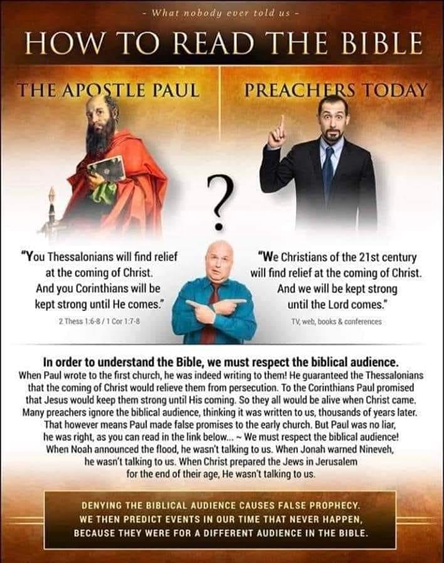
The Use of Evidence in Defending the Faith–A Comparison

A good friend of mine at The Domain for Truth blog writes a lot about presuppositional apologetics. Below is a really good comparison between two schools of apologetics concernnig the use of evidence in defending the faith.

Presuppositional Apologetics Believes in Evidence: Yet Five Ways its Different than Evidentialism

I hear too often people say Presuppositional apologetics don’t believe in evidence.  That’s not true.  Presuppositional apologetics does believe there’s a role for evidence in Christian apologetics.

But first off some might need to know what is Presuppositional apologetics in the first place.  It might be helpful to listen to various different lectures on Presuppositional apologetics; check out our “Ultimate Collection of Free Presuppositional Apologetics Lectures.”  Among the many lectures the ones I recommend would be Greg Bahnsen’s Van Tillian Apologetics and Jason Lisle’s one shot “Jason Lisle “The Ultimate Proof of Creation” Lecture at The Master’s Seminary

Yet if Presuppositional Apologetics believes there’s a place for evidence how is a distinctly Presuppositional Apologetics’ approach different than the typical Evidentialism?

I can think of five ways.

Difference 1: There is no neutrality.  This is a distinctive of Presuppositional apologetics: There is no religious neutrality.  I’ve argued for this point in our “A BRIEF OUTLINE AGAINST RELIGIOUS NEUTRALITY.”  I’ve met some traditional evidentialist or proponents of Classical Apologetics asserting that they approach the defense of the faith in a neutral fashion.  Even before I was into Presuppositional Apologetics I felt that this might not always be true in practice; the apologist does have a bias of believing in the Bible.  Yet when the skeptics say the Christian is bias in handling the evidences the Presuppositional apologists can point out the skeptics are also bias.  They are not neutral.  Far from it.  In their state of not believing God’s Word they are rebelling against God our Creator.   A Presuppositionalist talking about evidence with an unbeliever will expose the skeptics’ pretended neutrality in how they handle the evidence.  Yet when a skeptic merely dismiss a Christian handling evidences as being bias the Presuppositionalist can argue that there is no neutrality.

Difference 2: Philosophy of evidence matters more than evidence per se.   In the past I have mentioned this point in our blog that one’s philosophy of evidence matters more than evidences per se.  That is because one’s philosophy of evidence will shape how one interpret the evidence.  In other words one’s criteria of evidence will either dismiss something as evidence or accept something as evidence.  If someone has a messed up criteria of evidence it might be better to first deal with the philosophy of evidence before you present any evidence.   See Van Til, Evidence, and Philosophy of Evidence.

Difference 3: Even the prerequisite for talking about evidences such as the laws of logic, uniformity of nature, nature of truth, etc., requires the existence of God. This is a powerful argument.  It is also a big claim.  I am aware of that.  Space doesn’t permit me to talk about this as much as I would like but I highly recommend Jason Lisle’s “Jason Lisle “The Ultimate Proof of Creation” Lecture at The Master’s Seminary” that develop this point further.  An apologist conscious of Presuppositional apologetics when talking with an unbeliever about evidences will be on the look out for self-refuting presuppositions that makes nonsense of the tools necessary for discussing evidences.   An apologist conscious of Presuppositional apologetics will also make a powerful argument that the skeptics’ own reasoning ability requires the existence of God.

Difference 4: Presuppositionalism believes in more evidences than the evidentialists.  This is rather ironic.  For instance the Presuppositionalist looks at the Bible and discover that Scripture is self-attesting according to Luke 16:31 and is thus another “evidence.”  Actually the Bible is “the” evidence(s).  Scripture also talks about the doctrine of the self-authorizing Christ.  So instead of dismissing anything that is self-evidencing the Presuppositionalist sees these self-evidencing evidences must be in the apologist’s aresenal. That’s because that which is self-evidencing still has evidential value!

Difference 5: Presuppositionalism believes Romans 1:18 onwards that all people already know God but suppresses the truth. Which means the Presuppositionalist is not naive in how he handles evidences and is aware that very likely the skeptics will not accept Christian evidence as evidence.  Instead when a Presuppositionalist discusses any evidences with a nonbeliever he will presents the argument in a stronger and more robust Presuppositional fashion.  One should read “A Proposal on the Occasion and the Method of Presenting Evidence within a Van Tillian Framework” that is linked in this post “Van Til, Evidence, and Philosophy of Evidence.”

Used with Permission.

To read The Domain For Truth blog, go here. If you want a simpler look at the topic of apologetics, go here.