The REST of the Story

“– in a minute, you’re going to hear the rest of the story.” – Paul Harvey

Paul Harvey was an American radio broadcaster from 1951 – 2008. Beginning in 1951, he broadcast News and Comment for ABC Radio News. In 1976 his famous The Rest of the Story program premiered, in which he provided backstories behind famous people and events.  The program was broadcast for 33 years, until his death in 2009. The programs would conclude with another famous quote:

“And now you know — the REST of the story.”
image

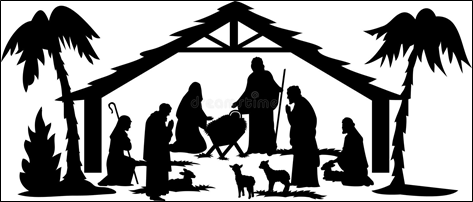
The month of December marks, for many, the end of their favorite time of the year – the period between Thanksgiving and New Years Day. There are Christmas lights everywhere, Christmas music all the time on radio and stations and Christmas movies on every channel. People flock to stores and shopping malls to find gifts for friends and loved ones. And of course, there is all of the wonderful family time!

Christians celebrate the birth of Jesus Christ, which honors the incarnation of the Son of God. Setting aside any discussions/arguments about Jesus’ actual date of birth, as well as all the other ways we engage in debating the virtues of celebrating Christmas as a special day, let us honor the birth of our Savior and Messiah!

LET US REJOICE WITH THE PROPHET!

“Therefore the Lord himself will give you a sign. Behold, the virgin shall conceive and bear a son, and shall call his name Immanuel.” Isaiah 7:14

“For to us a child is born, to us a son is given; and the government shall be upon his shoulder, and his name shall be called Wonderful Counselor, Mighty God, Everlasting Father, Prince of Peace. Of the increase of his government and of peace there will be no end, on the throne of David and over his kingdom, to establish it and to uphold it with justice and with righteousness from this time forth and forevermore.” Isaiah 9:6-7

LET US MARVEL WITH THE SHEPHERDS!

“And in the same region there were shepherds out in the field, keeping watch over their flock by night. And an angel of the Lord appeared to them, and the glory of the Lord shone around them, and they were filled with great fear. And the angel said to them, “Fear not, for behold, I bring you good news of great joy that will be for all the people. For unto you is born this day in the city of David a Savior, who is Christ the Lord. And this will be a sign for you: you will find a baby wrapped in swaddling cloths and lying in a manger.” And suddenly there was with the angel a multitude of the heavenly host praising God and saying,

“Glory to God in the highest, and on earth peace among those with whom he is pleased!”” Luke 2:8-14

LET US BOW DOWN IN HUMILITY WITH JOSEPH!

“Now the birth of Jesus Christ took place in this way. When his mother Mary had been betrothed to Joseph, before they came together she was found to be with child from the Holy Spirit. And her husband Joseph, being a just man and unwilling to put her to shame, resolved to divorce her quietly. But as he considered these things, behold, an angel of the Lord appeared to him in a dream, saying, “Joseph, son of David, do not fear to take Mary as your wife, for that which is conceived in her is from the Holy Spirit. She will bear a son, and you shall call his name Jesus, for he will save his people from their sins.

All this took place to fulfill what the Lord had spoken by the prophet: “Behold, the virgin shall conceive and bear a son, and they shall call his name Immanuel” (which means, God with us). – Matthew 1:18-23

It’s in the words of the angel of the Lord that we find the central purpose for which Jesus came to earth.

“She will bear a son, and you shall call his name Jesus, for he will save his people from their sins.”- Mattthew 1:21

While we would all agree that Jesus was the greatest gift given to men in the history of the universe, let us remember and reflect upon

the fact that it’s Christ’s death for OUR sin that made it the greatest gift ever given to us by an all-loving God. As the Apostle John so simply and eloquently tells us:

“For God so loved the world, that he gave his only Son, that whoever believes in him should not perish but have eternal life.” John 3:16

Should we not daily carry in our hearts the sentiment of the Apostle Paul, as he counseled a young preacher?

“The saying is trustworthy and deserving of full acceptance, that Christ Jesus came into the world to save sinners, of whom I am the foremost.”  – 1 Timothy 1:15

While we celebrate Christ’s birth, let us remember that His incarnation was but the beginning of a journey – a journey that lead to the Cross at Calvary where Jesus paid the price for OUR sin, and that by God’s design. Listen to the Apostle Peter preaching in Jerusalem at Pentecost:

“Men of Israel, hear these words: Jesus of Nazareth, a man attested to you by God with mighty works and wonders and signs that God did through him in your midst, as you yourselves know—this Jesus, delivered up according to the definite plan and foreknowledge of God, you crucified and killed by the hands of lawless men.” – Acts 2:22-23

But there’s MORE! The journey didn’t end at Calvary!

The singular event, without which our faith in the Christ Child would be in vain, was yet to come! Peter continued:

“God raised him up, loosing the pangs of death, because it was not possible for him to be held by it.”  – Acts 2:24

Let us envision, with the Apostle John, that great scene in heaven:

“Then I saw in the right hand of him who was seated on the throne a scroll written within and on the back, sealed with seven seals. And I saw a mighty angel proclaiming with a loud voice, “Who is worthy to open the scroll and break its seals?” And no one in heaven or on earth or under the earth was able to open the scroll or to look into it, and I began to weep loudly because no one was found worthy to open the scroll or to look into it. And one of the elders said to me, “Weep no more; behold, the Lion of the tribe of Judah, the Root of David, has conquered, so that he can open the scroll and its seven seals.”

And between the throne and the four living creatures and among the elders I saw a Lamb standing, as though it had been slain, with seven horns and with seven eyes, which are the seven spirits of God sent out into all the earth. And he went and took the scroll from the right hand of him who was seated on the throne. And when he had taken the scroll, the four living creatures and the twenty-four elders fell down before the Lamb, each holding a harp, and golden bowls full of incense, which are the prayers of the saints. And they sang a new song, saying,

“Worthy are you to take the scroll and to open its seals, for you were slain, and by your blood you ransomed people for God from every tribe and language and people and nation, and you have made them a kingdom and priests to our God, and they shall reign on the earth.” – Revelation 5:1-9

Enjoy this wonderful Season with friends, family, schoolmates, co-workers, and maybe even the strangers you meet standing in line at your local pharmacy, or waiting for the downtown bus, or your flight home for the holidays

Above all, Dear friends, as we celebrate the birth of the baby Jesus this year, let us also hold close to our hearts His journey to the Cross and beyond, and while doing so, let us pray for and look for opportunities to share, with great love and compassion, the REST of the story!

image

image

5 Common Misconceptions of Reformation Day

by David Qaoud | Filed under: Theology Church History, Martin Luther,

For many people the date October 31 is significant not only for being the Eve of All Saints (All Hallows Eve, Halloween) but as the day in 1517 when Martin Luther nailed his 95 theses to the door of the Castle Church in Wittenburg. These theses were a list of arguments against the abuses of the papacy as it was in the early 16th century, largely centering on the sale of indulgences by the Roman Church. The 95 theses were quickly copied and distributed with the emerging printing press, and soon became a manifesto of sorts for the reform of the church in Europe.

Reformation Day

The 500th anniversary of this event is quickly approaching.

Because of this many people are talking about the Reformation and interest in Reformation events and theologies is swelling. Along with this interest and discussion comes several of the myths or misconceptions about the Reformation that have been perpetuated over the years.

As a historical theologian I am not only interested in these misconceptions for accuracy’s sake (though I do care about accuracy) but also because I believe that holding to faulty conceptions about the Reformation does harm to the actual intentions and aims of the Protestant Reformers.

For this reason, I am going to briefly address 5 of these misconceptions and discuss why correcting them is important.

1. Nailing the 95 Theses to the Church Door Was an Act of Protest

We have likely seen the images.

Reformation Day

The defiant young Luther in his billowing monastic robes, brandishing his hammer, brazenly nailing his protest to the door of the institution that he was fed up with. But this isn’t what happened.

By late 1517 Luther certainly had issues with the Church, and especially with the sale of indulgences that was being preached in German lands by Tetzel, but his theology of justification was not yet fully formed and he had no intention yet of starting off a firestorm of reformation. What he did want to do was start a local theological reform emanating from the university he taught at along the lines of what he was reading in the writings of Augustine.

So when he nailed his theses to the door, he was instigating a formal academic theological discussion, or disputatio (disputation). He nailed it to the door of the church because that’s where you put notices. It was like a bulletin board. He was calling for an academic exercise, not necessarily trying to kick off a widespread church reform, even if God eventually used it for that end.

Why does this matter?

For one it helps us to see just how hungry the entire continent was for reform. Luther’s theses happened to hit a nerve. They went viral. But often, just like today, things go viral that we wouldn’t expect or could foresee. Who would think that a syllabus posted on an academic bulletin board would be what God would use to start the reform?

But that’s what happened. It wasn’t the first university that God used to reform the church, and it wouldn’t be the last.

2. That the Reformation Commenced Immediately After the Nailing

First of all, the Reformation was already underway!

Zwingli had already been preaching the gospel and reforming the church for several years before he heard of Luther. And for Luther, it would take 3 or 4 years before his ideas were fully formed and he started calling for widespread reform in his writings and subsequently began receiving condemnation for them by papal opponents. No one woke up on All Saints Day in 1517 thinking that the Reformation had started. One could argue that a more significant date for the beginning of the Reformation would be the Diet of Worms in 1521 and Luther’s subsequent exile. Before that, things were largely academic. After the Diet, things got real. But whatever moment we choose, the nailing of the theses has been invested with meaning well beyond warrant.

Why does this matter?

It matters for a number of reasons.

First of all, it leads us to discount the reforming movements that were started by earlier leaders like John Wycliffe (14th c.) and Jan Hus (15th c.). It also leads us to neglect the fact that the Reformation was a widespread grassroots movement that would have likely happened independent of Luther.

Furthermore, Luther’s ideas were not even fully formed in 1517, as you can see for yourself by reading his early treatises on the sacraments. The real call for reform by Luther begins in 1520 and takes off in 1521 after his exile.

Before this, not much reform had really taken place. Liturgical reforms didn’t take place until 1523. Luther was still living as a monk in 1524, and didn’t marry until 1525. Zwingli had already beaten him to that by a year.

3. That Luther Was the First Reformer

I’ve kind of already busted this myth. Luther was not the first or only reformer of the church.

“Luther was not the first or only reformer of the church.”

Reform has always been a key element of church life going well back to the first millennium. Ambrose (4th c.) and Augustine (5th c.) were reformers. Benedict (6th c.) and Gregory the Great (7th c.) were reformers. The Carolingians (8th-9th c.) were reformers. Bernard of Clairvaux (12th c.) was a reformer. Gregory VII (11th c.) , Innocent III (13th c.) and St. Francis of Assisi (13th c.) were all reformers. They all faced significant issues in the Church that need to change and they addressed them through a combination of moral, missional, theological, and ecclesiological reforms.

But even closer to the time of Luther, he wasn’t the first or only. John Wycliffe had been writing about similar issues in England from the 14th century. Jan Huss had a very similiar program of reform in Prague in the 15th century. Ulrich Zwingli was already at work in the Swiss Churches and Martin Bucer in the Western German churches.

Luther stands in as one of these great reformers, and while the most influential and important, he was by no means the first or the only.

Why does this matter?

Again, we do ourselves a disservice in our appreciation and study of the Reformation if we do not also heed the events and theologies of the other reformers. Luther was building on Augustine. Hus was building on Wycliffe. Bucer had heard Luther speak, but was already well on his way. Zwingli was spurred on through study of Augustine and of the Bible. We need to both give credit to all these reformers and study their ways and means. It will help us in our modern day need to continue reforming the church and to address the issues of our day.

4. That Luther Did it All on His Own

Luther was a towering personality. And he was a great theologian and leader. But he needed lots of help along the way.

We might tend to think that it was the merit of his message that caused his success and the success of the Reformation, but that would again be a misconception.

There’s little separating the teachings and reforming actions of Hus and Luther. Yet the reason why Luther succeeded when Hus didn’t was that Luther had strong military and political support from his local rulers. Frederick of Saxony was interested in humanism and church reform from the 1480s. He founded the University of Wittenberg to that end and invited Luther and Melancthon to come teach there. When Luther was under threat from his excommunication, Frederick hid Luther and protected his life during his exile. He funded Luther’s translation of the New Testament into German. He and other German princes continued to support his reforms and caused them to be able to take place. The German Reformation probably doesn’t take place, at least as we know it, without Frederick of Saxony.

The same can be said of Zwingli in Zurich, Cranmer in England, Knox in Scotland, and Calvin in Geneva. Without the support of their local rulers, none of it ever happens.

Hus was burned at the stake and his reform was quashed because of a lack of political support. By God’s providence Luther got what Hus didn’t. But we shouldn’t think that Luther was a better man because he succeeded. He got by with a lot of help from his friends.

Why does this matter?

This helps us see the grassroots nature of the Reformation. It was a groundswell, bottom up movement. The papacy was incapable at the time of reforming even though there had been calls to reform for over 100 years. The leadership was corrupt. Luther in many ways served as a mascot and leader for the Reform, but it would not have happened without the enthusiastic support of so many.

When the leadership is against you and threatening you with death, it shifts the movement underground. But underground movements can be the most powerful. As soon as you forbid something, everyone wants to have it. That’s what happened during the Reformation.

This is also why Calvin addressed King Francis of France with his prefatory address in his Institutes. It may not make much sense to us now because of our strict separation between church and state, but Calvin knew if he could gain the King of France as a convert, the church in France could be reformed.

In fact, the only places where the Reformation flourished were places where local rulers supported it in some way. Governments can have a major effect on the flourishing or suppressing of the faith.

5. That the Reformers Intended to Split From the Catholic Church

This is the most important and often most misunderstood aspect of the Reformation.

The Protestant Reformers, Luther included, wanted to reform the Church, not split from the church.

That means that they wanted to remain Catholic and reform the Catholic Church. This was their goal at the outset and remained the goal well into the 16th century. Even Calvin holds out hope for a general council that would meet to reform and reunify the church. There were many who hoped that Trent would be that council, but alas, it was not able to be that. Its hardline approach drove a wedge between them and the Protesting churches, and still functions as a dividing wall to this day.

Furthermore, we should not see it as the Protestants splitting from the Catholic Church and forming a new church, with the old church remaining being the Catholic Church.

Rather, we should see both the Protestant and the Roman Catholic traditions as heirs of the Western Catholic church, both having formerly been a part of it and split from it by dividing from each other. The Reformers argued this extensively, and they did not shy away from calling themselves “Catholic.”

The Reformation was very local. In local areas (cities, regions, countries) it wasn’t as if the local churches split and some of them were now protestant. No, in local areas, all the churches continued on as they had for 1,000 years. Some were reformed according to the tenets of the Protestant Reformation. Others were reformed according to the program that Trent laid down. Regardless, both church traditions, Protestant and Roman Catholic, are properly heirs of the Catholic Church.

Why does this matter?

It matters because Protestant churches need to see themselves as the heirs of the Ancient and Medieval Church.

When we look back in history, we need to understand that it is “us” that we are reading about, not somebody else. Augustine belongs to “us” as much as he belongs to Roman Catholics. Francis belongs to “us”. Anselm, Bonaventure, and Thomas belong to us. That’s our family and our tradition. We need to realize that and reacquaint ourselves with the riches of the theological tradition that is ours. The Protestant Reformers did not reject the past. Luther engaged to reform the German church according to the Bible and the teachings of Augustine. Calvin loved Augustine and greatly appreciated Bernard, Anselm, and Chrysostom. The Reformation was not a rejection of the past, but actually a return to the truth of the early traditions of the Church. Ad fontes (to the sources), meant not only to go back to the Bible, but to return to the Church Fathers.

As Protestants, we need to hear this. We need to embrace our rich family story. We need to sit at the feet of our Fathers and Mothers.

We are the Catholic Church.


About David Qaoud

David Qaoud (MDiv, Covenant Theological Seminary) is associate pastor of Bethesda Evangelical Church in St. Louis, Missouri, and founder of gospelrelevance.com. His work has appeared on The Gospel Coalition, For the Church, and Banner of Truth. He lives in St. Louis with his wife and two children. Learn more.

Th article was a guest contribution for Gospel Relevance  byTim LeCroy who blogs at   https://pastortimlecroy.com/